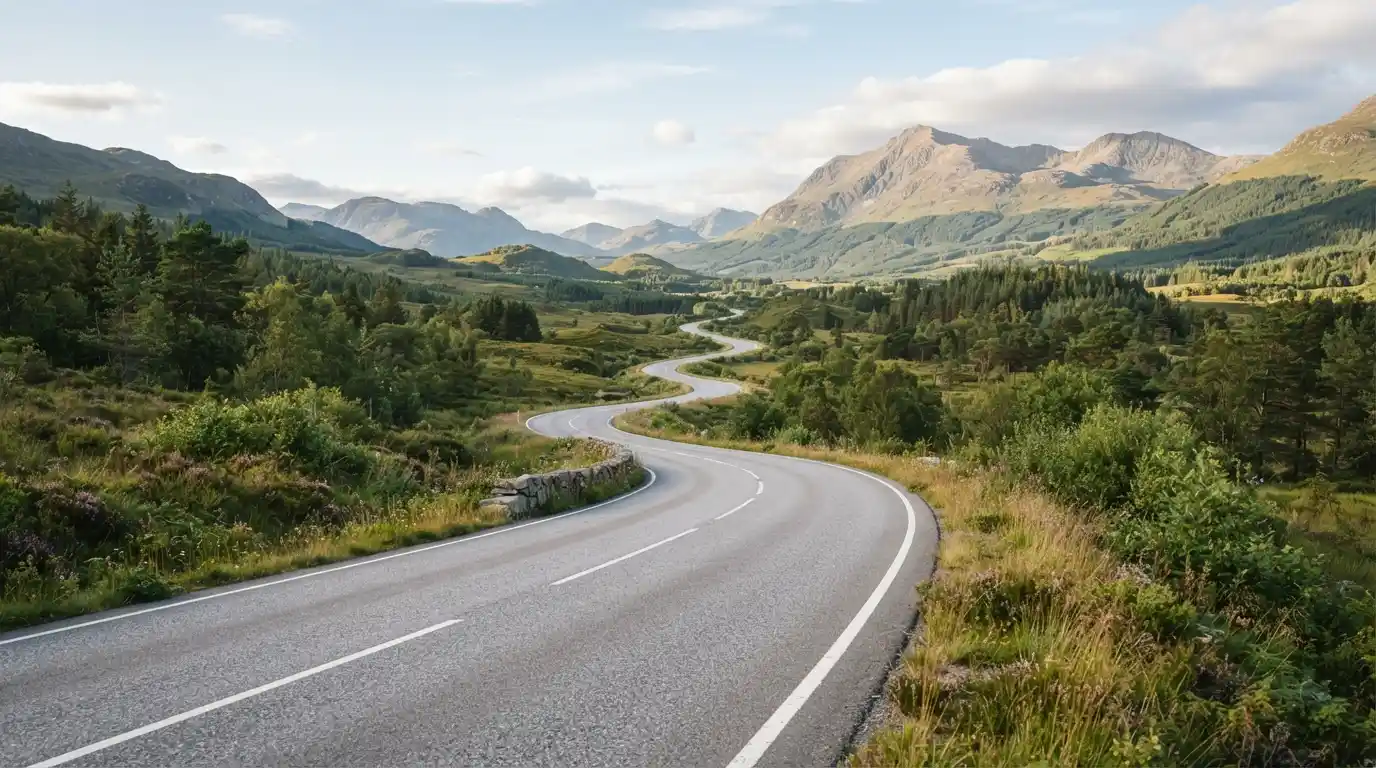
Synonyms of road can make everyday English more precise. Imagine describing a quiet lane instead of simply calling it a road.
A road may be busy, narrow, rural, scenic, or urban. Learning synonyms of road helps you describe each type naturally.
The word road is common in directions, travel, writing, and daily speech. Its alternatives help you avoid repetition.
For students, bloggers, writers, and daily English users, synonyms of road make communication clearer, richer, and more natural.
What Does “Road” Really Mean?
A road is a prepared or recognized way that connects two or more places and allows people or vehicles to travel.
In simple English, a road is a way used to get from one place to another.
Part of speech: Noun
Example:
We drove along the road to the village.
The word can also have a figurative meaning. It can describe a course, direction, or process that leads toward a goal.
Example:
Education can be a road to a better future.
Native speakers usually understand road as a physical route unless the context clearly gives it a figurative meaning.
Common Contexts for “Road”
The word commonly appears in:
- Travel and transportation
- Directions
- Geography
- City planning
- News reports
- Everyday conversations
- Travel writing
- Academic writing
- Literature
- Figurative expressions
Connotative Meaning of “Road”
Connotation is the feeling, idea, or association that a word suggests beyond its basic meaning.
Positive Tone
“Road” can suggest adventure, freedom, progress, discovery, or opportunity.
Example:
She chose a new road toward a better career.
Negative Tone
It can also suggest difficulty, danger, uncertainty, or hardship.
Example:
The road ahead may be difficult.
Neutral Tone
Most uses of road are neutral and simply describe a route.
Example:
The road leads to the airport.
Etymology of “Road”
The word road has Germanic roots.
It comes from Old English rād, which referred to a riding, journey, or expedition. It is related to the Old English verb rīdan, meaning “to ride.”
Old English: 450–1100
In Old English, rād was associated with traveling or riding from one place to another. The word focused more on the act of traveling than on the modern physical structure.
Middle English: 1100–1500
During the Middle English period, forms such as rode appeared. The meaning gradually developed toward the idea of a way or route used for travel.
Modern English: 1500–Present
The modern spelling road became established over time. Its meaning expanded to include public routes for vehicles and travelers.
Today, road also has figurative meanings. Expressions such as “the road to success” use the physical idea of movement to describe progress toward a goal.
Pronunciation of “Road”
- US: /roʊd/
- UK: /rəʊd/
Syllables
road
The word has one syllable.
Affixation Pattern of “Road”
- Root: road
- Prefix: None
- Suffix: None
“Road” is a simple root word rather than a word formed with a common English prefix or suffix.
Synonyms of Road
The best synonym depends on the type, size, location, purpose, and setting of the route.
Some alternatives are close matches. Others describe specific types of roads.
Avenue (Noun) — US /ˈævənuː/ — UK /ˈævənjuː/
Meaning: An avenue is usually a broad street in a town or city, often lined with buildings or trees.
Tone/Register: Neutral, everyday, geographical.
Example:
We walked along the wide avenue after lunch.
Several new cafés opened on the avenue last year.
Boulevard (Noun) — US /ˈbuːləvɑːrd/ — UK /ˈbuːləvɑːd/
Meaning: A boulevard is a wide urban road, often designed with trees, landscaping, or a central divider.
Tone/Register: Neutral, urban, descriptive.
Example:
The hotel stands on a busy boulevard.
Palm trees line the boulevard near the beach.
Street (Noun) — US /striːt/ — UK /striːt/
Meaning: A street is a public road in a town or city, usually surrounded by buildings.
Tone/Register: Neutral, everyday.
Example:
Her apartment is on a quiet street.
We crossed the street near the library.
Highway (Noun) — US /ˈhaɪweɪ/ — UK /ˈhaɪweɪ/
Meaning: A highway is a major public road used for traveling between places, especially over long distances.
Tone/Register: Neutral, travel-related.
Example:
The highway was crowded during the holiday.
We stayed on the highway for almost two hours.
Route (Noun) — US /ruːt/ or /raʊt/ — UK /ruːt/
Meaning: A route is the particular way or direction used to travel between two places.
Tone/Register: Neutral, formal, travel.
Example:
This route takes us through the mountains.
The driver chose a faster route home.
Way (Noun) — US /weɪ/ — UK /weɪ/
Meaning: A way is a general direction or course that leads from one place to another.
Tone/Register: Informal, everyday, neutral.
Example:
Is this the right way to the station?
We found a quiet way through the village.
Path (Noun) — US /pæθ/ — UK /pɑːθ/
Meaning: A path is usually a narrow route intended mainly for walking or moving through a particular area.
Tone/Register: Neutral, descriptive.
Example:
A narrow path leads to the lake.
We followed the forest path before sunset.
Lane (Noun) — US /leɪn/ — UK /leɪn/
Meaning: A lane is usually a narrow road, especially in a rural area or quiet neighborhood.
Tone/Register: Neutral, descriptive, often British.
Example:
They live on a peaceful country lane.
The lane becomes muddy after heavy rain.
Drive (Noun) — US /draɪv/ — UK /draɪv/
Meaning: A drive can refer to a private road leading to a house or a named road in a residential area.
Tone/Register: Neutral, geographical.
Example:
Their house is at the end of a long drive.
We turned onto Oak Drive.
Roadway (Noun) — US /ˈroʊdweɪ/ — UK /ˈrəʊdweɪ/
Meaning: A roadway is the part of a road intended mainly for vehicles.
Tone/Register: Formal, technical.
Example:
Drivers should remain on their side of the roadway.
Workers repaired the damaged roadway overnight.
Thoroughfare (Noun) — US /ˈθɜːroʊfer/ — UK /ˈθʌrəfeə/
Meaning: A thoroughfare is a public road or passage that carries people or vehicles through an area.
Tone/Register: Formal, literary.
Example:
The old market sits beside a busy thoroughfare.
Police closed the main thoroughfare during the parade.
Artery (Noun) — US /ˈɑːrtəri/ — UK /ˈɑːtəri/
Meaning: An artery is a major road that carries a large amount of traffic through a city or region.
Tone/Register: Formal, journalistic.
Example:
The road is a major traffic artery for the city.
Construction affected one of the region’s main arteries.
Track (Noun) — US /træk/ — UK /træk/
Meaning: A track is a rough or narrow route, often used in rural areas.
Tone/Register: Neutral, informal, rural.
Example:
The farmer drove along a muddy track.
We followed an old track across the field.
Trail (Noun) — US /treɪl/ — UK /treɪl/
Meaning: A trail is a marked or informal route through natural surroundings, usually for walking or outdoor travel.
Tone/Register: Neutral, outdoor, descriptive.
Example:
The hiking trail begins near the river.
We discovered a beautiful trail through the woods.
Passage (Noun) — US /ˈpæsɪdʒ/ — UK /ˈpæsɪdʒ/
Meaning: A passage is a way through or between places and can refer to a route in a formal or literary context.
Tone/Register: Formal, literary.
Example:
The narrow passage connected the two districts.
The travelers searched for a safe passage through the valley.
Causeway (Noun) — US /ˈkɔːzweɪ/ — UK /ˈkɔːzweɪ/
Meaning: A causeway is a raised road built across low or wet land, water, or another difficult area.
Tone/Register: Formal, geographical.
Example:
The causeway crosses the shallow marsh.
Strong winds made the causeway difficult to cross.
Expressway (Noun) — US /ɪkˈspresweɪ/ — UK /ɪkˈspresweɪ/
Meaning: An expressway is a major high-speed road designed to move traffic efficiently.
Tone/Register: Neutral, transportation, American English.
Example:
Take the expressway to avoid downtown traffic.
The new expressway shortened the journey considerably.
Freeway (Noun) — US /ˈfriːweɪ/ — UK /ˈfriːweɪ/
Meaning: A freeway is a major controlled-access road, especially in American English.
Tone/Register: Neutral, American English.
Example:
The freeway was clear early in the morning.
We entered the freeway near the airport.
Motorway (Noun) — US /ˈmoʊtərweɪ/ — UK /ˈməʊtəweɪ/
Meaning: A motorway is a major controlled-access road, especially in British English.
Tone/Register: Neutral, British English.
Example:
The motorway was busy after work.
We joined the motorway outside the city.
Turnpike (Noun) — US /ˈtɜːrnpaɪk/ — UK /ˈtɜːnpaɪk/
Meaning: A turnpike is a major road, especially one historically or currently associated with tolls.
Tone/Register: Regional, historical, American English.
Example:
The driver took the turnpike toward the coast.
Traffic moved steadily along the turnpike.
Bypass (Noun) — US /ˈbaɪpæs/ — UK /ˈbaɪpɑːs/
Meaning: A bypass is a road built around a town or busy area to keep through traffic away from the center.
Tone/Register: Neutral, transportation.
Example:
The new bypass reduced traffic downtown.
We used the bypass to avoid the crowded center.
Carriageway (Noun) — US /ˈkærɪdʒweɪ/ — UK /ˈkærɪdʒweɪ/
Meaning: A carriageway is one section of a divided road that carries traffic in one direction.
Tone/Register: Technical, formal, British.
Example:
The northbound carriageway was closed.
Drivers were moved to the opposite carriageway.
Branch (Noun) — US /bræntʃ/ — UK /brɑːntʃ/
Meaning: A branch can describe a smaller road that divides from a larger route.
Tone/Register: Neutral, geographical.
Example:
A small branch leads to the village.
Turn onto the branch after the bridge.
Connector (Noun) — US /kəˈnektər/ — UK /kəˈnektə/
Meaning: A connector is a road that links two larger roads or transportation routes.
Tone/Register: Technical, transportation.
Example:
The connector links the highway with the airport road.
A new connector eased traffic in the area.
Feeder Road (Noun) — US /ˈfiːdər roʊd/ — UK /ˈfiːdə rəʊd/
Meaning: A feeder road is a smaller road that carries traffic toward a major road.
Tone/Register: Technical, transportation.
Example:
The feeder road becomes crowded during rush hour.
Several villages connect to the highway through feeder roads.
Access Road (Noun) — US /ˈækses roʊd/ — UK /ˈækses rəʊd/
Meaning: An access road provides entry to a particular property, facility, or larger route.
Tone/Register: Neutral, technical.
Example:
Use the access road behind the building.
The construction site has a separate access road.
Service Road (Noun) — US /ˈsɜːrvɪs roʊd/ — UK /ˈsɜːvɪs rəʊd/
Meaning: A service road is a smaller road running alongside a major road and providing access to nearby properties.
Tone/Register: Technical, transportation.
Example:
The restaurant is beside the service road.
We left the highway using the service road.
Frontage Road (Noun) — US /ˈfrʌntɪdʒ roʊd/ — UK /ˈfrʌntɪdʒ rəʊd/
Meaning: A frontage road is a local road that runs parallel to a larger highway and gives access to nearby properties.
Tone/Register: Technical, American English.
Example:
The gas station is on the frontage road.
Drivers can reach the shops from the frontage road.
Country Road (Noun) — US /ˈkʌntri roʊd/ — UK /ˈkʌntri rəʊd/
Meaning: A country road is a road in a rural area, often surrounded by fields, farms, or countryside.
Tone/Register: Neutral, descriptive.
Example:
We drove slowly along the country road.
Green fields surrounded the country road.
Dirt Road (Noun) — US /ˈdɜːrt roʊd/ — UK /ˈdɜːt rəʊd/
Meaning: A dirt road is an unpaved road made mainly from soil or other natural material.
Tone/Register: Everyday, descriptive.
Example:
The cabin is reached by a dirt road.
Heavy rain made the dirt road slippery.
Gravel Road (Noun) — US /ˈɡrævəl roʊd/ — UK /ˈɡrævəl rəʊd/
Meaning: A gravel road is an unpaved route covered mainly with small stones.
Tone/Register: Neutral, descriptive.
Example:
The farm sits at the end of a gravel road.
Dust rose from the gravel road as the truck passed.
Paved Road (Noun) — US /peɪvd roʊd/ — UK /peɪvd rəʊd/
Meaning: A paved road has a hard surface made from materials such as asphalt or concrete.
Tone/Register: Neutral, descriptive.
Example:
The village finally has a paved road.
The paved road made travel much easier.
Ring Road (Noun) — US /ˈrɪŋ roʊd/ — UK /ˈrɪŋ rəʊd/
Meaning: A ring road is a road that forms a circular route around a city or town.
Tone/Register: Neutral, geographical.
Example:
The ring road is busy during the morning commute.
We took the ring road around the city.
Scenic Route (Noun) — US /ˈsiːnɪk ruːt/ — UK /ˈsiːnɪk ruːt/
Meaning: A scenic route is a way of traveling chosen for attractive views rather than maximum speed.
Tone/Register: Descriptive, positive.
Example:
We chose the scenic route along the coast.
The scenic route took longer but offered beautiful views.
Detour (Noun) — US /ˈdiːtʊr/ — UK /ˈdiːtʊə/
Meaning: A detour is an alternative route taken because the usual route is blocked, closed, or inconvenient.
Tone/Register: Everyday, travel.
Example:
We had to take a detour because of construction.
The detour added twenty minutes to the trip.
Byway (Noun) — US /ˈbaɪweɪ/ — UK /ˈbaɪweɪ/
Meaning: A byway is a less-traveled road or route, often associated with rural or scenic areas.
Tone/Register: Literary, descriptive.
Example:
They explored a quiet byway through the countryside.
The historic byway attracts visitors in autumn.
Promenade (Noun) — US /ˌprɑːməˈnɑːd/ — UK /ˌprɒməˈnɑːd/
Meaning: A promenade is a public walkway or road, often beside the sea or in a recreational area.
Tone/Register: Descriptive, formal.
Example:
People gathered along the seaside promenade.
The promenade becomes lively after sunset.
Esplanade (Noun) — US /ˌespləˈnɑːd/ — UK /ˌespləˈnɑːd/
Meaning: An esplanade is a broad open road or walkway, often beside a sea, river, or attractive public area.
Tone/Register: Formal, descriptive.
Example:
We walked along the riverside esplanade.
The esplanade offers excellent views of the harbor.
Passageway (Noun) — US /ˈpæsɪdʒweɪ/ — UK /ˈpæsɪdʒweɪ/
Meaning: A passageway is a route that allows people to move from one area to another.
Tone/Register: Neutral, formal.
Example:
The passageway leads toward the old district.
A narrow passageway connects the two courtyards.
Routeway (Noun) — US /ˈruːtweɪ/ — UK /ˈruːtweɪ/
Meaning: A routeway is an established route used for travel or transportation.
Tone/Register: Formal, geographical.
Example:
The river formed an important routeway for early settlers.
The routeway connected several trading communities.
Synonyms of Road by Tone
Choosing a synonym is not only about meaning. Tone also matters.
Positive and Scenic
These words can create pleasant, attractive, or adventurous images:
- Scenic route
- Promenade
- Byway
- Avenue
- Boulevard
- Trail
- Country road
These choices work well in travel writing, storytelling, and descriptive content.
Neutral
These are useful for everyday communication:
- Road
- Street
- Route
- Way
- Lane
- Highway
- Path
- Drive
- Track
- Bypass
- Ring road
They usually communicate information without creating a strong emotional effect.
Formal and Technical
These words are more appropriate for professional, academic, geographical, or transportation contexts:
- Thoroughfare
- Artery
- Roadway
- Carriageway
- Connector
- Feeder road
- Access road
- Service road
- Frontage road
- Routeway
- Causeway
Using these words in casual conversation can sometimes sound overly formal.
Informal and Descriptive
These expressions often sound natural when describing ordinary places or outdoor travel:
- Country road
- Dirt road
- Gravel road
- Track
- Lane
- Byway
- Trail
Why Does Tone Matter?
Consider these two sentences:
We walked along a road.
We walked along a peaceful country lane.
The first sentence is neutral. The second creates a clearer picture.
Strong vocabulary is not about using difficult words. It is about choosing the most accurate word for your meaning.
Road vs. Close Alternatives
Road vs. Street
A Road is a broad term for a route connecting places.
Street usually refers to a public urban road with buildings, homes, shops, or other structures around it.
Use road for general travel.
Use street when the urban environment is important.
Example:
We live on a quiet road.
We live on a quiet street in the city center.
Road vs. Highway
A road can be large or small.
A highway usually suggests a major route designed for longer-distance travel.
Example:
We live beside a narrow road.
We took the highway to the next city.
Road vs. Path
A road is generally designed for vehicles or broader transportation.
A path is usually narrower and often intended for pedestrians.
Example:
The road leads to the farm.
The path leads to the waterfall.
How “Road” Changes by Context
In Daily Conversation
In everyday speech, road, street, way, route, and lane are especially common.
People use them when discussing directions, commuting, travel, and locations.
Which road should I take?
Is there another route?
These simple words are often better than formal alternatives.
In Writing and Blogging
Writers can use more specific vocabulary to avoid repeating “road.”
A travel article might use scenic route, country road, trail, or byway.
An article about urban development might use boulevard, avenue, artery, or thoroughfare.
The choice should match the subject.
In Professional and Academic Writing
Professional writing often requires precision.
Transportation reports may use terms such as roadway, carriageway, connector, access road, or feeder road.
These words communicate specific information that the general word “road” may not provide.
In Creative Writing
Creative writers often choose route-related vocabulary to create atmosphere.
A lonely road may suggest isolation.
A winding trail may suggest adventure.
A sunlit avenue may suggest beauty or energy.
The vocabulary choice helps readers visualize the scene.
Common Mistakes and Native Usage
Mistake 1: Calling Every Road a Highway
A highway is normally a major route.
A small residential street should not automatically be called a highway.
Natural:
I live on a quiet street.
Less natural:
I live on a quiet highway.
Mistake 2: Treating “Path” and “Road” as Exact Synonyms
A path is usually narrower than a road.
It may be designed for walking rather than driving.
Natural:
We followed a path through the forest.
Mistake 3: Confusing “Route” With a Physical Road
A route describes the way or course used to travel.
It may include several roads.
Example:
We changed our route because of traffic.
This does not necessarily mean that a particular road was replaced.
Mistake 4: Overusing Formal Vocabulary
Words such as thoroughfare, carriageway, and routeway have specific uses.
They can sound unnatural in casual conversation.
A native speaker will often simply say road, street, or highway.
Mistake 5: Ignoring Regional English
Some road vocabulary differs between American and British English.
American English: freeway, expressway
British English: motorway, carriageway
Knowing regional differences helps you sound more natural.
Real-Life Mini Scenarios
Workplace Scenario
A transportation manager might write:
The main access road will be closed on Monday.
A city planner could say:
This arterial road carries heavy traffic during peak hours.
The technical vocabulary makes the information more precise.
Social Scenario
A friend might ask:
Which road did you take to get here?
You might answer:
I used the scenic route because the weather was beautiful.
Both speakers can use different vocabulary while discussing the same journey.
Media Scenario
A news report might use highway, roadway, route, or thoroughfare when discussing traffic.
A travel program may prefer trail, byway, or scenic route to create a more vivid image.
Storytelling Scenario
A writer might say:
The lonely country road disappeared into the evening mist.
Here, “road” does more than identify a route. It helps create mood and atmosphere.
Interactive Practice Quiz
Choose the best answer for each situation.
1. Which word best describes a major road connecting two cities?
A. Path
B. Highway
C. Lane
D. Trail
2. Which word is most suitable for a narrow rural road?
A. Lane
B. Freeway
C. Artery
D. Expressway
3. You are walking through a forest. Which word fits best?
A. Motorway
B. Highway
C. Trail
D. Carriageway
4. Which word describes a broad urban road often lined with trees?
A. Boulevard
B. Track
C. Passageway
D. Dirt road
5. Which British English term means a major controlled-access road?
A. Freeway
B. Motorway
C. Drive
D. Byway
6. Which word means an alternative route around a busy town?
A. Bypass
B. Avenue
C. Lane
D. Promenade
7. Which term sounds the most technical?
A. Roadway
B. Way
C. Road
D. Street
8. Which word best describes an unpaved route covered with small stones?
A. Gravel road
B. Boulevard
C. Motorway
D. Artery
9. Which word describes a route chosen for beautiful views?
A. Scenic route
B. Service road
C. Connector
D. Carriageway
10. Which word is most suitable for a public urban road with buildings along it?
A. Street
B. Trail
C. Causeway
D. Track
11. Which word can describe a major road carrying heavy urban traffic?
A. Artery
B. Path
C. Lane
D. Byway
12. Which term refers to a road providing entry to a property or facility?
A. Access road
B. Trail
C. Thoroughfare
D. Ring road
13. Which word can describe a less-traveled rural route?
A. Byway
B. Freeway
C. Expressway
D. Carriageway
14. Which term can describe one section of a divided road in British English?
A. Carriageway
B. Avenue
C. Trail
D. Turn
15. Which is the broadest everyday term?
A. Road
B. Causeway
C. Frontage road
D. Thoroughfare
Reflection Task: Write one sentence using a synonym of “road” that you could naturally use in your daily life.
Answer Key: 1-B | 2-A | 3-C | 4-A | 5-B | 6-A | 7-A | 8-A | 9-A | 10-A | 11-A | 12-A | 13-A | 14-A | 15-A
Frequently Asked Questions
What are the most common synonyms of road in everyday English?
The most common alternatives include street, route, way, lane, highway, avenue, path, drive, and track. However, these words are not exact replacements in every sentence. “Street” usually suggests an urban setting, “lane” often suggests a narrow road, and “highway” normally refers to a major route. Choosing the right synonym depends on context.
What is the difference between a road and a route?
A road generally refers to a physical way used for transportation. A route refers to the course or direction selected for traveling between places. One route can contain several roads. For example, someone may choose a route that includes a highway, a city street, and a country road before reaching a destination.
What are formal synonyms for road in academic writing?
Formal or technical alternatives include roadway, thoroughfare, carriageway, artery, connector, access road, feeder road, and routeway. These terms should be used according to their exact meanings. For example, “carriageway” refers to a section of a divided road, while “artery” can describe a major traffic route. Precision is more important than using complicated vocabulary.
Which synonym of road is best for creative writing?
Words such as trail, byway, country road, scenic route, lane, boulevard, and promenade can work well in creative writing. They create more specific images than the general word “road.” A “country road” can suggest rural isolation, while a “promenade” may suggest a lively waterfront. The best choice depends on the atmosphere of the scene.
What is the difference between a highway, freeway, and motorway?
These words all describe major roads, but usage varies by region. Highway is widely used in American English and can have a broad meaning. Freeway usually refers to a controlled-access highway in American English. Motorway is the common British English term for a major controlled-access road. Regional context determines the most natural choice.
Can “path” be used as a synonym for road?
Sometimes, but the two words are not exact equivalents. A path is generally narrower and is often designed for pedestrians. It may pass through a park, forest, field, or other natural area. A large road designed for cars would normally not be called a path. Always consider the route’s size and purpose.
How can learning synonyms of road improve English vocabulary?
Learning these words helps you describe routes more accurately and avoid unnecessary repetition. Instead of using “road” repeatedly, you can choose lane, avenue, highway, trail, route, boulevard, or byway when appropriate. This improves vocabulary range and can make essays, blog posts, emails, stories, conversations, and other forms of communication more natural.
Conclusion
Learning the synonyms of road is not simply about memorizing a long vocabulary list. It is about understanding how small word choices can change meaning and create clearer communication.
A road can become a street, lane, highway, trail, avenue, route, or byway depending on its size, setting, purpose, and context. Precision makes your English stronger.
Students can use these alternatives in essays. Bloggers can create richer descriptions. Writers can build stronger scenes. Everyday speakers can communicate directions more accurately.
Start with three new words today. Use them in an email, essay, story, or daily conversation, and keep practicing until they become a natural part of your English.

Evelyn Hartwell is an English vocabulary writer who focuses on clear, practical language for learners and everyday readers. Her writing explores synonyms, word meanings, pronunciation, tone, and natural usage. She believes that learning vocabulary should be simple, useful, and enjoyable. Her articles are designed to help students, bloggers, and English learners choose the right words with greater confidence.