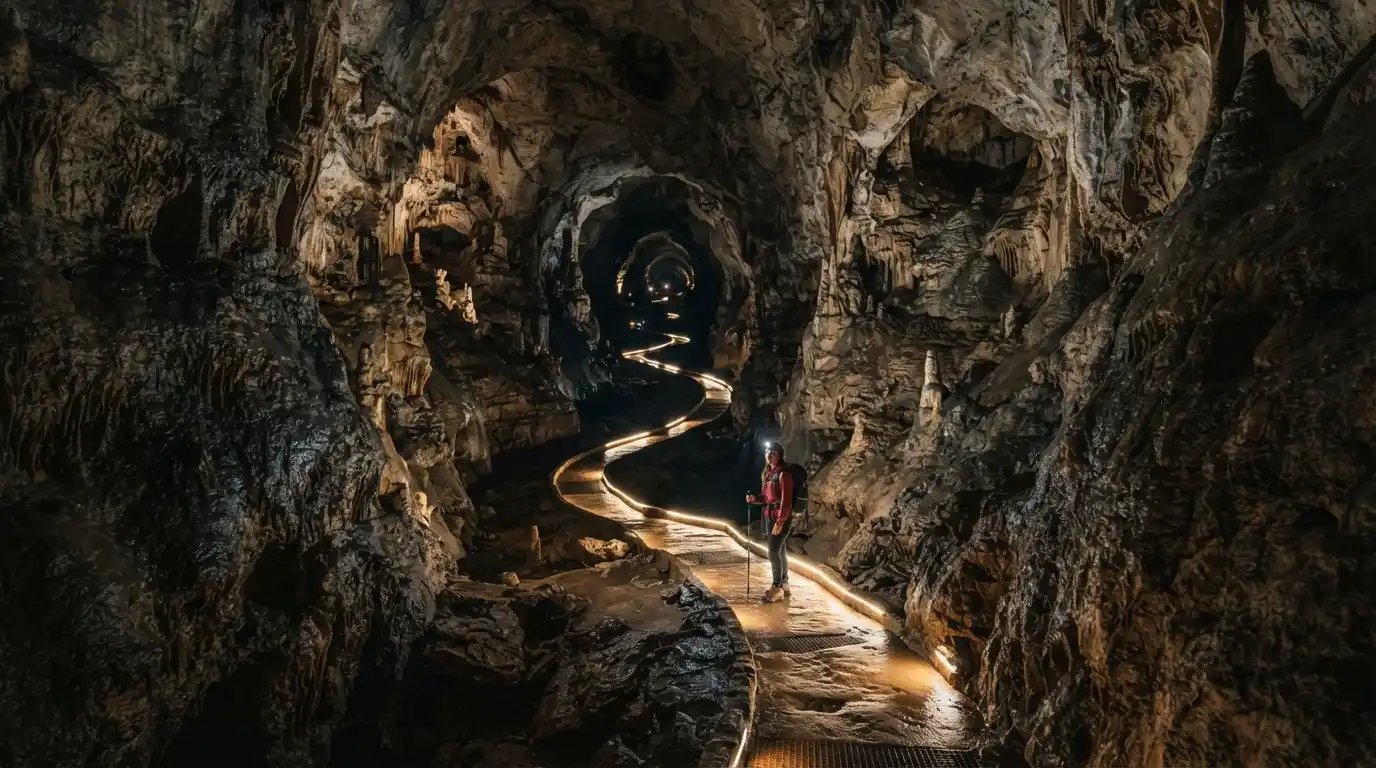
Synonyms for underground help writers describe hidden spaces, secret operations, and alternative movements with complete accuracy.
Imagine exploring a hidden tunnel system or uncovering a thriving local subculture that operates far from public view.
Using synonyms for underground brings clear tone and exact meaning to your stories, blogs, and academic projects.
Mastering these terms strengthens overall expression, making synonyms for underground valuable assets for students and writers.
What Does “Underground” Really Mean?
Underground describes anything physically situated below the surface of the earth or operating outside established, mainstream societal norms. Native speakers understand it as either a literal physical location or a metaphor for secrecy, counterculture, and non-traditional ideas. The word carries a sense of privacy, hidden action, or mystery depending on the exact setting. Grammatically, it functions primarily as an adjective, an adverb, or a noun.
Connotative Meaning
Connotation is the emotional tone or cultural connection associated with a word beyond its literal dictionary definition.
- Positive tone: Represents artistic freedom, indie creative expression, authenticity, and courageous resistance movements.
- Negative tone: Suggests illegal activity, criminal syndicates, illicit trade, or dangerous covert spaces.
- Neutral tone: Focuses purely on subterranean geography, basements, subways, or physical soil layers.
Etymology
The term stems from Germanic origins, combining “under” (beneath) and “ground” (earth’s surface).
- Old English (450–1100): Expressed through simple spatial descriptors indicating position beneath the earth.
- Middle English (1100–1500): Evolved into physical compound words describing basement areas and subterranean passages.
- Modern English (1500–Present): Expanded metaphorically to describe covert political networks, indie movements, and countercultures.
Pronunciation & Word Mechanics
- US IPA: /ˈʌn.dɚ.ɡraʊnd/
- UK IPA: /ˈʌn.də.ɡraʊnd/
- Syllables: un-der-ground
Affixation Pattern
- Root: Ground
- Prefix: Under- (meaning beneath or lower)
- Suffix: None
Synonyms List
Subterranean (Adjective) — US: /ˌsʌb.təˈreɪ.ni.ən/ | UK: /ˌsʌb.təˈreɪ.ni.ən/
Meaning: Located or existing entirely beneath the surface of the earth.
Examples:
- Engineers inspected the subterranean drainage channels before the heavy rain began.
- The historical castle features a vast network of subterranean storage rooms.
Subsurface (Adjective) — US: /ˈsʌb.sɝː.fɪs/ | UK: /ˈsʌb.sɜː.fɪs/
Meaning: Situated or occurring just under the top layer or outer ground.
Examples:
- Geologists detected subsurface water deposits beneath the desert floor.
- The road cracked because of severe subsurface erosion over time.
Buried (Adjective) — US: /ˈber.id/ | UK: /ˈber.id/
Meaning: Placed deep beneath dirt, soil, or another heavy material.
Examples:
- Archeologists recovered buried pottery near the ancient settlement ruins.
- Heavy winter blizzards left the entire mountain cabin buried in snow.
Sunken (Adjective) — US: /ˈsʌŋ.kən/ | UK: /ˈsʌŋ.kən/
Meaning: Settled or built at a lower level than the surrounding ground area.
Examples:
- They built a beautiful sunken garden right behind their family home.
- The diver discovered a sunken ship lying on the ocean floor.
Submerged (Adjective) — US: /səbˈmɝːdʒd/ | UK: /səbˈmɜːdʒd/
Meaning: Completely covered by water or another surrounding fluid.
Examples:
- The coastal pathway became submerged during high tide in the evening.
- Researchers used a remote camera to view the submerged rock formations.
Subterrene (Adjective) — US: /ˌsʌb.təˈriːn/ | UK: /ˌsʌb.təˈriːn/
Meaning: Belonging to or existing within the earth below the surface layer.
Examples:
- Deep subterranean life form research focuses on subterrene environments.
- Mining teams navigated narrow subterrene pathways deep underground.
Underfoot (Adverb) — US: /ˌʌn.dɚˈfʊt/ | UK: /ˌʌn.dəˈfʊt/
Meaning: Positioned beneath one’s feet or directly on the ground below.
Examples:
- Crisp autumn leaves crunched underfoot as we walked through the woods.
- Wet soil shifted underfoot while they climbed the steep trail.
Basal (Adjective) — US: /ˈbeɪ.səl/ | UK: /ˈbeɪ.səl/
Meaning: Relating to or forming the lowest foundation level of a structure.
Examples:
- The builders reinforced the basal rock layer to stabilize the tower.
- Soil tests confirmed strong basal rock conditions for construction.
Underneath (Adverb) — US: /ˌʌn.dɚˈniːθ/ | UK: /ˌʌn.dəˈniːθ/
Meaning: Positioned directly beneath or covered by something else.
Examples:
- She found her lost keys sitting underneath the kitchen table.
- The original oil painting was discovered underneath a newer canvas.
Belowground (Adjective) — US: /bɪˈloʊ.ɡraʊnd/ | UK: /bɪˈləʊ.ɡraʊnd/
Meaning: Situated or operating lower than ground level.
Examples:
- The facility contains four belowground parking levels for visitors.
- Root systems draw vital nutrients from belowground soil deposits.
Hidden (Adjective) — US: /ˈhɪd.ən/ | UK: /ˈhɪd.ən/
Meaning: Kept out of open view or concealed from general observation.
Examples:
- They unlocked a hidden door concealed behind a large tapestry.
- The traveler discovered a hidden valley high up in the mountains.
Concealed (Adjective) — US: /kənˈsiːld/ | UK: /kənˈsiːld/
Meaning: Kept secret or intentionally prevented from being seen by others.
Examples:
- Security officers spotted a concealed camera inside the lobby frame.
- He spoke with a concealed sense of urgency during the interview.
Covert (Adjective) — US: /ˈkoʊ.vɝːt/ | UK: /ˈkʌv.ət/
Meaning: Executed in a secret manner without public exposure or notice.
Examples:
- The government team launched a covert rescue mission at dusk.
- She maintained covert communication with her investigative sources.
Secret (Adjective) — US: /ˈsiː.krət/ | UK: /ˈsiː.krət/
Meaning: Kept private and unknown to the general public or outsiders.
Examples:
- The research team met at a secret facility in the desert.
- He recorded his thoughts in a secret journal every night.
Clandestine (Adjective) — US: /klænˈdes.tɪn/ | UK: /klænˈdes.tɪn/
Meaning: Organized in secrecy because it is forbidden, illegal, or unauthorized.
Examples:
- Diplomats arranged a clandestine meeting to draft the peace agreement.
- They ran a clandestine printing business during the military occupation.
Surreptitious (Adjective) — US: /ˌsɝː.əpˈtɪʃ.əs/ | UK: /ˌsʌr.əpˈtɪʃ.əs/
Meaning: Done stealthily or secretly to avoid detection or disapproval.
Examples:
- She cast a surreptitious glance at her watch during the slow meeting.
- He made a surreptitious call from the hallway to confirm the plan.
Furtive (Adjective) — US: /ˈfɝː.t̬ɪv/ | UK: /ˈfɜː.tɪv/
Meaning: Attempting to avoid notice, typically out of guilt or fear.
Examples:
- The suspect gave a furtive look around before opening the package.
- They exchanged furtive whispers in the back row of the auditorium.
Stealthy (Adjective) — US: /ˈstel.θi/ | UK: /ˈstel.θi/
Meaning: Moving or acting with quiet caution to remain unseen.
Examples:
- The cat made a stealthy approach toward the small garden bird.
- Detectives used stealthy observation tactics during the monitoring process.
Cloaked (Adjective) — US: /kloʊkt/ | UK: /kləʊkt/
Meaning: Wrapped, covered, or disguised to hide true identity or presence.
Examples:
- The entire mountain valley was cloaked in thick morning fog.
- The operation remained cloaked in complete mystery for decades.
Veiled (Adjective) — US: /veɪld/ | UK: /veɪld/
Meaning: Expressed in an indirect or disguised manner to obscure meaning.
Examples:
- He issued a veiled warning during his opening press address.
- Her polite comments contained a veiled critique of the decision.
Shrouded (Adjective) — US: /ˈʃraʊ.dɪd/ | UK: /ˈʃraʊ.dɪd/
Meaning: Covered or obscured from sight, making clear details impossible to see.
Examples:
- The peak of the mountain stayed shrouded in heavy storm clouds.
- Details about the ancient origin remain shrouded in historical myth.
Masked (Adjective) — US: /mæskt/ | UK: /mɑːskt/
Meaning: Disguised or hidden so that true nature remains unrevealed.
Examples:
- He spoke with masked emotions despite the overwhelming news.
- The software issue was masked by a temporary system glitch.
Shadowy (Adjective) — US: /ˈʃæd.oʊ.i/ | UK: /ˈʃæd.əʊ.i/
Meaning: Mysterious, secretive, or indistinct due to darkness or concealment.
Examples:
- A shadowy figure walked quickly down the narrow city alley.
- The business was managed by a shadowy international board.
Disguised (Adjective) — US: /dɪsˈɡaɪzd/ | UK: /dɪsˈɡaɪzd/
Meaning: Altered in appearance to deceive observers about real identity.
Examples:
- The reporter attended the event disguised as a catering staff worker.
- The threat was disguised as a harmless email message link.
Unseen (Adjective) — US: /ʌnˈsiːn/ | UK: /ʌnˈsiːn/
Meaning: Not noticed, observed, or detected by human vision.
Examples:
- An unseen hand seemed to guide the historic events behind the scenes.
- Microscopic organisms live unseen on almost every common surface.
Obscured (Adjective) — US: /əbˈskjʊrd/ | UK: /əbˈskjʊəd/
Meaning: Difficult to see, hear, or understand clearly because of barriers.
Examples:
- Tree branches obscured the trail signs along the dark mountain road.
- The original meaning of the text became obscured over centuries.
Camouflaged (Adjective) — US: /ˈkæm.ə.flɑːʒd/ | UK: /ˈkæm.ə.flɑːʒd/
Meaning: Blended into surrounding environments to prevent easy visual detection.
Examples:
- The green lizard remained perfectly camouflaged among the jungle leaves.
- Military vehicles were camouflaged to match the desert terrain.
Alternative (Adjective) — US: /ɑːlˈtɝː.nə.t̬ɪv/ | UK: /ɒlˈtɜː.nə.tɪv/
Meaning: Differing from mainstream, traditional, or widely accepted cultural choices.
Examples:
- The town features a vibrant alternative art and gallery scene.
- They prefer reading news through independent alternative media channels.
Counterculture (Noun) — US: /ˈkaʊn.tɚˌkʌl.tʃɚ/ | UK: /ˈkaʊn.təˌkʌl.tʃə/
Meaning: A cultural movement holding values opposed to dominant societal norms.
Examples:
- The city district served as a center for the rising youth counterculture.
- His essay explored how early counterculture influenced modern design.
Unofficial (Adjective) — US: /ˌʌn.əˈfɪʃ.əl/ | UK: /ˌʌn.əˈfɪʃ.əl/
Meaning: Operating without formal authorization, sanction, or public acknowledgment.
Examples:
- Staff members organized an unofficial mentoring group in the office.
- She serves as the unofficial spokesperson for the local street artists.
Independent (Adjective) — US: /ˌɪn.dɪˈpen.dənt/ | UK: /ˌɪn.dɪˈpen.dənt/
Meaning: Operating without financial control, backing, or direction from major institutions.
Examples:
- The director gained acclaim for her new independent documentary film.
- They publish an independent literary magazine focused on raw poetry.
Subversive (Adjective) — US: /səbˈvɝː.sɪv/ | UK: /səbˈvɜː.sɪv/
Meaning: Seeking to undermine or alter an established authority or convention.
Examples:
- The art piece offered a subversive commentary on modern consumer life.
- Officials confiscated publications containing subversive political messages.
Fringe (Adjective) — US: /frɪndʒ/ | UK: /frɪndʒ/
Meaning: Operating on the outer edge or extreme boundary of a group or movement.
Examples:
- The festival showcases fringe theater plays from international writers.
- Fringe political views rarely receive coverage in mainstream media outlets.
Nonconformist (Adjective) — US: /ˌnɑːn.kənˈfɔːr.mɪst/ | UK: /ˌnɒn.kənˈfɔː.mɪst/
Meaning: Refusing to accept or follow established social customs or rules.
Examples:
- Her nonconformist style made her stand out in fashion circles.
- The community attracted nonconformist thinkers, writers, and painters.
Radical (Adjective) — US: /ˈræd.ɪ.kəl/ | UK: /ˈræd.ɪ.kəl/
Meaning: Favoring fundamental, extreme, or revolutionary change away from traditions.
Examples:
- The architects proposed a radical design for the urban residential center.
- He joined a group advocating radical updates to local housing laws.
Avant-garde (Adjective) — US: /ˌæv.ɑːŋˈɡɑːrd/ | UK: /ˌæv.ɒ̃ˈɡɑːd/
Meaning: Introducing new, experimental, or unusual ideas in art or culture.
Examples:
- The gallery presented an avant-garde installation using light and sound.
- Her avant-garde fashion collection challenged traditional clothing designs.
Off-grid (Adjective) — US: /ˌɑːfˈɡrɪd/ | UK: /ˌɒfˈɡrɪd/
Meaning: Operating independently without reliance on public utilities or systems.
Examples:
- They built an off-grid home powered entirely by solar panels.
- He lives an off-grid lifestyle deep inside the mountain wilderness.
Unconventional (Adjective) — US: /ˌʌn.kənˈven.ʃən.əl/ | UK: /ˌʌn.kənˈven.ʃən.əl/
Meaning: Differing from what is typical, expected, or governed by custom.
Examples:
- She took an unconventional path to building her successful business.
- The teacher used unconventional methods to make history engaging.
Dissident (Adjective) — US: /ˈdɪs.ə.dənt/ | UK: /ˈdɪs.ɪ.dənt/
Meaning: Opposing official policies, rules, or established authority structures.
Examples:
- Dissident writers published their poetry through secret underground networks.
- The government tried to suppress dissident voices across social platforms.
Underground-railroad (Noun) — US: /ˌʌn.dɚ.ɡraʊndˈreɪl.roʊd/ | UK: /ˌʌn.də.ɡraʊndˈreɪl.rəʊd/
Meaning: A secret network organized to assist individuals seeking refuge or freedom.
Examples:
- The historical underground railroad provided escape routes to safe havens.
- Modern activists formed a support network modeled after an underground system.
Sub-rosa (Adjective) — US: /ˌsʌbˈroʊ.zə/ | UK: /ˌsʌbˈrəʊ.zə/
Meaning: Conducted in strict privacy, secrecy, or confidentiality.
Examples:
- Board members reached a sub rosa agreement before the general vote.
- The negotiations remained sub rosa to prevent market speculation.
Off-the-record (Adjective) — US: /ˌɑːf.ðəˈrek.ɚd/ | UK: /ˌɒf.ðəˈrek.ɔːd/
Meaning: Not intended for public publication or official disclosure.
Examples:
- The politician shared off-the-record details during the informal lunch.
- Her comments were strictly off-the-record and kept private by reporters.
Hush-hush (Adjective) — US: /ˌhʌʃˈhʌʃ/ | UK: /ˌhʌʃˈhʌʃ/
Meaning: Highly secret or confidential, often used in casual conversation.
Examples:
- The company kept its new product development very hush-hush.
- They arranged a hush-hush meeting to plan the surprise event.
Under-the-radar (Adjective) — US: /ˌʌn.dɚ.ðəˈreɪ.dɑːr/ | UK: /ˌʌn.də.ðəˈreɪ.dɑː/
Meaning: Attracting little notice, publicity, or official attention.
Examples:
- The charity operated under-the-radar while delivering crucial aid.
- He preferred to keep his private investments completely under-the-radar.
Under-the-counter (Adjective) — US: /ˌʌn.dɚ.ðəˈkaʊn.t̬ɚ/ | UK: /ˌʌn.də.ðəˈkaʊn.tə/
Meaning: Sold or traded secretly and illegally, away from official records.
Examples:
- Shops were caught selling under-the-counter medication without prescriptions.
- An under-the-counter trade flourished during the economic blockade.
Synonyms by Tone
Selecting the appropriate synonym depends on the exact tone you want to set for your reader.
- Positive Tone: Alternative, Independent, Avant-garde, Counterculture, Nonconformist (reflects creativity, freedom, and innovation).
- Neutral Tone: Subterranean, Subsurface, Buried, Underfoot, Belowground, Submerging (focuses strictly on physical location or structure).
- Negative Tone: Clandestine, Covert, Subversive, Surreptitious, Under-the-counter, Dissident (implies secrecy, deception, or lawbreaking).
- Playful / Informal Tone: Hush-hush, Under-the-radar, Off-grid, Furtive (used in everyday conversation to describe low-profile activities).
Mini Comparison: Underground vs. Subterranean vs. Clandestine
- Underground: Versatile term. Describes physical soil layers, secret operations, or counterculture movements.
- Subterranean: Strictly physical geology. Refers only to spaces, tunnels, or objects located under Earth’s soil.
- Clandestine: Focuses on secrecy and illegality. Used specifically for unauthorized meetings, spycraft, or illicit acts.
Usage Tip: Use subterranean for physical spaces, clandestine for unauthorized or illegal actions, and underground for broad or cultural themes.
Context-Based Usage
Daily Conversation
In casual talk, speakers rely on “under-the-radar,” “hush-hush,” or “off-grid” to talk about low-profile spots, personal privacy, or secret plans.
Writing & Blogging
Writers use “alternative,” “independent,” or “counterculture” to highlight unique lifestyle choices, indie music, or non-mainstream media trends.
Professional & Academic Tone
Academics prefer technical precision, using “subterranean” and “subsurface” in geology, or “clandestine” and “subversive” in political science.
Common Mistakes & Native Usage
Misuse Scenarios
- Describing an indie rock band as “subterranean” (it only applies to physical dirt, soil, or rock settings).
- Using “clandestine” for simple everyday secrets (it conveys strong implications of wrongdoing, spycraft, or illegality).
Register Notes
- Formal/Written: Subterranean, Subsurface, Clandestine, Surreptitious, Subversive.
- Informal/Spoken: Underground, Off-grid, Hush-hush, Under-the-radar, Alternative.
Tip: When exploring creative tone choices, check out our guide on expressive vocabulary building to elevate your writing style.
Real-Life Scenarios
- Workplace: Colleagues held an unofficial brainstorming session to refine product ideas before presenting to managers.
- Social Situations: Friends enjoyed live music at an alternative indie venue hidden in an industrial district.
- Media & Pop Culture: Documentaries often expose clandestine espionage operations carried out during historical conflicts.
- Storytelling: Fantasy novels construct vast subterranean worlds filled with hidden paths and subterranean cities.
Practice Exercise
Test your understanding by selecting the correct synonym for each real-world context below.
- Construction crews installed a __________ pipeline below the downtown street.
A) Subversive
B) Subterranean
C) Clandestine
D) Unofficial - Agents organized a __________ meeting inside an abandoned warehouse.
A) Subsurface
B) Clandestine
C) Independent
D) Buried - She loves supporting __________ artists who publish their own music.
A) Subterranean
B) Buried
C) Independent
D) Subsurface - Archeologists excavated a __________ temple buried deep under desert sand.
A) Covert
B) Buried
C) Unofficial
D) Subversive - The group distributed __________ flyers urging citizens to challenge government policy.
A) Subterranean
B) Subsurface
C) Subversive
D) Buried - Sensors mapped large __________ ice reserves beneath the planet surface.
A) Subsurface
B) Covert
C) Clandestine
D) Alternative - Students ran an __________ social channel not endorsed by their school board.
A) Subterranean
B) Buried
C) Unofficial
D) Covert - Military officers launched a __________ stealth operation across border lines.
A) Subsurface
B) Covert
C) Alternative
D) Unofficial - The local district became famous for its thriving creative __________ movement.
A) Subterranean
B) Subsurface
C) Counterculture
D) Buried - The author chose an __________ press to keep full artistic ownership.
A) Independent
B) Subterranean
C) Clandestine
D) Covert - She gave a __________ glance at her phone during the quiet meeting.
A) Subsurface
B) Furtive
C) Subterranean
D) Basal - The cabin relies on solar power for an completely __________ lifestyle.
A) Off-grid
B) Subterranean
C) Subversive
D) Buried
Reflection Task
Write one original sentence using subterranean or clandestine based on your personal experiences or a favorite story.
Answer Key
1: B | 2: B | 3: C | 4: B | 5: C | 6: A | 7: C | 8: B | 9: C | 10: A | 11: B | 12: A
Conclusion
Building a rich vocabulary with synonyms for underground allows you to express subtle thoughts clearly, smoothly, and with authentic emotional accuracy.
Using precise synonyms for underground transforms basic sentences into captivating content that keeps your target audience deeply engaged.
Start integrating these dynamic synonyms for underground into your daily emails, essays, and creative writing projects to watch your influence grow naturally.

Evelyn Hartwell is an English vocabulary writer who focuses on clear, practical language for learners and everyday readers. Her writing explores synonyms, word meanings, pronunciation, tone, and natural usage. She believes that learning vocabulary should be simple, useful, and enjoyable. Her articles are designed to help students, bloggers, and English learners choose the right words with greater confidence.