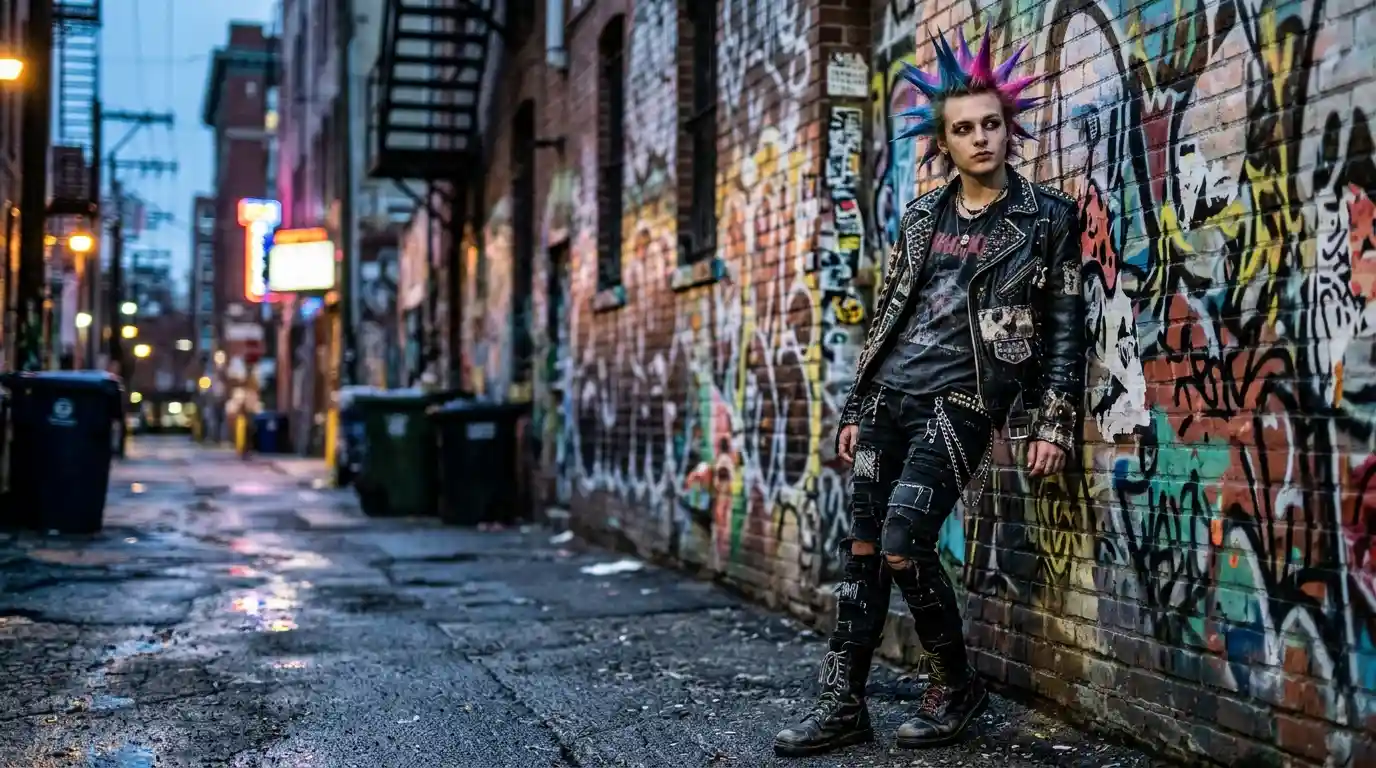
Synonyms for punk help you describe rebels, troublemakers, and bold subcultures with precision. Yesterday, I saw a teenager skate past my café wearing a studded leather jacket and bright green hair.
Repeating the same slang word makes your writing feel flat or overly casual. Learning fresh synonyms for punk expands your vocabulary and sharpens your tone.
People use this word daily in music reviews, street slang, and playful teasing. Mastering these synonyms for punk helps students, bloggers, content writers, and daily speakers communicate clearly.
What Does “Punk” Really Mean?
In simple English, a punk is either a rebellious subculture fan or an aggressive, disrespectful young troublemaker.
The word carries a sharp, edgy, and confrontational attitude. Native speakers understand its exact meaning from context, either as a badge of artistic pride or an insult.
It appears in music journalism, action movies, playground arguments, and fashion blogs. For example, a 1970s rock fan embraces the label, while a movie villain uses it as a threat.
Part of Speech: Noun (most common), Adjective (describing punk rock style or poor quality).Simple Definition: A loud, rebellious youth culture movement, or a rude, inexperienced troublemaker.
Connotative Meaning
Connotation (the hidden emotional feeling or cultural association a word carries beyond its literal dictionary definition).
- Positive tone: Suggests fearless creativity, independence, authenticity, and standing up against unfair rules (e.g., rebel, nonconformist, maverick, iconoclast).
- Negative tone: Suggests petty crime, bullying, disrespect, or worthless nonsense (e.g., thug, hoodlum, hooligan, delinquent).
- Neutral tone: Simply describes a young person, beginner, or fan of a specific music style without judging them (e.g., youth, rocker, rookie, newcomer).
Etymology
- Origin: Punk appeared in late 16th-century English. Its exact origin is uncertain, though linguists link it to old terms for decaying wood (spunk or punkwood used as tinder) and early slang for a worthless person.
- Old English (450–1100): The word punk did not exist in Old English yet. Speakers used native Germanic nouns like cniht (boy or youth) and wiðersaca (adversary or rebel).
- Middle English (1100–1500): The word was still absent from Middle English texts. Writers used words like rebelle (rebel) and harlot (rogue or rascal) instead.
- Modern English (1500–Present): By the 1900s, American slang used punk for a young hoodlum or inexperienced rookie. In the mid-1970s, bands like the Ramones and Sex Pistols turned punk into a global music and fashion movement.
Pronunciation & Word Structure
- US IPA: /pʌŋk/
- UK IPA: /pʌŋk/
- Syllables: punk (single-syllable word)
Affixation Pattern:
- Root: punk (monosyllabic root word)
- Prefix: None
- Suffix: None in the base form (takes -s, -er, -ish, -y in derived forms)
Core Synonyms for Punk
Rebel (Noun) — US /ˈrɛbəl/ | UK /ˈrɛbəl/
Meaning: A person who resists authority, traditional rules, or accepted social habits.
Examples:
- As a teenager, he was a gentle rebel who painted his bedroom walls black.
- True rebels question unfair rules instead of blindly following the crowd.
Troublemaker (Noun) — US /ˈtrʌbəlˌmeɪkər/ | UK /ˈtrʌbəlmeɪkə/
Meaning: Someone who intentionally causes problems, arguments, or chaos for others.
Examples:
- Two troublemakers in the back row kept interrupting the guest speaker.
- Our playful puppy is a cute little troublemaker who steals socks.
Hoodlum (Noun) — US /ˈhudləm/ | UK /ˈhuːdləm/
Meaning: A violent young criminal or street gang member who causes damage.
Examples:
- Hoodlums smashed three streetlights in the park last Friday night.
- Classic detective movies often feature tough hoodlums wearing leather coats.
Hooligan (Noun) — US /ˈhulɪɡən/ | UK /ˈhuːlɪɡən/
Meaning: A noisy, violent young person who behaves badly in public places.
Examples:
- Soccer stadiums ban known hooligans from buying tickets to big matches.
- A group of hooligans overturned trash cans down the quiet street.
Thug (Noun) — US /θʌɡ/ | UK /θʌɡ/
Meaning: A violent, aggressive person who intimidates or hurts others.
Examples:
- The hero fought off two thugs trying to rob the corner grocery store.
- Online thugs leave nasty comments behind fake social media profiles.
Delinquent (Noun) — US /dɪˈlɪŋkwənt/ | UK /dɪˈlɪŋkwənt/
Meaning: A young person who repeatedly breaks the law or ignores school rules.
Examples:
- The community center offers free art classes to help local delinquents stay out of trouble.
- He was a teenage delinquent before turning his life around as a chef.
Ruffian (Noun) — US /ˈrʌfiən/ | UK /ˈrʌfɪən/
Meaning: A rough, violent, and lawless person who enjoys fighting.
Examples:
- Sailors in old harbor taverns often had to watch out for local ruffians.
- The security guard quickly escorted the loud ruffian out of the theater.
Rowdy (Noun) — US /ˈraʊdi/ | UK /ˈraʊdi/
Meaning: A noisy, rough person who acts wildly and disturbs the peace.
Examples:
- Late-night rowdies woke up the whole apartment building after the concert.
- Police asked the rowdies to leave the boardwalk before midnight.
Vandal (Noun) — US /ˈvændəl/ | UK /ˈvændəl/
Meaning: Someone who deliberately destroys or damages public or private property.
Examples:
- Vandals spray-painted messy tags across the newly painted library wall.
- Security cameras helped catch the vandals who broke the playground swings.
Miscreant (Noun) — US /ˈmɪskriənt/ | UK /ˈmɪskrɪənt/
Meaning: A person who behaves badly or breaks rules in a dishonest or harmful way.
Examples:
- The principal lectured the young miscreants caught cheating on the science quiz.
- Neighborhood watch groups report local miscreants to the police.
Rascal (Noun) — US /ˈræskəl/ | UK /ˈrɑːskəl/
Meaning: A mischievous person or child who causes playful trouble without real malice.
Examples:
- My little nephew is a cheeky rascal who hid my car keys under the couch.
- That old dog is a lovable rascal when food is left on the counter.
Scamp (Noun) — US /skæmp/ | UK /skæmp/
Meaning: A playful, energetic child or young person who gets into harmless mischief.
Examples:
- Look at that little scamp smiling with chocolate all over his face.
- Two young scamps rang our doorbell and ran laughing down the driveway.
Brat (Noun) — US /bræt/ | UK /bræt/
Meaning: A spoiled, rude child or immature person who behaves selfishly.
Examples:
- He acted like a total brat when he did not get the birthday gift he wanted.
- Don’t be a brat—share the video game controller with your younger sister.
Upstart (Noun) — US /ˈʌpˌstɑrt/ | UK /ˈʌpstɑːt/
Meaning: An arrogant newcomer who suddenly gains success and disrespects older leaders.
Examples:
- Older executives resented the young upstart who modernized their sales team.
- That tiny tech upstart stole half the market from established phone brands.
Whippersnapper (Noun) — US /ˈwɪpərˌsnæpər/ | UK /ˈwɪpəsnæpə/
Meaning: A young, inexperienced person who acts overly confident or disrespectful to elders.
Examples:
- My grandfather jokingly calls every new intern a young whippersnapper.
- Listen here, whippersnapper—I was fixing engines before you were born!
Smart aleck (Noun) — US /ˈsmɑrt ˌælɪk/ | UK /ˈsmɑːt ˌælɪk/
Meaning: Someone who annoys others by always trying to sound clever or sarcastic.
Examples:
- Nobody likes a smart aleck who corrects everyone’s grammar at dinner.
- He gave a smart aleck reply when the teacher asked where his homework was.
Wise guy (Noun) — US /ˈwaɪz ˌɡaɪ/ | UK /ˈwaɪz ˌɡaɪ/
Meaning: A person who makes sarcastic jokes or acts like a tough guy.
Examples:
- Stop being a wise guy and help me carry these heavy grocery boxes.
- Old gangster films are full of wise guys talking in smoky back rooms.
Maverick (Noun) — US /ˈmævrɪk/ | UK /ˈmævrɪk/
Meaning: An independent thinker who refuses to follow rules and does things their own way.
Examples:
- The fashion designer is a bold maverick who sews jackets from recycled tents.
- Every creative agency needs at least one maverick to spark fresh ideas.
Nonconformist (Noun) — US /ˌnɑnkənˈfɔrmɪst/ | UK /ˌnɒnkənˈfɔːmɪst/
Meaning: Someone who refuses to live or dress according to mainstream social norms.
Examples:
- As a true nonconformist, she shaved her head and wore combat boots to prom.
- Small art towns attract nonconformists looking for freedom and community.
Iconoclast (Noun) — US /aɪˈkɑnəˌklæst/ | UK /aɪˈkɒnəklɑːst/
Meaning: A person who attacks or rejects cherished beliefs, traditions, or institutions.
Examples:
- The film director is a famous iconoclast who breaks every Hollywood rule.
- Punk rockers acted as musical iconoclasts against polished stadium rock.
Anarchist (Noun) — US /ˈænərkɪst/ | UK /ˈænəkɪst/
Meaning: Someone who believes in abolishing government and living without formal authority.
Examples:
- Early punk lyrics often borrowed slogans from political anarchists.
- He called himself an anarchist, yet he always stopped at red traffic lights.
Renegade (Noun) — US /ˈrɛnəˌɡeɪd/ | UK /ˈrɛnɪɡeɪd/
Meaning: A person who abandons an organization, rulebook, or group to act independently.
Examples:
- A renegade coder leaked the secret software update online yesterday.
- The movie follows a renegade detective who ignores the chief’s orders.
Outlaw (Noun) — US /ˈaʊtˌlɔ/ | UK /ˈaʊtlɔː/
Meaning: A person who has broken the law and lives outside society’s rules.
Examples:
- Western movies tell legends about famous outlaws riding across the desert.
- He felt like an outlaw sneaking into the closed rooftop garden at night.
Rogue (Noun) — US /roʊɡ/ | UK /rəʊɡ/
Meaning: A dishonest or unpredictable person who ignores rules, often with cheeky charm.
Examples:
- That charming rogue talked his way into the VIP concert lounge without a pass.
- Watch out for rogues selling fake tickets outside the stadium gates.
Scoundrel (Noun) — US /ˈskaʊndrəl/ | UK /ˈskaʊndrəl/
Meaning: A dishonest, untrustworthy person who treats others unfairly.
Examples:
- The villain in the play was a greedy scoundrel who stole the family farm.
- Only a heartless scoundrel would take candy from a toddler.
Knave (Noun) — US /neɪv/ | UK /neɪv/
Meaning: A tricky, dishonest man or boy (often used playfully or in historical stories).
Examples:
- Medieval fairy tales frequently feature a clever knave outsmarting the king.
- You sneaky knave—you ate the last slice of cheesecake!
Lout (Noun) — US /laʊt/ | UK /laʊt/
Meaning: An uncouth, rude, and aggressive man or boy with terrible manners.
Examples:
- Some drunken lout spilled soda on my shoes and walked away without apologizing.
- Don’t act like a lout at your cousin’s formal wedding dinner.
Boor (Noun) — US /bʊr/ | UK /bʊə/
Meaning: A rough, insensitive person who lacks basic social manners.
Examples:
- He proved himself to be a total boor by talking loudly throughout the movie.
- Nobody wanted to sit next to the boor who chewed with his mouth open.
Creep (Noun) — US /krip/ | UK /kriːp/
Meaning: An unpleasant, rude, or creepy person who makes others uncomfortable.
Examples:
- Tell that creep at the bar to stop staring at our table.
- What a creep—he read my private text messages over my shoulder!
Jerk (Noun) — US /dʒɜrk/ | UK /dʒɜːk/
Meaning: A mean, foolish, or inconsiderate person who treats people badly.
Examples:
- Don’t be a jerk; hold the elevator door for the woman carrying groceries.
- My neighbor acted like a jerk when my ball accidentally rolled onto his lawn.
Pipsqueak (Noun) — US /ˈpɪpˌskwik/ | UK /ˈpɪpskwiːk/
Meaning: A small, young, or insignificant person who tries to act tough.
Examples:
- The tall basketball player laughed when the tiny pipsqueak challenged him to a dunk contest.
- Listen to that little pipsqueak bossing around his older brothers!
Rookie (Noun) — US /ˈrʊki/ | UK /ˈrʊki/
Meaning: A new, inexperienced member of a team, police force, or workplace.
Examples:
- Every rookie makes a few silly mistakes during their first week on the job.
- The rookie pitcher struck out three veteran batters in a row.
Amateur (Noun) — US /ˈæmətʃər/ | UK /ˈæmətə/
Meaning: Someone who lacks professional skill or does something purely as a hobby.
Examples:
- Compared to master chefs, I am just an enthusiastic amateur in the kitchen.
- Don’t hire an amateur to rewire your house’s electrical panel.
Novice (Noun) — US /ˈnɑvɪs/ | UK /ˈnɒvɪs/
Meaning: A beginner who is brand new to a skill, sport, or job.
Examples:
- Ski resorts have gentle green slopes designed specifically for novices.
- Even a complete novice can bake this simple three-ingredient bread.
Rocker (Noun) — US /ˈrɑkər/ | UK /ˈrɒkə/
Meaning: A musician or fan who loves loud, energetic rock or punk music.
Examples:
- Aging rockers still fill massive arenas with screaming guitars and leather jackets.
- She has been a dedicated punk rocker since buying her first cassette in 1994.
Grunge (Noun) — US /ɡrʌndʒ/ | UK /ɡrʌndʒ/
Meaning: A messy, rebellious 1990s rock style and subculture known for flannel shirts and raw sound.
Examples:
- Seattle bands turned grunge into the defining sound of early-nineties youth.
- His messy hair and torn jeans gave him a classic grunge look.
Goth (Noun) — US /ɡɑθ/ | UK /ɡɒθ/
Meaning: A member of a dark, dramatic music and fashion subculture related to post-punk.
Examples:
- Teen goths gathered near the fountain wearing black lace and silver boots.
- She loves classic goth bands, dark poetry, and rainy autumn afternoons.
Skater (Noun) — US /ˈskeɪtər/ | UK /ˈskeɪtə/
Meaning: A skateboarder, often linked with punk music, street style, and laid-back rebellion.
Examples:
- Local skaters practiced kickflips outside the library steps all afternoon.
- Baggy cargo pants and worn sneakers are classic skater fashion.
Hipster (Noun) — US /ˈhɪpstər/ | UK /ˈhɪpstə/
Meaning: A trendy person who follows alternative music, indie fashion, and counterculture.
Examples:
- Neighborhood hipsters lined up outside the vinyl record shop on Saturday morning.
- That coffee shop is famous among hipsters for its weird lavender espresso.
Counterculturist (Noun) — US /ˌkaʊntərˈkʌltʃərɪst/ | UK /ˌkaʊntəˈkʌltʃərɪst/
Meaning: Someone who rejects mainstream values and creates an alternative lifestyle.
Examples:
- Back-to-the-land counterculturists built off-grid farms in the 1970s.
- Punk artists were loud counterculturists who printed their own zines.
Firebrand (Noun) — US /ˈfaɪərˌbrænd/ | UK /ˈfaɪəbrænd/
Meaning: A passionate person who stirs up strong emotions, protests, or rebellion.
Examples:
- The young union leader was a fiery firebrand who inspired workers to strike.
- Every punk scene has a vocal firebrand shouting truth through a microphone.
Agitator (Noun) — US /ˈædʒəˌteɪtər/ | UK /ˈædʒɪteɪtə/
Meaning: Someone who urges others to protest, rebel, or challenge the status quo.
Examples:
- Campus agitators handed out flyers calling for lower student tuition.
- Critics labeled the protest singer a dangerous agitator.
Gangster (Noun) — US /ˈɡæŋstər/ | UK /ˈɡæŋstə/
Meaning: A member of an organized criminal gang who uses violence and intimidation.
Examples:
- Classic black-and-white movies often portray ruthless 1930s gangsters.
- He tried talking like a movie gangster, though nobody took him seriously.
Punker (Noun) — US /ˈpʌŋkər/ | UK /ˈpʌŋkə/
Meaning: An informal term for a punk rock fan or someone who dresses in punk style.
Examples:
- Old-school punkers filled the basement club to hear the local band play.
- My uncle was a hardcore punker with a bright red mohawk in college.
Punk-rocker (Noun) — US /ˈpʌŋk ˌrɑkər/ | UK /ˈpʌŋk ˌrɒkə/
Meaning: A musician or devoted fan of fast, loud, rebellious punk rock music.
Examples:
- At fifty years old, she is still a proud punk-rocker at heart.
- Three teenage punk-rockers formed a garage band using borrowed amplifiers.
Synonyms for “Punk” by Tone
Choosing the right synonym depends completely on whether you are praising bold individuality or insulting bad behavior. Calling someone a maverick is a huge compliment, while calling them a thug is a serious accusation.
- Positive Tone: Rebel, maverick, nonconformist, iconoclast, firebrand, counterculturist. These words celebrate fearless independence, artistic originality, and standing up against boring norms.
- Neutral Tone: Rocker, punker, punk-rocker, skater, goth, grunge, rookie, novice, amateur. These words simply describe a subculture style or beginner status without attacking character.
- Negative Tone: Hoodlum, hooligan, thug, delinquent, vandal, ruffian, lout, boor, jerk, creep, scoundrel. These words express anger, disapproval, or fear toward rude or criminal behavior.
- Playful / Informal Tone: Rascal, scamp, whippersnapper, smart aleck, wise guy, pipsqueak, rogue. These lighthearted words fit teasing friends, kids, or harmless mischief.
Mini Comparison: Punk vs. Close Alternatives
Punk vs. Rebel vs. Hoodlum
- Meaning difference: A punk can be either a subculture music fan or a disrespectful young troublemaker. A rebel resists authority or unfair rules for a cause or personal freedom. A hoodlum is a violent street criminal who breaks laws and destroys property.
- Tone difference: Punk is slangy and sharp. Rebel is bold and often romantic. Hoodlum is dark and criminal.
- When to use each: Use rebel for someone challenging outdated rules, hoodlum for someone smashing car windows, and punk for music subculture or street slang.
Punk vs. Rascal vs. Delinquent
- Meaning difference: A punk sounds aggressive or disrespectful. A rascal causes cute, harmless mischief. A delinquent repeatedly breaks laws and gets into serious trouble with police or schools.
- Tone difference: Punk is harsh. Rascal is affectionate and playful. Delinquent is formal and legal.
- When to use each: Use rascal for a cheeky kid hiding your keys, delinquent in a social work report, and punk in casual dialogue.
How “Punk” Changes by Context
Daily Conversation
In everyday speech, native speakers use punk in two ways: either talking about punk music or casually insulting a rude person. Friendly alternatives include jerk, troublemaker, rascal, or rookie.
Writing or Blogging
Music, fashion, and culture bloggers use vibrant words to capture subculture energy. Using iconoclast, nonconformist, counterculturist, skater, or punk-rocker makes reviews vivid and authentic.
Professional or Academic Tone
In sociology papers, legal reports, and journalism, slang like punk feels too informal unless discussing music history. Writers choose delinquent, vandal, agitator, maverick, or novice instead.
Creative or Informal Use
Screenwriters and novelists love punchy nouns to show character attitude immediately. Words like renegade, ruffian, wise guy, outlaw, and rogue bring dialogue to life.
Common Mistakes & Native Usage
Common Mistakes Learners Make
- Calling a friend “a punk” as a joke without knowing their reaction: Because punk can mean a weak or worthless criminal in older slang, calling someone “a punk” to their face can start a real fight! Use rascal or goofball for friendly teasing.
- Confusing punk (subculture) with punked (pranked): In American slang, “You got punked!” means someone played a practical joke on you. Do not confuse this verb with punk rock music.
- Using thug or hoodlum for harmless teens: Reserve thug and hoodlum for actual violent crime. For noisy teenagers skateboarding on a sidewalk, use rowdies, skaters, or troublemakers.
Register Notes
- Formal vs. Informal: Iconoclast, nonconformist, delinquent, miscreant, and agitator belong in formal essays and news reports. Jerk, creep, wise guy, and smart aleck fit casual spoken slang.
- Spoken vs. Written English: Spoken English favors short, punchy words like brat and rookie. Written English favors descriptive nouns like renegade, firebrand, and vandal.
(Tip: When you want to describe people who break old rules to build something better, check out our guide on synonyms of pioneer for inspiring alternatives.)
Real-Life Mini Scenarios
- Workplace: The older accountants initially rolled their eyes at the young upstart who wore sneakers to meetings, until the bold maverick saved the firm thousands of dollars.
- Social Situations: When my eight-year-old nephew hid my sunglasses behind the couch, I laughed and called him a cheeky rascal instead of getting mad.
- Media & Pop Culture: Music critics praised the 1977 band as fearless iconoclasts and loud counterculturists who changed rock history forever.
- Writing & Storytelling: In the crime novel, a cornered ruffian snarled at the rookie police officer before bolting down the dark alley.
Conclusion
Expanding your vocabulary beyond basic slang helps you express attitude, humor, and judgment with precision. Learning the best synonyms for punk lets you separate harmless mischief from real rebellion or bad behavior.
Whether you are writing a music blog post, crafting dialogue for a story, or chatting with friends, the right word hits the exact tone you want.
Start practicing today. Pick three new words from this list and use them in your next story, review, or daily conversation!
Practice Exercise: Test Your Vocabulary
Choose the best synonym for punk to fit the context and tone of each sentence.
1. ______ spray-painted messy graffiti across the freshly cleaned subway station walls.
A) Vandals
B) Rascals
C) Novices
D) Scamps
2. My little cousin is a playful ______ who always hides behind the door to jump out and surprise me.
A) thug
B) rascal
C) hoodlum
D) vandal
3. That independent film director is a true ______ who refuses to follow boring Hollywood formulas.
A) maverick
B) lout
C) boor
D) brat
4. Every ______ on our baseball team has to carry the equipment bags during their first week.
A) rookie
B) ruffian
C) gangster
D) anarchist
5. Nobody wanted to sit near the rude ______ who talked loudly on his phone during the entire play.
A) boor
B) skater
C) goth
D) rocker
6. He acted like a spoiled ______ when he threw his controller across the room after losing the game.
A) brat
B) iconoclast
C) firebrand
D) novice
7. Early 1970s bands were musical ______ who smashed old rock traditions with fast, three-chord songs.
A) iconoclasts
B) whipsnappers
C) pipsqueaks
D) amateurs
8. Stop being a ______ and give me a straight answer instead of a sarcastic joke.
A) wise guy
B) vandal
C) delinquent
D) hipster
9. My grandfather jokingly called the twenty-year-old tech genius a young ______.
A) whippersnapper
B) hoodlum
C) thug
D) gangster
10. Community sports programs help keep at-risk ______ busy after school so they stay out of trouble.
A) delinquents
B) amateurs
C) hipsters
D) goths
Answer Key: 1-A, 2-B, 3-A, 4-A, 5-A, 6-A, 7-A, 8-A, 9-A, 10-A
Reflection Task: Pick one synonym from this list that fits your style (such as maverick, nonconformist, or rascal) and write one original sentence describing a character from your favorite movie, book, or song.

Evelyn Hartwell is an English vocabulary writer who focuses on clear, practical language for learners and everyday readers. Her writing explores synonyms, word meanings, pronunciation, tone, and natural usage. She believes that learning vocabulary should be simple, useful, and enjoyable. Her articles are designed to help students, bloggers, and English learners choose the right words with greater confidence.