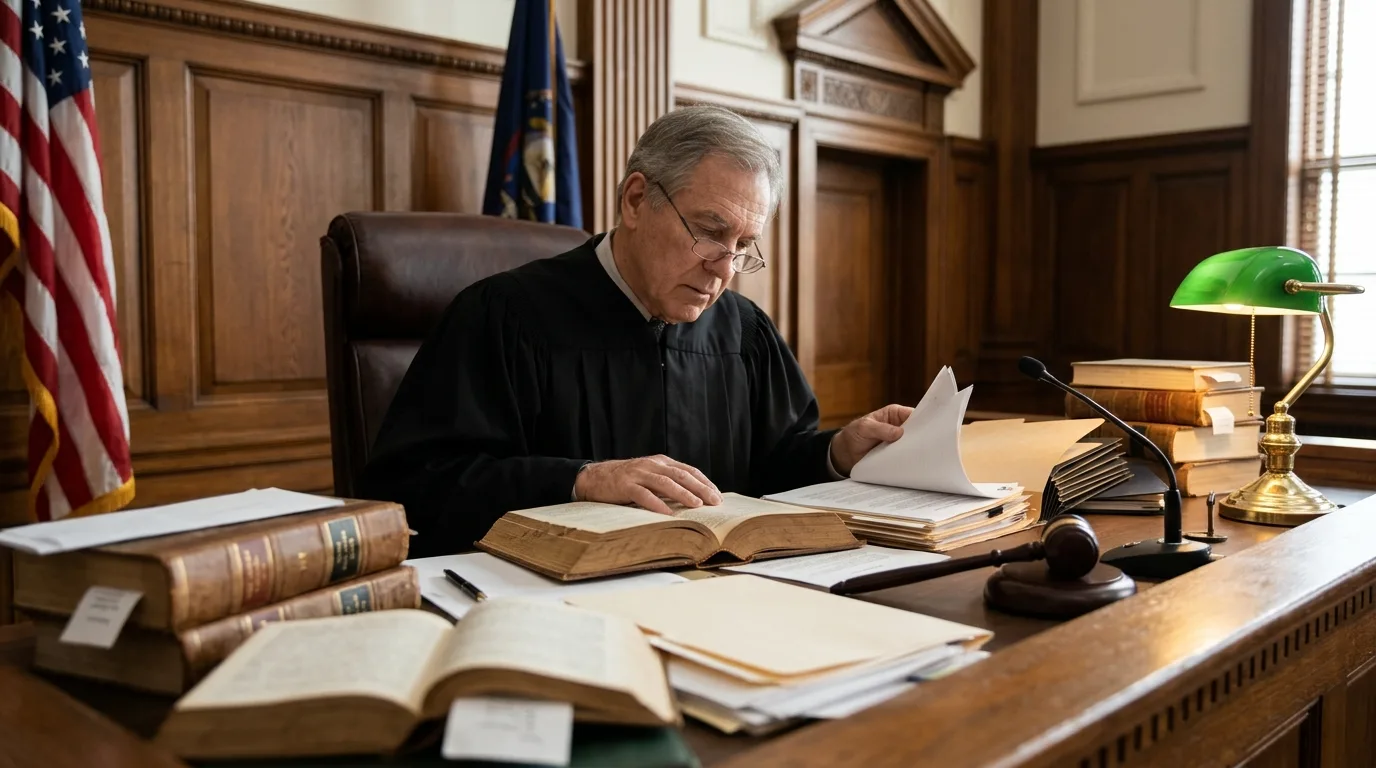
Synonyms of precedent help you talk about past events that guide today’s choices. Last week, my coworker asked to work from home on Fridays, and our boss approved it. Now, everyone in the office points to that decision as a clear rule for future requests.
Repeating the same formal word makes your writing feel stiff and predictable. Learning fresh synonyms of precedent expands your vocabulary and keeps readers hooked.
People use this word often in law, business, history, and daily arguments. Mastering these synonyms of precedent helps students, bloggers, content writers, and daily speakers express ideas with confidence.
What Does “Precedent” Really Mean?
In simple English, a precedent is an earlier event, action, or decision that serves as an example or rule for similar situations later.
The word carries a serious, logical, and authoritative attitude. Native speakers understand it as a standard set by the past that people use to justify what happens next.
It appears heavily in courtrooms, office policies, politics, and family rules. For example, letting one child stay up past midnight sets a precedent for their younger siblings.
Part of Speech: Noun (most common), Adjective (formal, meaning coming before in time or order).Simple Definition: A past action, event, or rule that acts as a guide or example for future decisions.
Connotative Meaning
Connotation (the hidden emotional feeling or cultural association a word carries beyond its literal dictionary definition).
- Positive tone: Suggests wisdom, proven success, inspiring leadership, or a trusted blueprint (e.g., benchmark, prototype, trailblazer, model).
- Negative tone: Suggests a dangerous mistake, bad habit, or risky excuse that others might copy (e.g., justification, warrant, dictate).
- Neutral tone: Simply describes an earlier event, standard, or rule without judging it (e.g., example, standard, custom, criterion).
Etymology
- Origin: Precedent comes from the Old French word precedent and the Latin word praecedentem, the present participle of praecedere. In Latin, prae- means “before” and cedere means “to go.” Literally, it means “going before.”
- Old English (450–1100): The word precedent did not exist in Old English. Speakers used native Germanic terms like bysen (example or pattern) and ealdriht (old law or custom).
- Middle English (1100–1500): The word entered English in the late 14th century through French legal texts. At first, it was used as an adjective meaning “previous” or “earlier.”
- Modern English (1500–Present): By the 1500s, English courts adopted it as a noun for past legal rulings. Today, it is used across business, science, and everyday life.
Pronunciation & Word Structure
- US IPA: /ˈprɛsɪdənt/ (Noun) | /prɪˈsidənt/ (Adjective)
- UK IPA: /ˈprɛsɪdənt/ (Noun) | /prɪˈsiːdənt/ (Adjective)
- Syllables: prec-e-dent
Affixation Pattern:
- Root: ced (from Latin cedere, meaning “to go or yield”)
- Prefix: pre- (from Latin prae-, meaning “before”)
- Suffix: -ent (forms nouns and adjectives showing a state or agent)
Core Synonyms of Precedent
Example (Noun) — US /ɪɡˈzæmpəl/ | UK /ɪɡˈzɑːmpəl/
Meaning: Something or someone that shows how things work or how others should behave.
Examples:
- My older sister set a great example by graduating college with honors.
- Can you give me a quick example of how this new app works?
Model (Noun) — US /ˈmɑdəl/ | UK /ˈmɒdəl/
Meaning: A system, person, or design that people copy because it works well.
Examples:
- Finland’s school system is often used as a model for other countries.
- Our small clinic follows a patient-first care model.
Standard (Noun) — US /ˈstændərd/ | UK /ˈstændəd/
Meaning: An accepted level of quality or rule that people use to judge things.
Examples:
- This hotel sets the gold standard for friendly customer service.
- Every new phone must meet strict safety standards before shipping.
Benchmark (Noun) — US /ˈbɛntʃˌmɑrk/ | UK /ˈbɛntʃmɑːk/
Meaning: A point of reference used to measure and compare quality or success.
Examples:
- Her marathon time became the new benchmark for the entire track team.
- Investors use the S&P 500 as a benchmark for stock market health.
Criterion (Noun) — US /kraɪˈtɪriən/ | UK /kraɪˈtɪərɪən/
Meaning: A specific rule or principle used to judge or decide something.
Examples:
- Previous teaching experience is our main criterion for hiring new staff.
- Price was the deciding criterion when we bought our family car.
Pattern (Noun) — US /ˈpætərn/ | UK /ˈpætən/
Meaning: A repeated way of doing things that others follow as a guide.
Examples:
- The company’s hiring pattern favors candidates with strong communication skills.
- Detectives noticed a clear pattern in the dates of the robberies.
Prototype (Noun) — US /ˈproʊtəˌtaɪp/ | UK /ˈprəʊtətaɪp/
Meaning: The very first working version of an idea or product that later versions copy.
Examples:
- Engineers tested the electric car prototype on a closed track yesterday.
- That early website served as the prototype for modern social media.
Blueprint (Noun) — US /ˈbluˌprɪnt/ | UK /ˈbluːprɪnt/
Meaning: A detailed early plan or guide that shows how to build or achieve something.
Examples:
- Their successful launch became the blueprint for all our future campaigns.
- The architect rolled out the blueprint on the conference table.
Template (Noun) — US /ˈtɛmplət/ | UK /ˈtɛmpleɪt/
Meaning: A preset format or guide used as a starting point for similar work.
Examples:
- Use this invoice template so all our client bills look identical.
- Her study routine became a helpful template for younger students.
Archetype (Noun) — US /ˈɑrkəˌtaɪp/ | UK /ˈɑːkɪtaɪp/
Meaning: The original, classic example of a person or thing that many others resemble.
Examples:
- Sherlock Holmes is the classic archetype of the brilliant detective.
- This small diner is the archetype of a cozy roadside cafe.
Paradigm (Noun) — US /ˈpærəˌdaɪm/ | UK /ˈpærədaɪm/
Meaning: A dominant model, theory, or way of thinking that shapes how people act.
Examples:
- Remote work created a brand-new paradigm for modern office culture.
- Doctors are shifting toward a prevention-based paradigm in healthcare.
Exemplar (Noun) — US /ɪɡˈzɛmplɑr/ | UK /ɪɡˈzɛmplɑː/
Meaning: A person or thing serving as a typical or ideal model worth copying.
Examples:
- The local library is an exemplar of strong community funding.
- She is widely praised as an exemplar of calm leadership during a crisis.
Guide (Noun) — US /ɡaɪd/ | UK /ɡaɪd/
Meaning: Something that helps you make decisions or shows you the right way to act.
Examples:
- Let past mistakes serve as a helpful guide for your next project.
- We used last year’s budget as a guide for this year’s spending.
Guidepost (Noun) — US /ˈɡaɪdˌpoʊst/ | UK /ˈɡaɪdpəʊst/
Meaning: A clear sign, rule, or past event that directs future choices.
Examples:
- Honest feedback acts as a reliable guidepost for personal growth.
- Supreme Court rulings serve as guideposts for lower courts across the nation.
Yardstick (Noun) — US /ˈjɑrdˌstɪk/ | UK /ˈjɑːdstɪk/
Meaning: A standard used for comparing and judging how good or successful something is.
Examples:
- Customer happiness is the true yardstick of a great restaurant.
- Test scores are not the only yardstick of a student’s intelligence.
Touchstone (Noun) — US /ˈtʌtʃˌstoʊn/ | UK /ˈtʌtʃstəʊn/
Meaning: A fundamental standard or example used to test the quality of other things.
Examples:
- That classic 1990s film remains a touchstone for modern sci-fi directors.
- Fairness is the touchstone of every policy our school creates.
Precursor (Noun) — US /priˈkɜrsər/ | UK /priːˈkɜːsə/
Meaning: Something that comes before another thing and leads to its development.
Examples:
- Early silent films were the direct precursor to modern cinema.
- Heavy dark clouds are often a precursor to a summer thunderstorm.
Forerunner (Noun) — US /ˈfɔrˌrʌnər/ | UK /ˈfɔːrʌnə/
Meaning: An earlier person or thing that prepares the way for something similar later.
Examples:
- The telegraph was an important forerunner of the modern smartphone.
- She was a brave forerunner in the field of space engineering.
Antecedent (Noun) — US /ˌæntəˈsidənt/ | UK /ˌæntɪˈsiːdənt/
Meaning: A thing or event that existed before or logically precedes another.
Examples:
- Historians studied the economic antecedents of the 1929 market crash.
- Every modern tradition has fascinating cultural antecedents.
Trailblazer (Noun) — US /ˈtreɪlˌbleɪzər/ | UK /ˈtreɪlbleɪzə/
Meaning: A pioneer who does something first and makes it easier for others to follow.
Examples:
- As the first female pilot in her town, she was a true trailblazer.
- That indie game studio was a trailblazer in virtual reality storytelling.
Pioneer (Noun) — US /ˌpaɪəˈnɪr/ | UK /ˌpaɪəˈnɪə/
Meaning: One of the first people to explore a new area or develop a new method.
Examples:
- Marie Curie was a famous pioneer in radiation research.
- Early internet pioneers never imagined how fast video streaming would grow.
Case (Noun) — US /keɪs/ | UK /keɪs/
Meaning: A specific situation or past legal decision used to support an argument.
Examples:
- The lawyer cited a 1998 case to win the property dispute.
- In this particular case, we decided to waive the late fee.
Ruling (Noun) — US /ˈrulɪŋ/ | UK /ˈruːlɪŋ/
Meaning: An official decision made by a judge or authority that guides future actions.
Examples:
- The judge’s ruling changed how local schools handle student privacy.
- Umpires must follow the official league ruling on replay reviews.
Statute (Noun) — US /ˈstætʃut/ | UK /ˈstætʃuːt/
Meaning: A written law passed by a government body that sets a binding rule.
Examples:
- A new city statute requires helmets for all electric scooter riders.
- Legal scholars examined the old statute before drafting the new bill.
Mandate (Noun) — US /ˈmændeɪt/ | UK /ˈmændeɪt/
Meaning: An official order or authority to carry out a specific policy or action.
Examples:
- The school board issued a clear mandate to upgrade classroom computers.
- Voters gave the new mayor a strong mandate to fix public transit.
Convention (Noun) — US /kənˈvɛnʃən/ | UK /kənˈvɛnʃən/
Meaning: A widely accepted way of behaving or doing things established over time.
Examples:
- Shaking hands when meeting someone is a common business convention.
- Modern poets often break traditional rhyming conventions.
Custom (Noun) — US /ˈkʌstəm/ | UK /ˈkʌstəm/
Meaning: A traditional practice or usual way of acting within a society or group.
Examples:
- Taking off your shoes at the front door is a strict custom in our house.
- Local customs dictate bringing a small gift when visiting a neighbor.
Tradition (Noun) — US /trəˈdɪʃən/ | UK /trəˈdɪʃən/
Meaning: A belief or behavior passed down from earlier generations that guides people today.
Examples:
- Baking apple pie every Sunday is a beloved family tradition.
- The university kept its century-old graduation tradition alive.
Norm (Noun) — US /nɔrm/ | UK /nɔːm/
Meaning: A standard or pattern of behavior that is considered normal in a group.
Examples:
- Flexible working hours have quickly become the new office norm.
- Checking emails before breakfast is the norm for many busy managers.
Practice (Noun) — US /ˈpræktɪs/ | UK /ˈpræktɪs/
Meaning: The usual or expected way of doing something in a specific place or job.
Examples:
- It is standard practice to back up your computer files every Friday.
- The bakery follows the daily practice of donating unsold bread.
Habit (Noun) — US /ˈhæbɪt/ | UK /ˈhæbɪt/
Meaning: Something you do regularly, often based on past routines.
Examples:
- Waking up at six in the morning is a hard habit to break.
- She made a habit of writing down three daily goals every night.
Routine (Noun) — US /ruˈtin/ | UK /ruːˈtiːn/
Meaning: A fixed sequence of actions regularly followed as a standard way of operating.
Examples:
- Following a calm bedtime routine helps children fall asleep faster.
- Security guards follow the exact same inspection routine every evening.
Rule (Noun) — US /rul/ | UK /ruːl/
Meaning: An accepted principle or instruction that states what is allowed or expected.
Examples:
- Our house rule is simple: whoever cooks dinner does not wash dishes.
- As a general rule, arrive fifteen minutes early for a job interview.
Principle (Noun) — US /ˈprɪnsəpəl/ | UK /ˈprɪnsəpəl/
Meaning: A basic truth or moral rule that guides decisions and behavior.
Examples:
- He refused the bribe on principle, even though he needed the money.
- Good journalism relies on the core principle of verifying every fact.
Basis (Noun) — US /ˈbeɪsɪs/ | UK /ˈbeɪsɪs/
Meaning: The main reason, fact, or starting point from which something develops.
Examples:
- Past performance often forms the basis for annual salary raises.
- Trust is the solid basis of any lasting friendship.
Foundation (Noun) — US /faʊnˈdeɪʃən/ | UK /faʊnˈdeɪʃən/
Meaning: An underlying principle, fact, or earlier work that supports everything built on it.
Examples:
- Those early coding lessons laid the foundation for her tech career.
- Respect and honesty are the foundation of our team culture.
Groundwork (Noun) — US /ˈɡraʊndˌwɜrk/ | UK /ˈɡraʊndwɜːk/
Meaning: Early preparation or past actions that make future success possible.
Examples:
- Volunteers laid the groundwork for the new community garden last spring.
- Good research provides the essential groundwork for a convincing essay.
Rationale (Noun) — US /ˌræʃəˈnæl/ | UK /ˌræʃəˈnɑːl/
Meaning: The logical set of reasons or past examples behind a decision.
Examples:
- The manager explained the rationale behind extending the project deadline.
- Could you share your rationale for choosing this software vendor?
Justification (Noun) — US /ˌdʒʌstəfəˈkeɪʃən/ | UK /ˌdʒʌstɪfɪˈkeɪʃən/
Meaning: A good reason or past example that proves an action is fair or right.
Examples:
- Last year’s budget cuts were used as justification for freezing new hires.
- There is no valid justification for treating coworkers rudely.
Warrant (Noun) — US /ˈwɔrənt/ | UK /ˈwɒrənt/
Meaning: Official authorization or a strong reason based on past facts to do something.
Examples:
- Past safety violations gave inspectors full warrant to shut down the site.
- You have no warrant to accuse him without clear proof.
Authority (Noun) — US /əˈθɔrəti/ | UK /ɔːˈθɒrəti/
Meaning: A recognized source of reliable information, legal power, or past decisions used as proof.
Examples:
- The lawyer cited a supreme court authority to support her claim.
- Dictionaries serve as a trusted authority on proper spelling.
Measure (Noun) — US /ˈmɛʒər/ | UK /ˈmɛʒə/
Meaning: A standard or unit used to judge the quality, size, or value of something.
Examples:
- Sales growth is not the only measure of a healthy company.
- Honesty is the true measure of a person’s character.
Gauge (Noun) — US /ɡeɪdʒ/ | UK /ɡeɪdʒ/
Meaning: A standard or test used to estimate or judge how well something is doing.
Examples:
- Student participation is a great gauge of how engaging a lesson is.
- Early ticket sales act as an accurate gauge of movie popularity.
Baseline (Noun) — US /ˈbeɪsˌlaɪn/ | UK /ˈbeɪslaɪn/
Meaning: A minimum starting point or past measurement used for future comparisons.
Examples:
- Doctors took a baseline blood pressure reading before starting the treatment.
- Last year’s energy usage serves as our baseline for cutting costs.
Reference (Noun) — US /ˈrɛfərəns/ | UK /ˈrɛfərəns/
Meaning: A past example, source, or standard that people look at for guidance.
Examples:
- Keep this style guide on your desk as a quick reference while writing.
- She used her previous project as a reference when pricing the new contract.
Precedence (Noun) — US /ˈprɛsɪdəns/ | UK /ˈprɛsɪdəns/
Meaning: The condition of being considered more important or coming before something else based on established rules.
Examples:
- Patient safety always takes precedence over hospital paperwork.
- Older company policies often hold precedence during routine audits.
Exemplification (Noun) — US /ɪɡˌzɛmpləfəˈkeɪʃən/ | UK /ɪɡˌzɛmplɪfɪˈkeɪʃən/
Meaning: A clear example or model that illustrates a general rule or pattern.
Examples:
- Her career is a brilliant exemplification of hard work paying off.
- That case study offers a clear exemplification of smart marketing.
Illustration (Noun) — US /ˌɪləˈstreɪʃən/ | UK /ˌɪləˈstreɪʃən/
Meaning: An example or story that helps explain a rule, idea, or past outcome.
Examples:
- The speaker shared a funny story as an illustration of good teamwork.
- This failed launch serves as a clear illustration of why testing matters.
Sample (Noun) — US /ˈsæmpəl/ | UK /ˈsɑːmpəl/
Meaning: A small part or single example that shows what the rest of a group or system is like.
Examples:
- The designer showed us a fabric sample before sewing the curtains.
- Reviewing a sample of past essays helps students understand grading rules.
Specimen (Noun) — US /ˈspɛsəmən/ | UK /ˈspɛsɪmən/
Meaning: An individual example used to represent a whole class or standard.
Examples:
- The museum displayed a rare specimen of volcanic rock.
- That contract is a textbook specimen of clear legal writing.
Law (Noun) — US /lɔ/ | UK /lɔː/
Meaning: An established rule or system of rules that governs behavior and future decisions.
Examples:
- Gravity is a fundamental law of nature that never changes.
- Company law requires two managers to sign off on large expenses.
Decree (Noun) — US /dɪˈkri/ | UK /dɪˈkriː/
Meaning: An official order or ruling issued by a leader or court that sets a binding standard.
Examples:
- The mayor issued an emergency decree to conserve water during the drought.
- History books mention the king’s famous decree on trade taxes.
Verdict (Noun) — US /ˈvɜrdɪkt/ | UK /ˈvɜːdɪkt/
Meaning: A formal decision or judgment reached after careful review that guides future views.
Examples:
- The jury’s verdict settled the dispute once and for all.
- Customers gave a positive verdict on the restaurant’s new menu.
Policy (Noun) — US /ˈpɑləsi/ | UK /ˈpɒlɪsi/
Meaning: A set of rules or guidelines adopted by an organization based on past experience.
Examples:
- Our store has a strict thirty-day return policy for all electronics.
- The school updated its attendance policy after last semester’s review.
Protocol (Noun) — US /ˈproʊtəˌkɑl/ | UK /ˈprəʊtəkɒl/
Meaning: The official system of rules and accepted procedures followed in formal situations.
Examples:
- Nurses follow strict safety protocols before entering the operating room.
- Diplomatic protocol dictates who speaks first at international summits.
Synonyms for “Precedent” by Tone
Choosing the right synonym depends heavily on the attitude you want to project. Calling an earlier event a blueprint feels exciting and constructive, while calling it a decree feels strict and top-down.
- Positive Tone: Model, benchmark, blueprint, exemplar, trailblazer, pioneer, touchstone, foundation, exemplification. These words emphasize leadership, inspiration, and proven success.
- Neutral Tone: Example, standard, criterion, pattern, prototype, template, case, norm, practice, basis, precursor, baseline, reference, sample, specimen, measure, gauge, policy, protocol. These words simply describe an earlier reference point without judging it.
- Negative Tone: Justification, warrant, decree (when used defensively to excuse bad behavior or enforce rigid control).
- Playful / Informal Tone: Habit, routine, rule, yardstick. These relatable words keep everyday conversations warm, grounded, and easy to follow.
Mini Comparison: Precedent vs. Close Alternatives
Precedent vs. Example vs. Standard
- Meaning difference: A precedent is a specific past event or decision that creates an expectation or rule for later cases. An example is any instance that illustrates a point. A standard is an established measure of quality that everyone is expected to meet.
- Tone difference: Precedent sounds formal and binding. Example sounds friendly and educational. Standard sounds firm and professional.
- When to use each: Use precedent for legal rulings or office policy shifts, example when teaching a concept, and standard when talking about product quality.
Precedent vs. Precursor vs. Tradition
- Meaning difference: A precedent guides future decisions on how to act. A precursor simply comes earlier in time and leads to something new. A tradition is a cultural or family custom passed down over generations.
- Tone difference: Precedent is analytical. Precursor is historical or scientific. Tradition is warm and nostalgic.
- When to use each: Use precedent in debates or courtrooms, precursor for early inventions, and tradition for holiday celebrations.
How “Precedent” Changes by Context
Daily Conversation
In casual chats, native speakers rarely drop the heavy word precedent unless they are making a dramatic point. They prefer simple, everyday words like example, rule, habit, or norm.
Writing or Blogging
Bloggers and content writers love words that paint clear mental pictures. Using blueprint, template, trailblazer, or benchmark makes how-to guides and case studies feel actionable and modern.
Professional or Academic Tone
In law, business strategy, and research papers, exact wording builds credibility. Writers choose criterion, paradigm, antecedent, ruling, baseline, and protocol to sound precise and authoritative.
Creative or Informal Use
Storytellers use evocative nouns to show how the past shapes characters. Words like touchstone, forerunner, archetype, and foundation add depth and weight to narratives.
Common Mistakes & Native Usage
Common Mistakes Learners Make
- Confusing precedent with president: They sound very similar! Precedent (/ˈprɛsɪdənt/) ends with a soft “s” sound and means a past guide. President (/ˈprɛzɪdənt/) has a “z” sound and means a leader.
- Using unprecedented incorrectly: Unprecedented means something has never happened before. Avoid saying “very unprecedented”; something either has a precedent, or it does not.
- Saying “set a precedent for” vs. “set a precedent of”: Native speakers almost always say “set a precedent for future cases” rather than “of.”
Register Notes
- Formal vs. Informal: Antecedent, paradigm, statute, exemplification, and exemplar belong in formal essays and legal briefs. Rule, habit, routine, and guide fit everyday speech.
- Spoken vs. Written English: Spoken English favors concrete words like example, sample, and pattern. Written English favors abstract nouns like criterion, rationale, and foundation.
(Tip: If you want to express events that happen before a major change, check out our guide on synonyms of previous for sharper time-related vocabulary.)
Real-Life Mini Scenarios
- Workplace: When the CEO approved four weeks of paid paternity leave for Tom, it set a positive precedent that quickly became the company policy.
- Social Situations: Paying for everyone’s dinner on your birthday is generous, though it might create an expensive tradition among your friend group.
- Media & Pop Culture: The first Toy Story movie acted as a creative trailblazer, becoming the blueprint for every modern animated film that followed.
- Writing & Storytelling: In mystery novels, a detective always looks for an antecedent clue, a small event from the past that explains the villain’s current rationale.
Conclusion
Mastering fresh words beyond basic terms transforms how clearly you share your ideas. Exploring the best synonyms of precedent helps you sound sharp, persuasive, and natural in every situation.
Whether you are writing an essay, crafting a blog post, or debating a new office rule, picking the right word makes your point stick.
Start practicing right now. Choose two new words from this guide and use them in your next email, journal entry, or daily chat!
Practice Exercise: Test Your Vocabulary
Choose the best synonym of precedent to fit the context and tone of each sentence.
1. The rotary telephone was an early ______ of the modern smartphone we carry today.
A) statute
B) precursor
C) habit
D) verdict
2. Our company uses customer satisfaction scores as the main ______ for annual bonuses.
A) criterion
B) custom
C) forerunner
D) routine
3. Her wildly successful bakery became the ______ that dozens of local entrepreneurs copied.
A) warrant
B) blueprint
C) antecedent
D) justification
4. As the first woman to climb that peak alone, she was celebrated as a true ______.
A) template
B) trailblazer
C) ruling
D) norm
5. The Supreme Court’s historic ______ changed how digital privacy laws work across the country. A) habit
B) ruling
C) prototype
D) routine
6. Engineers built a working ______ of the solar drone before starting mass production.
A) tradition
B) prototype
C) rationale
D) custom
7. Remote video meetings have quickly become the everyday ______ for global tech teams.
A) norm
B) statute
C) precursor
D) warrant
8. Please use this formatting ______ so every report in our department looks consistent.
A) pioneer
B) template
C) justification
D) antecedent
9. Baking cinnamon rolls together on New Year’s morning is our favorite family ______.
A) benchmark
B) tradition
C) ruling
D) criterion
10. The manager explained the logical ______ behind moving the product launch to October.
A) rationale
B) forerunner
C) yardstick
D) archetype
Answer Key: 1-B, 2-A, 3-B, 4-B, 5-B, 6-B, 7-A, 8-B, 9-B, 10-A, 11-A, 12-A
Reflection Task: Pick one synonym from this list that you rarely use (such as benchmark, baseline, or paradigm) and write one original sentence about a rule, habit, or example from your own life.

Evelyn Hartwell is an English vocabulary writer who focuses on clear, practical language for learners and everyday readers. Her writing explores synonyms, word meanings, pronunciation, tone, and natural usage. She believes that learning vocabulary should be simple, useful, and enjoyable. Her articles are designed to help students, bloggers, and English learners choose the right words with greater confidence.