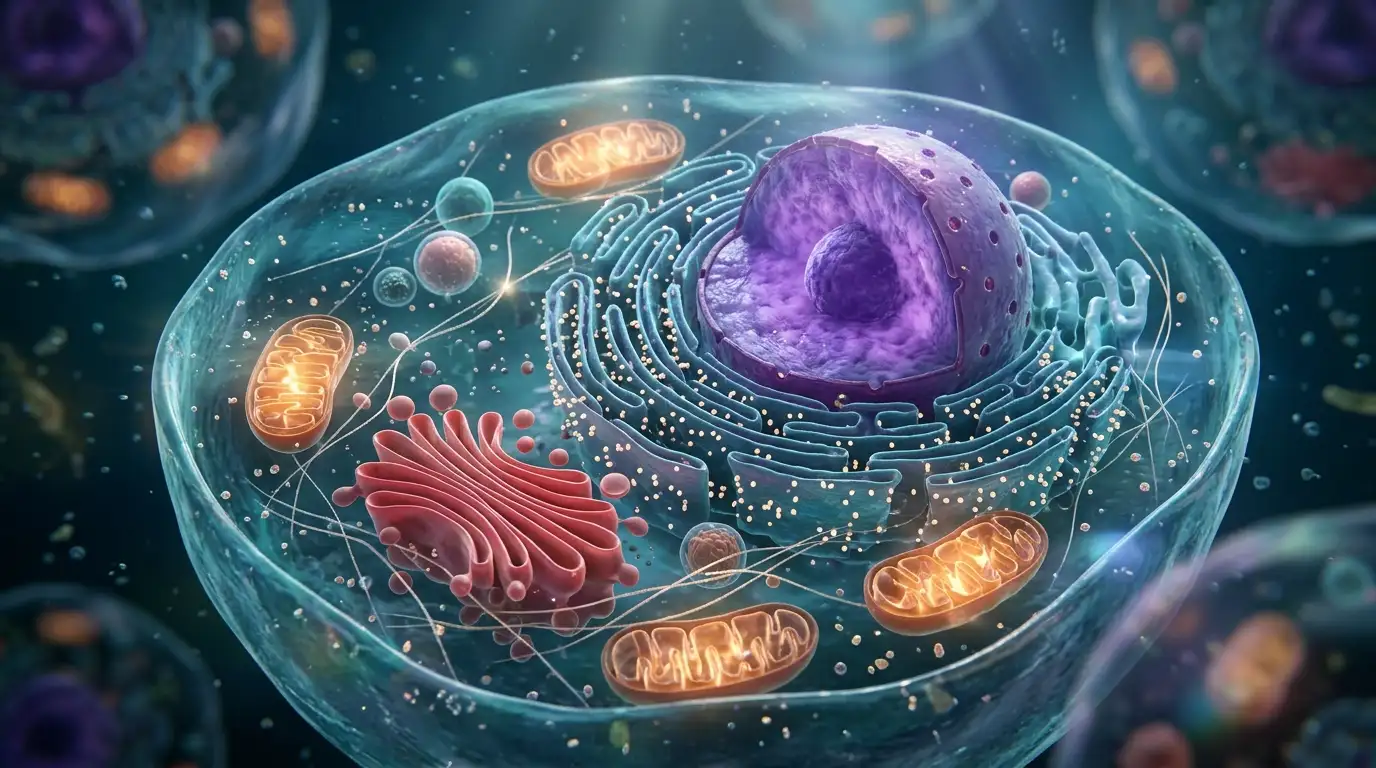
Synonyms of organelle help you explain cellular structures, biology assignments, scientific articles, and everyday medical topics with complete clarity.
Imagine explaining how human cells function or describing microscopic parts in a biology class. Learning synonyms of organelle allows you to choose exact scientific and general terms without repeating technical terms over and over.
This comprehensive guide details the best synonyms of organelle, complete with clear definitions, pronunciations, and real-life examples. Mastering synonyms of organelle empowers students, bloggers, science writers, and English learners to communicate with precision.
What Does “Organelle” Really Mean?
The word “organelle” refers to a specialized subunit within a cell that performs a specific function, much like an organ does in a body. In simple terms, it is a tiny, functional structure inside a microscopic cell.
Native speakers and scientists understand “organelle” as a precise biological noun. It appears regularly in high school biology textbooks, medical reports, academic research papers, and popular science articles.
- Part of Speech: Noun
- Definition: A specialized sub-unit or structure within a cell that performs a specific physiological function.
Connotative Meaning
Words carry subtle emotional shades depending on how they are used in writing.
(Connotation refers to the emotional association or secondary meaning suggested by a word beyond its strict literal definition.)
- Positive tone: Implies intricate living harmony, perfect microscopic efficiency, metabolic vitality, and life-sustaining design.
- Negative tone: Suggests cellular dysfunction, viral takeover, toxic damage, or microscopic malfunction.
- Neutral tone: Denotes a standard biological classification, structural component, or scientific observation.
Etymology
The noun “organelle” was coined in the late 19th century as a diminutive form of the Latin word organum (meaning “instrument” or “tool”).
Historical Evolution:
- Old English (450–1100): English relied on native Germanic words like līc-dæl (body part) long before microscopic terms existed.
- Middle English (1100–1500): Scholars used organe from Old French to describe external functional body parts.
- Modern English (1500–Present): Biologists created “organelle” in the 1830s by combining Latin organum with the diminutive suffix -elle to mean a “little organ” inside a cell.
Pronunciation (US & UK – IPA)
- US: /ˌɔːr.ɡəˈnel/
- UK: /ˌɔː.ɡəˈnel/
Syllables & Structure
- Syllable Breakdown: or-gan-elle (3 syllables)
- Root: Organ (Latin organum, meaning instrument or functional part)
- Prefix: None
- Suffix: -elle (diminutive suffix meaning “small” or “little”)
Synonyms List (Core Section)
Cellular structure (Noun) — US: /ˈsel.jə.lɚ ˈstrʌk.tʃɚ/ | UK: /ˈsel.jə.lər ˈstrʌk.tʃər/
Meaning: An organized physical arrangement of molecules inside a living cell.
Examples:
- Mitochondria are essential cellular structures that convert food into energy.
- Scientists studied the delicate cellular structure under an electron microscope.
Cell organ (Noun) — US: /sel ˈɔːr.ɡən/ | UK: /sel ˈɔː.ɡən/
Meaning: A functional component within a cell working like a miniature bodily organ.
Examples:
- Each cell organ carries out a specific duty to keep the organism alive.
- The nucleus acts as the primary cell organ responsible for holding genetic codes.
Cytoplasmic structure (Noun) — US: /ˌsaɪ.t̬əˈplæz.mɪk ˈstrʌk.tʃɚ/ | UK: /ˌsaɪ.təˈplæz.mɪk ˈstrʌk.tʃər/
Meaning: A specialized functional unit located in the liquid interior of a cell.
Examples:
- Ribosomes are cytoplasmic structures involved in building complex proteins.
- The researcher measured each cytoplasmic structure across different cell samples.
Cellular subunit (Noun) — US: /ˈsel.jə.lɚ ˈsʌbˌjuː.nɪt/ | UK: /ˈsel.jə.lər ˈsʌbˌjuː.nɪt/
Meaning: A distinct structural part that forms part of a larger cellular system.
Examples:
- Every cellular subunit works in harmony to process essential nutrients.
- Mutations in a cellular subunit can impair overall metabolic activity.
Subcellular structure (Noun) — US: /ˌsʌbˈsel.jə.lɚ ˈstrʌk.tʃɚ/ | UK: /ˌsʌbˈsel.jə.lər ˈstrʌk.tʃər/
Meaning: Any microscopic part found within the boundaries of a single cell.
Examples:
- Lysosomes function as subcellular structures that digest waste materials.
- High-powered lasers helped visualize every subcellular structure clearly.
Micro-organ (Noun) — US: /ˈmaɪ.kroʊˌɔːr.ɡən/ | UK: /ˈmaɪ.krəʊˌɔː.ɡən/
Meaning: A tiny functional biological component operating on a microscopic scale.
Examples:
- Chloroplasts are micro-organs that allow plant leaves to capture sunlight.
- The lecture described how each micro-organ contributes to cell division.
Cellular component (Noun) — US: /ˈsel.jə.lɚ kəmˈpoʊ.nənt/ | UK: /ˈsel.jə.lər kəmˈpəʊ.nənt/
Meaning: A constituent part that helps make up the entire living cell.
Examples:
- Water accounts for a large portion of every cellular component.
- Enzymes interact with each cellular component during daily metabolism.
Intracellular unit (Noun) — US: /ˌɪn.trəˈsel.jə.lɚ ˈjuː.nɪt/ | UK: /ˌɪn.trəˈsel.jə.lər ˈjuː.nɪt/
Meaning: A functional entity situated entirely inside a biological cell membrane.
Examples:
- The vacuole is an intracellular unit that stores water and nutrient supplies.
- Signals travel rapidly to every intracellular unit when stress occurs.
Cytoplasmic body (Noun) — US: /ˌsaɪ.t̬əˈplæz.mɪk ˈbɑː.di/ | UK: /ˌsaɪ.təˈplæz.mɪk ˈbɒd.i/
Meaning: A distinct physical mass or particle suspended inside cell cytoplasm.
Examples:
- Inclusion bodies are specialized cytoplasmic bodies containing reserve materials.
- The lab sample revealed several dense cytoplasmic bodies under illumination.
Cell particle (Noun) — US: /sel ˈpɑːr.t̬ə.kəl/ | UK: /sel ˈpɑː.tɪ.kəl/
Meaning: A minute structural fragment operating within a single cell space.
Examples:
- Ribosomes operate as tiny cell particles that construct amino acid chains.
- Centrifuges help separate each heavy cell particle from fluid liquid.
Cellular element (Noun) — US: /ˈsel.jə.lɚ ˈel.ə.mənt/ | UK: /ˈsel.jə.lər ˈel.ɪ.mənt/
Meaning: A basic or essential part contributing to the structure of a cell.
Examples:
- Protein fibers act as a key cellular element supporting cell shape.
- The biology test covered every major cellular element found in plants.
Internal cell part (Noun) — US: /ɪnˈtɝː.nəl sel pɑːrt/ | UK: /ɪnˈtɜː.nəl sel pɑːt/
Meaning: A basic descriptive term for any component inside a cell membrane.
Examples:
- The teacher drew each internal cell part on the classroom chalkboard.
- Damage to any internal cell part can slow down growth.
Cytosolic subunit (Noun) — US: /ˌsaɪ.t̬əˈsɑː.lɪk ˈsʌbˌjuː.nɪt/ | UK: /ˌsaɪ.təˈsɒl.ɪk ˈsʌbˌjuː.nɪt/
Meaning: A specific structural module floating directly in cell cytosol.
Examples:
- The enzymes form a cytosolic subunit responsible for sugar breakdown.
- Fluorescent dyes illuminated the targeted cytosolic subunit in blue.
Membrane-bound unit (Noun) — US: /ˈmem.breɪn baʊnd ˈjuː.nɪt/ | UK: /ˈmem.breɪn baʊnd ˈjuː.nɪt/
Meaning: A cellular structure enclosed within its own protective lipid layer.
Examples:
- The Golgi apparatus is a membrane-bound unit that packages proteins.
- Eukaryotic cells contain several membrane-bound unit formations.
Cellular compartment (Noun) — US: /ˈsel.jə.lɚ kəmˈpɑːrt.mənt/ | UK: /ˈsel.jə.lər kəmˈpɑːt.mənt/
Meaning: An enclosed space inside a cell dedicated to specific chemical reactions.
Examples:
- The mitochondrion serves as a specialized cellular compartment for respiration.
- Enclosing reactions in a cellular compartment protects the cell cytosol.
Microscopic organ (Noun) — US: /ˌmaɪ.krəˈskɑː.pɪk ˈɔːr.ɡən/ | UK: /ˌmaɪ.krəˈskɒp.ɪk ˈɔː.ɡən/
Meaning: A functional structure so small it requires magnification to be seen.
Examples:
- Chloroplasts act as a microscopic organ producing energy in algae.
- Students marveled at seeing each microscopic organ working inside plant tissue.
Biological subunit (Noun) — US: /ˌbaɪ.əˈlɑː.dʒɪ.kəl ˈsʌbˌjuː.nɪt/ | UK: /ˌbaɪ.əˈlɒdʒ.ɪ.kəl ˈsʌbˌjuː.nɪt/
Meaning: A distinct functional section within a larger living system or cell.
Examples:
- The nucleus is an important biological subunit holding genetic DNA strands.
- Every biological subunit must function correctly to maintain health.
Protoplasmic body (Noun) — US: /ˌproʊ.t̬əˈplæz.mɪk ˈbɑː.di/ | UK: /ˌprəʊ.təˈplæz.mɪk ˈbɒd.i/
Meaning: A specialized mass formed from the living substance of a cell.
Examples:
- Plant cells contain unique protoplasmic bodies known as plastids.
- Microscopic stains revealed red protoplasmic bodies in the sample.
Intracellular structure (Noun) — US: /ˌɪn.trəˈsel.jə.lɚ ˈstrʌk.tʃɚ/ | UK: /ˌɪn.trəˈsel.jə.lər ˈstrʌk.tʃər/
Meaning: Any defined physical formation located within the interior of a cell.
Examples:
- Cytoskeletal filaments provide support as an intracellular structure.
- Radiation can harm a delicate intracellular structure like the nucleus.
Cytoplasmic element (Noun) — US: /ˌsaɪ.t̬əˈplæz.mɪk ˈel.ə.mənt/ | UK: /ˌsaɪ.təˈplæz.mɪk ˈel.ɪ.mənt/
Meaning: An essential molecular or physical unit located within cell cytoplasm.
Examples:
- Each cytoplasmic element plays a role in internal protein transport.
- Cold temperatures slowed reaction speeds in every cytoplasmic element.
Subcellular unit (Noun) — US: /ˌsʌbˈsel.jə.lɚ ˈjuː.nɪt/ | UK: /ˌsʌbˈsel.jə.lər ˈjuː.nɪt/
Meaning: A functional component operating below the overall cell level.
Examples:
- The peroxisome acts as a subcellular unit neutralizing metabolic toxins.
- Researchers isolated the subcellular unit to measure oxygen consumption.
Cellular machinery (Noun) — US: /ˈsel.jə.lɚ məˈʃiː.nɚ.i/ | UK: /ˈsel.jə.lər məˈʃiː.nər.i/
Meaning: The collective internal structures performing work inside a living cell.
Examples:
- Viruses hijack host cellular machinery to replicate their viral genes.
- Healthy diet choices help support efficient cellular machinery.
Functional cell part (Noun) — US: /ˈfʌŋk.ʃən.əl sel pɑːrt/ | UK: /ˈfʌŋk.ʃən.əl sel pɑːt/
Meaning: A distinct section of a cell that carries out an active job.
Examples:
- The endoplasmic reticulum is a functional cell part making lipids.
- Diagrams highlighted every functional cell part in bright colors.
Cytosolic structure (Noun) — US: /ˌsaɪ.t̬əˈsɑː.lɪk ˈstrʌk.tʃɚ/ | UK: /ˌsaɪ.təˈsɒl.ɪk ˈstrʌk.tʃər/
Meaning: A distinct physical formation residing inside cell fluid.
Examples:
- Microtubules create a dynamic cytosolic structure inside growing cells.
- Scientists mapped the cytosolic structure using advanced imaging.
Micro-structure (Noun) — US: /ˈmaɪ.kroʊˌstrʌk.tʃɚ/ | UK: /ˈmaɪ.krəʊˌstrʌk.tʃər/
Meaning: A structural arrangement visible only under high-power microscopes.
Examples:
- Electron microscopes reveal the detailed micro-structure of membranes.
- Plant walls show a rigid micro-structure under high magnification.
Intracellular machine (Noun) — US: /ˌɪn.trəˈsel.jə.lɚ məˈʃiːn/ | UK: /ˌɪn.trəˈsel.jə.lər məˈʃiːn/
Meaning: A complex molecular complex that executes physical work inside cells.
Examples:
- ATP synthase operates as a tiny intracellular machine producing energy.
- Textbooks describe ribosomes as an intracellular machine for proteins.
Metabolic unit (Noun) — US: /ˌmet.əˈbɑː.lɪk ˈjuː.nɪt/ | UK: /ˌmet.əˈbɒl.ɪk ˈjuː.nɪt/
Meaning: A cell part specialized in processing chemical energy and reactions.
Examples:
- Mitochondria are the primary metabolic unit inside muscle tissue cells.
- Starvation alters how every metabolic unit processes available storage.
Cellular organ (Noun) — US: /ˈsel.jə.lɚ ˈɔːr.ɡən/ | UK: /ˈsel.jə.lər ˈɔː.ɡən/
Meaning: A formal synonym for an internal functional cell structure.
Examples:
- The nucleus is often considered the most prominent cellular organ.
- Botany students learned how each cellular organ supports photosynthesis.
Protoplasmic unit (Noun) — US: /ˌproʊ.t̬əˈplæz.mɪk ˈjuː.nɪt/ | UK: /ˌprəʊ.təˈplæz.mɪk ˈjuː.nɪt/
Meaning: A functional section composed of living protoplasm in a cell.
Examples:
- The amoeba extends its protoplasmic unit to capture food particles.
- Heat stress caused damage to the protoplasmic unit inside plant cells.
Subcellular compartment (Noun) — US: /ˌsʌbˈsel.jə.lɚ kəmˈpɑːrt.mənt/ | UK: /ˌsʌbˈsel.jə.lər kəmˈpɑːt.mənt/
Meaning: A bounded area inside a cell dedicated to specific tasks.
Examples:
- Enzymes remain safely isolated inside a subcellular compartment.
- The lysosome forms an acidic subcellular compartment for digestion.
Microscopic structure (Noun) — US: /ˌmaɪ.krəˈskɑː.pɪk ˈstrʌk.tʃɚ/ | UK: /ˌmaɪ.krəˈskɒp.ɪk ˈstrʌk.tʃər/
Meaning: Any physical arrangement that requires a lens to observe.
Examples:
- High magnification reveals every microscopic structure in blood samples.
- Biology lab students sketched each microscopic structure carefully.
Intracellular component (Noun) — US: /ˌɪn.trəˈsel.jə.lɚ kəmˈpoʊ.nənt/ | UK: /ˌɪn.trəˈsel.jə.lər kəmˈpəʊ.nənt/
Meaning: A constituent part located inside the cellular boundary.
Examples:
- DNA acts as a master intracellular component guiding cell growth.
- Toxins can inhibit an essential intracellular component rapidly.
Cytoplasmic particle (Noun) — US: /ˌsaɪ.t̬əˈplæz.mɪk ˈpɑːr.t̬ə.kəl/ | UK: /ˌsaɪ.təˈplæz.mɪk ˈpɑː.tɪ.kəl/
Meaning: A small granular formation located within the cell fluid matrix.
Examples:
- RNA strands assemble on each cytoplasmic particle during synthesis.
- Staining made every cytoplasmic particle visible as dark dots.
Cellular inclusion (Noun) — US: /ˈsel.jə.lɚ ɪnˈkluː.ʒən/ | UK: /ˈsel.jə.lər ɪnˈkluː.ʒən/
Meaning: A stored substance or non-living particle inside cell cytoplasm.
Examples:
- Fat droplets exist as a cellular inclusion in adipose tissue.
- Plant leaves store starch as a dense cellular inclusion.
Sub-cellular body (Noun) — US: /sʌb ˈsel.jə.lɚ ˈbɑː.di/ | UK: sʌb ˈsel.jə.lər ˈbɒd.i/
Meaning: A distinct microscopic mass found operating inside a cell.
Examples:
- Centrosomes function as a sub-cellular body during cell division.
- Imaging captured the motion of each sub-cellular body live.
Cytosolic component (Noun) — US: /ˌsaɪ.t̬əˈsɑː.lɪk kəmˈpoʊ.nənt/ | UK: /ˌsaɪ.təˈsɒl.ɪk kəmˈpəʊ.nənt/
Meaning: A constituent unit residing within the liquid portion of a cell.
Examples:
- Sugar molecules diffuse around every cytosolic component quickly.
- The lab analyzed each cytosolic component under stress conditions.
Intracellular element (Noun) — US: /ˌɪn.trəˈsel.jə.lɚ ˈel.ə.mənt/ | UK: /ˌɪn.trəˈsel.jə.lər ˈel.ɪ.mənt/
Meaning: A fundamental constituent located inside the cell wall or membrane.
Examples:
- Calcium acts as a vital intracellular element triggering muscle contraction.
- Every intracellular element maintains balance inside healthy tissue.
Internal structure (Noun) — US: /ɪnˈtɝː.nəl ˈstrʌk.tʃɚ/ | UK: /ɪnˈtɜː.nəl ˈstrʌk.tʃər/
Meaning: A general term for any physical part located inside a cell.
Examples:
- The cell wall protects every internal structure from outer pressure.
- Scientists studied the internal structure of muscle tissue cells.
Biological compartment (Noun) — US: /ˌbaɪ.əˈlɑː.dʒɪ.kəl kəmˈpɑːrt.mənt/ | UK: /ˌbaɪ.əˈlɒdʒ.ɪ.kəl kəmˈpɑːt.mənt/
Meaning: A separated internal region where unique biological work occurs.
Examples:
- The chloroplast forms a biological compartment for capturing light.
- Membranes keep each biological compartment isolated and secure.
Micro-unit (Noun) — US: /ˈmaɪ.kroʊ ˈjuː.nɪt/ | UK: /ˈmaɪ.krəʊ ˈjuː.nɪt/
Meaning: A small individual unit operating within a microscopic system.
Examples:
- Each micro-unit plays a small part in total cell respiration.
- The slide displayed thousands of micro-units working together.
Intracellular partition (Noun) — US: /ˌɪn.trəˈsel.jə.lɚ pɑːrˈtɪʃ.ən/ | UK: /ˌɪn.trəˈsel.jə.lər pɑːˈtɪʃ.ən/
Meaning: A membrane-separated division inside a complex cell environment.
Examples:
- Nuclear envelopes form an intracellular partition around genetic code.
- The internal membranes create an intracellular partition for lipids.
Cellular entity (Noun) — US: /ˈsel.jə.lɚ ˈen.t̬ə.t̬i/ | UK: /ˈsel.jə.lər ˈen.tɪ.ti/
Meaning: A distinct structural or functional presence within a cell.
Examples:
- Every cellular entity contributes to maintaining steady homeostasis.
- The report detailed every cellular entity identified in the sample.
Micro-compartment (Noun) — US: /ˈmaɪ.kroʊ kəmˈpɑːrt.mənt/ | UK: /ˈmaɪ.krəʊ kəmˈpɑːt.mənt/
Meaning: A tiny, protein-bound shell or compartment in prokaryote cells.
Examples:
- Bacteria use a micro-compartment to isolate toxic metabolic reactions.
- Researchers studied how molecules enter the bacterial micro-compartment.
Cytoplasmic unit (Noun) — US: /ˌsaɪ.t̬əˈplæz.mɪk ˈjuː.nɪt/ | UK: /ˌsaɪ.təˈplæz.mɪk ˈjuː.nɪt/
Meaning: An individual functional part residing within cell cytoplasm.
Examples:
- The vacuole acts as a storage cytoplasmic unit in plant cells.
- Each cytoplasmic unit responds quickly to chemical signals.
Cell organoid (Noun) — US: /sel ˈɔːr.ɡə.nɔɪd/ | UK: /sel ˈɔː.ɡən.ɔɪd/
Meaning: An older or alternate scientific term for a small cell structure.
Examples:
- Historical texts often referred to the mitochondrion as a cell organoid.
- The professor explained the history of the term cell organoid.
Synonyms for “Organelle” by Tone
Grouping synonyms by tone helps you match your scientific vocabulary to your context:
- Positive Tone: Cellular machinery, Intracellular machine, Metabolic unit, Biological compartment.
- Neutral Tone: Organelle, Cellular structure, Subcellular structure, Cellular component, Membrane-bound unit.
- Negative Tone: Cellular inclusion (when associated with toxic waste buildup or viral deposits).
- Playful / Informal: Cell organ, Micro-organ, Internal cell part, Tiny cell engine.
Tone matters because using informal terms like “internal cell part” in a doctoral dissertation sounds unscholarly, while using “subcellular compartment” in a middle school essay might confuse young readers.
Mini Comparison
“Organelle” vs. “Cellular Structure” vs. “Cytoplasmic Body”
- Organelle: Refers specifically to a functional, often membrane-bound subunit with a dedicated task (e.g., the mitochondrion is a vital organelle).
- Cellular Structure: A broad, inclusive term that includes organelles as well as non-functional parts like cell walls and cytoskeletal filaments (e.g., plant cell walls are rigid cellular structures).
- Cytoplasmic Body: Focuses strictly on physical masses or granules located inside the cell fluid, whether functional or non-functional (e.g., dense cytoplasmic bodies).
When to use which: Use organelle when discussing functional subunits like mitochondria or chloroplasts. Use cellular structure when describing general physical parts of a cell. Use cytoplasmic body when referring specifically to granules or fluid-bound particles.
Context-Based Usage
Daily Conversation
In casual conversation, people prefer simple descriptive terms like “internal cell part” or “cell organ.” For example: “Mitochondria are the cell organs that make energy.”
Writing & Blogging
Science bloggers use engaging terms like “cellular machinery,” “microscope organ,” or “cellular component” to keep articles lively and readable.
Professional & Academic Tone
In university lectures and scientific journals, precise terms like “subcellular compartment,” “membrane-bound unit,” or “intracellular structure” provide technical authority.
Creative & Informal Use
Popular science writers use visual metaphors like “intracellular machine” or “micro-engine” to build excitement about cell biology.
Common Mistakes & Native Usage
Misuse Scenarios
- Confusing “organelle” with “organ”: An organ is a large body structure (like a heart or lung), while an organelle is a tiny part inside a single cell.
- Confusing “organelle” with “organism”: An organism is a whole living thing (like a human or bacterium), not a sub-part inside a cell.
- Overusing “organelle”: Repeating “organelle” in every sentence of a science report creates repetitive text. Rotate with “subcellular structure,” “cellular component,” or “cellular compartment.”
Register Notes
- Formal vs. Informal: “Subcellular compartment” belongs in scientific papers. “Internal cell part” fits basic school lessons.
- Spoken vs. Written: Speakers use “cell part” or “cell organ,” while writers choose “organelle,” “intracellular unit,” or “cellular component.”
(Looking to polish your science vocabulary further? Read our detailed guides on biological terminology and academic verbs.)
Real-Life Mini Scenarios
- Workplace: A biotech researcher isolates a membrane-bound unit to analyze protein production under lab conditions.
- Social Situations: A university student helps a younger sibling draw each internal cell part for a science fair poster.
- Media / Pop Culture: A science documentary uses 3D animations to illustrate how cellular machinery generates energy.
- Writing or Storytelling: A science fiction author describes a synthetic alien species built with custom subcellular structures.
Practice Exercise
Test your understanding of synonyms of organelle with these 10 practical questions:
- Which synonym best describes a specialized cell part enclosed in a lipid membrane?
a) Cell wall
b) Membrane-bound unit
c) Organism
d) Blood vessel - What is the precise biological term for tiny functional parts inside a cell?
a) Organelle
b) Organ
c) Tissue
d) Organ system - Which phrase works best for explaining cell biology to elementary school students?
a) Protoplasmic unit
b) Internal cell part
c) Cytosolic subunit
d) Proscriptive unit - What term describes all the working functional components of a cell acting together like equipment?
a) Cellular machinery
b) Outer membrane
c) Liquid cytosol
d) Cell inclusion - Which academic term refers to a membrane-enclosed area inside a cell holding distinct reactions?
a) Cellular compartment
b) Cell surface
c) Fluid matrix
d) External wall - What term refers specifically to structures floating inside the liquid cytoplasm?
a) Cytoplasmic structure
b) Extracellular matrix
c) Bone tissue
d) Skin layer - Choose the term that means a microscopic functional structure operating below the whole-cell level:
a) Subcellular structure
b) Macro-structure
c) Whole organism
d) Body organ - What term describes fat droplets or starch grains stored inside cell fluid?
a) Cellular inclusion
b) Active machine
c) Membrane envelope
d) Nucleus - Which metaphorical phrase compares cellular parts to mechanical devices?
a) Intracellular machine
b) Static wall
c) Foreign body
d) Fluid layer - Mitochondria are primarily known as which metabolic type of cell part?
a) Metabolic unit
b) External shell
c) Waste product
d) Liquid cytoplasm
Application Task
Write one short sentence describing your favorite cell structure using at least one synonym from this guide (e.g., organelle, cellular machinery, subcellular structure).
Answer Key:
1: b | 2: a | 3: b | 4: a | 5: a | 6: a | 7: a | 8: a | 9: a | 10: a
Conclusion
Mastering synonyms of organelle helps you communicate complex biological concepts with precision, variety, and scientific accuracy. Choosing exact terms improves your writing across biology essays, research papers, and daily educational conversations.
Understanding subtle tone differences helps you tailor your vocabulary to your audience. Moving smoothly between formal terms like “subcellular structure” and accessible terms like “cellular component” enlivens your writing style.
Start practicing these descriptive science words today in your study notes and writing projects. Challenge yourself to use three new synonyms from this guide in your next biology report or essay!

I am AAMER SHAHZAD, an MPhil graduate with 8 years of teaching experience in English language and vocabulary. At PrayIstic, I help learners, writers, and professionals expand their vocabulary, master synonyms, and improve communication. My guides and examples are clear, practical, and easy to apply, making English learning simple and enjoyable. Whether for academics, blogging, or daily conversation, PrayIstic is your go-to resource for enhancing English skills and writing with confidence.