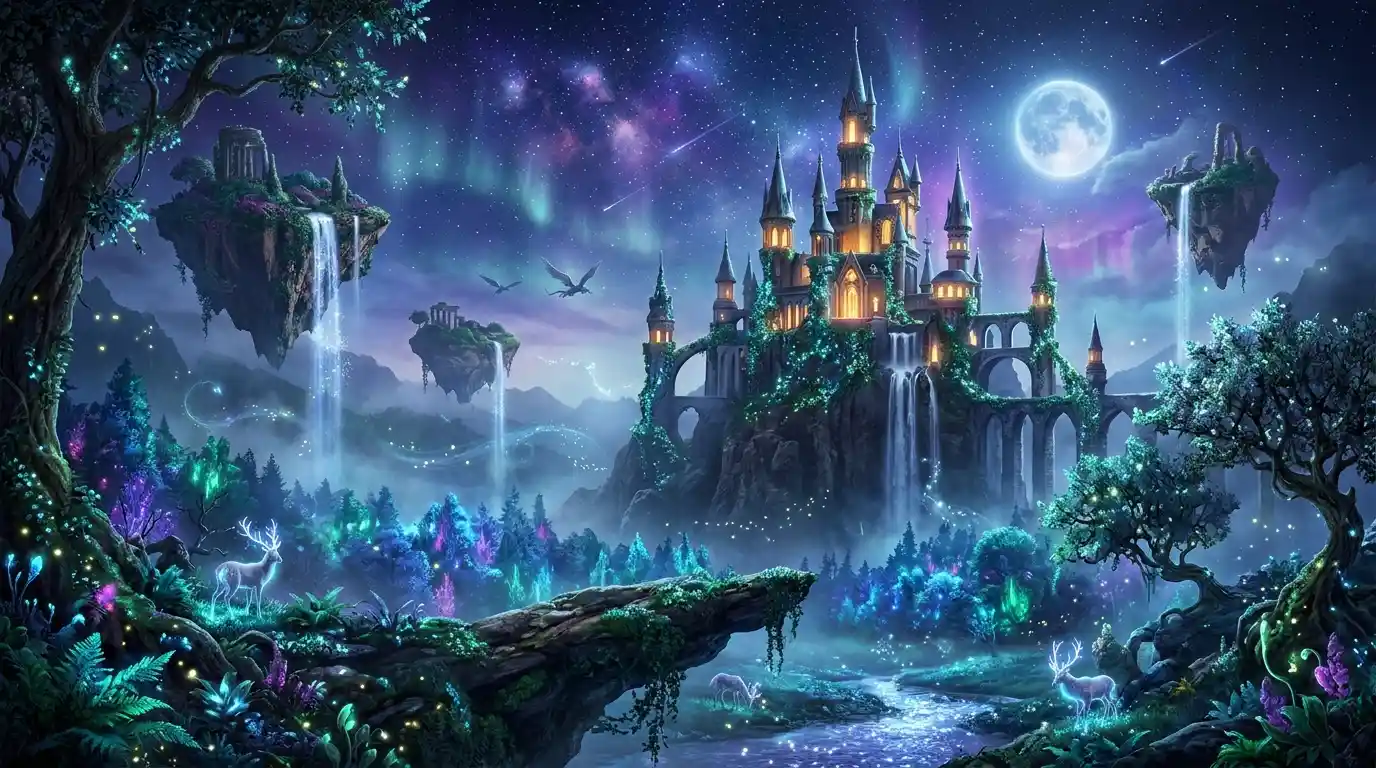
Synonyms of fantasy appear in daily life whenever our minds wander into creative dreams, wild imaginations, or unreal daytime wishes. Imagine sitting at your office desk on a rainy Monday while picturing yourself on a sunny tropical beach.
Understanding synonyms of fantasy helps you describe mental images, creative stories, and unrealistic expectations with exact precision. Repeating the same term makes your writing feel dull, so broadening your word choices opens up richer ways to express thoughts clearly.
Exploring synonyms of fantasy allows writers to capture distinct mental states, from playful daydreams to unhelpful illusions. Choosing the right word brings your storytelling, personal essays, and everyday conversations to life without sounding repetitive or overly formal.
Learning synonyms of fantasy gives students, bloggers, content writers, and daily English speakers essential tools for creative writing. Expanding your vocabulary sharpens your expression, improves your communication skills, and boosts your speaking confidence every single day.
What Does “Fantasy” Really Mean?
“Fantasy” refers to the activity of imagining impossible or improbable things, a pleasant daydream, or a genre of fiction featuring magical and supernatural elements. Native speakers use it to describe both creative literature and personal mental escape.
The word carries a versatile emotional tone depending on context. It can describe inspiring artistic creativity or unhelpful detachment from real life. Common contexts include fiction literature, movie genres, psychological discussions, daily ambition, and casual daydreaming.
- Part of Speech: Noun (also used as a verb or modifier)
- Simple Definition: An imagined idea, dream, or story that is not based on real-world facts or present reality.
Connotation
(Connotation is the emotional feeling, idea, or secondary meaning that a word carries beyond its literal definition.)
- Positive tone: Whimsical imagination, creative inspiration, magic, wonder, and pleasant dreams.
- Negative tone: Unrealistic delusion, denial of truth, false hope, and foolish escapism.
- Neutral tone: A mental image, fictional book genre, or speculative thought experiment.
Etymology
The word comes from Old French fantasie, deriving via Latin phantasia from Ancient Greek phantasia (meaning “imagination,” “appearance,” or “mental image”), which stems from phantazein (“to make visible”).
- Old English (450–1100): Not present in Old English (words like swefn for “dream” or hige for “mind” were used).
- Middle English (1100–1500): Entered as fantasie or phantasie, meaning a mental concept, phantom, or imaginary vision.
- Modern English (1500–Present): Evolved into modern “fantasy,” expanding from mental imagery to a dominant literary and cinematic genre.
Pronunciation & Structure
- US IPA: /ˈfæn.tə.si/
- UK IPA: /ˈfæn.tə.si/
- Syllables: fan-ta-sy
- Root: fant- (to show or make visible)
- Prefix: None
- Suffix: -y (noun-forming suffix creating an abstract noun)
Complete List of Synonyms
Daydream
Daydream (Noun) — US: /ˈdeɪ.driːm/ | UK: /ˈdeɪ.driːm/
Meaning: Pleasant thoughts that make you forget your present surroundings.
Examples:
- She lost herself in a quiet daydream during the afternoon lecture.
- His daydream about winning the marathon made him smile warmly.
Illusion
Illusion (Noun) — US: /ɪˈluː.ʒən/ | UK: /ɪˈluː.ʒən/
Meaning: A false idea, belief, or impression that is not real.
Examples:
- The magician created a clever illusion of floating on stage.
- He harbored no illusion about the difficulty of the upcoming exam.
Delusion
Delusion (Noun) — US: /dɪˈluː.ʒən/ | UK: /dɪˈluː.ʒən/
Meaning: A persistent false belief maintained despite strong evidence to the contrary.
Examples:
- Believing he could pass without studying was a complete delusion.
- The movie character suffered from a delusion of grandeur.
Imagination
Imagination (Noun) — US: /ɪˌmædʒ.əˈneɪ.ʃən/ | UK: /ɪˌmædʒ.ɪˈneɪ.ʃən/
Meaning: The ability of the mind to form new ideas or mental images.
Examples:
- Reading fiction books expands a child’s active imagination.
- Her vivid imagination helped her write exciting adventure stories.
Vision
Vision (Noun) — US: /ˈvɪʒ.ən/ | UK: /ˈvɪʒ.ən/
Meaning: An image produced by imagination or a clear concept of the future.
Examples:
- The architect shared his futuristic vision for the new park.
- She had a sudden vision of success that kept her working late.
Chimera
Chimera (Noun) — US: /kaɪˈmɪr.ə/ | UK: /kaɪˈmɪə.rə/
Meaning: A hope or wish that is impossible to achieve in reality.
Examples:
- Chasing easy wealth proved to be an impossible chimera.
- The dream of global harmony seemed like a distant chimera to him.
Figment
Figment (Noun) — US: /ˈfɪɡ.mənt/ | UK: /ˈfɪɡ.mənt/
Meaning: Something that exists only in the mind and is not real.
Examples:
- The ghost he saw turned out to be a figment of his imagination.
- Do not worry about monsters because they are just a fictional figment.
Phantom
Phantom (Noun) — US: /ˈfæn.təm/ | UK: /ˈfæn.təm/
Meaning: An apparition, ghost, or illusory image created by the mind.
Examples:
- Shadows in the dark hallway looked like a looming phantom.
- He chased the phantom of his past mistakes for many years.
Reverie
Reverie (Noun) — US: /ˈrev.ɚ.i/ | UK: /ˈrev.ər.i/
Meaning: A state of being pleasantly lost in one’s own thoughts.
Examples:
- Loud rain tapping on the window broke her peaceful reverie.
- He sat by the quiet lake, sunk deep in a calm reverie.
Fancy
Fancy (Noun) — US: /ˈfæn.si/ | UK: /ˈfæn.si/
Meaning: A sudden, superficial, or whimsical idea or desire.
Examples:
- Moving to a remote island was just a passing fancy for them.
- She took a sudden fancy to painting watercolor landscapes.
Whimsy
Whimsy (Noun) — US: /ˈwɪm.zi/ | UK: /ˈwɪm.zi/
Meaning: Playful, quaint, or fanciful behavior and creative ideas.
Examples:
- The children’s storybook was full of delightful humor and whimsy.
- Her home decor featured a touch of artistic whimsy and color.
Conception
Conception (Noun) — US: /kənˈsep.ʃən/ | UK: /kənˈsep.ʃən/
Meaning: The ability to form or understand mental concepts and ideas.
Examples:
- He had no conception of how complex the software build was.
- Her artistic conception of the building project won the award.
Invention
Invention (Noun) — US: /ɪnˈven.ʃən/ | UK: /ɪnˈven.ʃən/
Meaning: A creative story, idea, or device created by imagination.
Examples:
- The tale of the hidden dragon was a pure literary invention.
- Her story contained clever character inventions that entertained us.
Fabrication
Fabrication (Noun) — US: /ˌfæb.rɪˈkeɪ.ʃən/ | UK: /ˌfæb.rɪˈkeɪ.ʃən/
Meaning: An invented lie or untrue story made up to deceive.
Examples:
- The rumor about the company closing was a complete fabrication.
- He admitted that his excuse for arriving late was a fabrication.
Falsehood
Falsehood (Noun) — US: /ˈfɑːls.hʊd/ | UK: /ˈfɒls.hʊd/
Meaning: The state of being untrue or an invented false statement.
Examples:
- Spreading a harmful falsehood can ruin personal trust quickly.
- The article exposed several falsehoods in the report.
Mirage
Mirage (Noun) — US: /mɪˈrɑːʒ/ | UK: /mɪˈrɑːʒ/
Meaning: An optical illusion or an unrealistic hope that cannot be reached.
Examples:
- Thirsty travelers spotted a water mirage across the desert road.
- Quick riches in that market proved to be an economic mirage.
Pipe dream
Pipe dream (Noun) — US: /ˈpaɪp driːm/ | UK: /ˈpaɪp driːm/
Meaning: An unattainable, unrealistic plan or hope for the future.
Examples:
- Buying a private jet remains a total pipe dream for most people.
- His plan to build a house in a week was a silly pipe dream.
Castle in the air
Castle in the air (Noun) — US: /ˈkæs.əl ɪn ðə er/ | UK: /ˈkɑː.səl ɪn ðə eə/
Meaning: An impractical plan, dream, or hope that has no real basis.
Examples:
- Instead of building castles in the air, focus on daily steps.
- Her business idea was just a castle in the air without funding.
Will-o’-the-wisp
Will-o’-the-wisp (Noun) — US: /ˌwɪl.ə.ðəˈwɪsp/ | UK: /ˌwɪl.ə.ðəˈwɪsp/
Meaning: Something that deceives or misleads with false hope.
Examples:
- Finding instant fame online can be a dangerous will-o’-the-wisp.
- They chased a will-o’-the-wisp clue through the dark forest.
Hallucination
Hallucination (Noun) — US: /həˌluː.səˈneɪ.ʃən/ | UK: /həˌluː.sɪˈneɪ.ʃən/
Meaning: Seeing or hearing something that is not really present.
Examples:
- High fever caused him to experience a strange sensory hallucination.
- The desert heat created a vivid visual hallucination of rain.
Apparition
Apparition (Noun) — US: /ˌæp.əˈrɪʃ.ən/ | UK: /ˌæp.əˈrɪʃ.ən/
Meaning: A remarkable or unexpected ghost-like image that appears.
Examples:
- The old castle story mentions an eerie apparition in the tower.
- A strange misty apparition floated across the morning field.
Speculation
Speculation (Noun) — US: /ˌspek.jəˈleɪ.ʃən/ | UK: /ˌspek.jəˈleɪ.ʃən/
Meaning: Forming theories or conjectures without firm evidence.
Examples:
- There was intense speculation about who would win the election.
- Her story was based on wild speculation rather than facts.
Conjecture
Conjecture (Noun) — US: /kənˈdʒek.tʃɚ/ | UK: /kənˈdʒek.tʃə/
Meaning: An opinion or conclusion formed on the basis of incomplete information.
Examples:
- The news report was pure conjecture without confirmed sources.
- We cannot make legal decisions based on simple conjecture.
Surmise
Surmise (Noun) — US: /sɚˈmaɪz/ | UK: /səˈmaɪz/
Meaning: A supposition that something may be true without concrete proof.
Examples:
- My initial surmise was that the train had been delayed by rain.
- Her surmise about the plot turned out to be completely accurate.
Supposition
Supposition (Noun) — US: /ˌsʌp.əˈzɪʃ.ən/ | UK: /ˌsʌp.əˈzɪʃ.ən/
Meaning: An uncertain belief or idea assumed to be true.
Examples:
- The entire theory rests on a basic scientific supposition.
- We proceeded under the supposition that help would arrive soon.
Hypothesizing
Hypothesizing (Noun) — US: /haɪˈpɑː.θə.saɪ.zɪŋ/ | UK: /haɪˈpɒθ.ə.saɪ.zɪŋ/
Meaning: The act of making an educated assumption to explain facts.
Examples:
- Late night hypothesizing helped the team solve the puzzle.
- Science advances through constant testing and hypothesizing.
Thought-experiment
Thought-experiment (Noun) — US: /ˈθɑːt ɪkˌsper.ə.mənt/ | UK: /ˈθɔːt ɪkˌsper.ɪ.mənt/
Meaning: An exercise in which one imagines a scenario to analyze consequences.
Examples:
- Einstein used a clever thought experiment to explain physics concepts.
- The ethics class conducted a fascinating thought experiment today.
Mind’s-eye
Mind’s-eye (Noun) — US: /ˈmaɪndz.aɪ/ | UK: /ˈmaɪndz.aɪ/
Meaning: The mental faculty of conceiving visual images internally.
Examples:
- She pictured the mountain landscape clearly in her mind’s eye.
- The author brought the fictional city alive in the reader’s mind’s eye.
Brainchild
Brainchild (Noun) — US: /ˈbreɪn.tʃaɪld/ | UK: /ˈbreɪn.tʃaɪld/
Meaning: An original idea, plan, or invention produced by one person.
Examples:
- The local community garden was the brainchild of our neighbor.
- The software application was the brainchild of two young coders.
Fiction
Fiction (Noun) — US: /ˈfɪk.ʃən/ | UK: /ˈfɪk.ʃən/
Meaning: Literature describing imaginary events and people.
Examples:
- She enjoys reading historical fiction before going to bed.
- His claim of meeting a celebrity turned out to be pure fiction.
Myth
Myth (Noun) — US: /mɪθ/ | UK: /mɪθ/
Meaning: A traditional story or widely held false belief.
Examples:
- Ancient Greek myth explains natural events through epic gods.
- It is a popular myth that carrots grant night vision.
Legend
Legend (Noun) — US: /ˈledʒ.ənd/ | UK: /ˈledʒ.ənd/
Meaning: A traditional story popular within a culture but unverified.
Examples:
- Local legend speaks of hidden treasure buried near the cave.
- The tale of Robin Hood remains a famous English legend.
Fable
Fable (Noun) — US: /ˈfeɪ.bəl/ | UK: /ˈfeɪ.bəl/
Meaning: A short fictional story teaching a moral lesson using animals.
Examples:
- The fable of the tortoise and the hare teaches patience.
- Children love listening to bedtime fables with valuable lessons.
Parable
Parable (Noun) — US: /ˈpær.ə.bəl/ | UK: /ˈpær.ə.bəl/
Meaning: A simple story used to illustrate a moral or spiritual lesson.
Examples:
- The teacher shared an ancient parable about honesty and work.
- Readers reflected deeply on the meaning behind the short parable.
Romance
Romance (Noun) — US: /roʊˈmæns/ | UK: /rəʊˈmæns/
Meaning: A feeling of excitement associated with love or heroic adventure.
Examples:
- The old castle held an aura of historical romance and mystery.
- She loves reading classic tales of chivalry and medieval romance.
Storytelling
Storytelling (Noun) — US: /ˈstɔːr.iˌtel.ɪŋ/ | UK: /ˈstɔː.riˌtel.ɪŋ/
Meaning: The art or activity of writing or telling stories.
Examples:
- Visual storytelling makes marketing campaigns much more effective.
- The campfire was a great spot for evening storytelling.
Fairy-tale
Fairy-tale (Noun) — US: /ˈfer.i.teɪl/ | UK: /ˈfeə.ri.teɪl/
Meaning: A story for children about magical creatures and improbable events.
Examples:
- They had a fairy-tale wedding in a quiet mountain town.
- Her life story sounded like a classic rags-to-riches fairy-tale.
Wonderland
Wonderland (Noun) — US: /ˈwʌn.dɚ.lænd/ | UK: /ˈwʌn.də.lænd/
Meaning: An enchanted place full of wonderful and magical surprises.
Examples:
- Fresh winter snow turned the quiet forest into a white wonderland.
- The theme park felt like an exciting wonderland for young kids.
Dreamworld
Dreamworld (Noun) — US: /ˈdriːm.wɝːld/ | UK: /ˈdriːm.wɜːld/
Meaning: An imaginary ideal world existing only in thoughts.
Examples:
- Living in a peaceful dreamworld kept her calm during busy weeks.
- The artist painted colorful scenes from his private dreamworld.
Utopia
Utopia (Noun) — US: /juːˈtoʊ.pi.ə/ | UK: /juːˈtəʊ.pi.ə/
Meaning: An imagined place or state in which everything is perfect.
Examples:
- The book describes an eco-friendly utopia with clean power.
- Building a complete social utopia remains an impossible ideal.
Dystopia
Dystopia (Noun) — US: /dɪsˈtoʊ.pi.ə/ | UK: /dɪsˈtəʊ.pi.ə/
Meaning: An imagined state or society in which there is great suffering.
Examples:
- Modern science fiction often explores a bleak urban dystopia.
- The video game is set in a post-war dystopian world.
Escapism
Escapism (Noun) — US: /ɪˈskeɪ.pɪz.əm/ | UK: /ɪˈskeɪ.pɪz.əm/
Meaning: Seeking distraction and relief from unpleasant realities through fantasy.
Examples:
- Video games offer fun escapism after a long workday.
- Reading fantasy novels is a healthy form of weekend escapism.
Wish-fulfillment
Wish-fulfillment (Noun) — US: /ˈwɪʃ.fʊlˌfɪl.mənt/ | UK: /ˈwɪʃ.fʊlˌfɪl.mənt/
Meaning: The satisfaction of a desire through involuntary or voluntary dreams.
Examples:
- The movie hero winning against all odds was pure wish-fulfillment.
- Her story served as a heartwarming piece of personal wish-fulfillment.
Castle-building
Castle-building (Noun) — US: /ˈkæs.əl ˈbɪl.dɪŋ/ | UK: /ˈkɑː.səl ˈbɪl.dɪŋ/
Meaning: The practice of devising ambitious but impractical plans.
Examples:
- Stop idle castle-building and start working on your study goal.
- His plan for quick success was just empty castle-building.
Dreamland
Dreamland (Noun) — US: /ˈdriːm.lænd/ | UK: /ˈdriːm.lænd/
Meaning: An imaginary, unreal, or enchanting state or country.
Examples:
- The tired child drifted off to dreamland shortly after dinner.
- Soft music carried the audience away to a quiet dreamland.
Unreality
Unreality (Noun) — US: /ˌʌn.riˈæl.ə.t̬i/ | UK: /ˌʌn.riˈæl.ə.ti/
Meaning: The quality of being imaginary, impractical, or lacking substance.
Examples:
- Standing on the movie set gave her a strange feeling of unreality.
- The unreality of the news took a few days to process fully.
False-hope
False-hope (Noun) — US: /fɑːls hoʊp/ | UK: fɒls həʊp/
Meaning: An optimistic belief that has no realistic chance of fulfillment.
Examples:
- Do not give the team false hope about an early Friday release.
- The rumor created false hope among job applicants.
Daydreaming
Daydreaming (Noun) — US: /ˈdeɪ.driː.mɪŋ/ | UK: /ˈdeɪ.driː.mɪŋ/
Meaning: The ongoing act of indulging in pleasant fantasy thoughts while awake.
Examples:
- Constant daydreaming during work led to missed task deadlines.
- She enjoys quiet daydreaming while traveling on the morning train.
Self-deception
Self-deception (Noun) — US: /ˌself.dɪˈsep.ʃən/ | UK: /ˌself.dɪˈsep.ʃən/
Meaning: The act of allowing oneself to accept what is false as true.
Examples:
- Ignoring financial advice was an act of dangerous self-deception.
- Honesty with oneself prevents the trap of self-deception.
Head-in-the-clouds
Head-in-the-clouds (Noun) — US: /hed ɪn ðə klaʊdz/ | UK: /hed ɪn ðə klaʊdz/
Meaning: An informal state of being impractical, dreamy, and disconnected from reality.
Examples:
- His constant head-in-the-clouds attitude annoyed his practical team.
- Keep your head-in-the-clouds for ideas, but keep your feet on the ground.
Synonyms by Tone
Choosing the correct tone ensures your communication matches your exact intent:
- Positive Synonyms: Daydream, Reverie, Whimsy, Vision, Brainchild, Utopia, Wonderland
- Neutral Synonyms: Fantasy, Imagination, Fiction, Speculation, Hypothesis, Conception
- Negative Synonyms: Delusion, Illusion, Fabrication, Mirage, Pipe dream, Self-deception, Falsehood
- Playful / Informal Synonyms: Pipe dream, Castle in the air, Head-in-the-clouds, Fairy-tale
Mini Comparison
| Feature | Fantasy | Daydream | Delusion |
| Core Meaning | A broad imaginative concept, story, or genre | A temporary, pleasant waking dream or fantasy | A fixed false belief held despite proof of truth |
| Context | Literature, movies, art, personal desires | Daily routines, waiting rooms, quiet breaks | Psychology, medical contexts, serious mistakes |
| Tone | Creative / Neutral / Whimsical | Relaxed / Gentle / Pleasant | Critical / Negative / Serious |
| Best Usage | Describing fiction books, films, or creative ideas | Explaining casual waking dreams or lost focus | Describing harmful false beliefs or denial |
Context-Based Usage
Daily Conversation
In casual speech, native speakers prefer simple terms like “daydream,” “wishful thinking,” or “pipe dream.” Saying “That plan sounds like a pipe dream” is easy to understand.
Writing or Blogging
Bloggers and content creators use words like “reverie,” “whimsy,” or “escapism” to paint vivid pictures. It keeps articles lively, entertaining, and relatable.
Professional or Academic Tone
In formal research, business reports, and essays, use precise terms like “conjecture,” “speculation,” “supposition,” or “thought-experiment.”
Creative Writing
Storytellers, poets, and novelists draw on rich concepts like “brainchild,” “utopia,” “dystopia,” or “chimera” to build immersive fictional worlds.
Common Mistakes & Native Usage
Misuse Scenarios
- Confusing Fantasy with Delusion: “Fantasy” is usually harmless, creative, or fun. “Delusion” implies a dangerous or mistaken belief that ignores real facts.
- Overusing Pipe Dream in Formal Writing: Calling an official business plan a “pipe dream” sounds overly casual. Use “unrealistic proposition” or “impractical concept” instead.
Register Notes
In everyday spoken English, native speakers choose simple terms like “dream” or “story.” Reserve complex literary terms like “chimera” or “surmise” for formal essays.
Real-Life Mini Scenarios
- Workplace: “Designing an automated workflow was the manager’s favorite brainchild this year.”
- Social Situations: “She snapped out of her daydream when her friend waved a hand in front of her.”
- Media & Entertainment: “Sci-fi movies offer thrilling escapism by taking viewers into distant worlds.”
- Storytelling: “The knight traveled through an enchanted wonderland to find the hidden sword.”
Conclusion
Mastering synonyms of fantasy enriches your daily communication, allowing you to choose words that perfectly match your desired context and tone.
Varying your vocabulary keeps your writing fresh and engaging, whether you are drafting academic essays, business emails, or casual blog posts.
By learning synonyms of fantasy, you can replace repetitive terms with precise alternatives to communicate creative ideas effortlessly and connect better with your audience.
Try using two new synonyms of fantasy from this guide in your next email or journal entry to permanently sharpen your language skills!
Interactive Practice Exercise
Multiple-Choice Questions
- Which synonym best describes a pleasant, temporary waking dream during a quiet afternoon?
- A) Daydream
- B) Delusion
- C) Falsehood
- D) Fabrication
- An impossible hope or unrealistic plan that has no real foundation is called a:
- A) Pipe dream
- B) Brainchild
- C) Conception
- D) Speculation
- What term refers to a harmful false belief maintained despite overwhelming contrary evidence?
- A) Delusion
- B) Reverie
- C) Whimsy
- D) Fable
- An original creative idea or plan produced by a specific person is their:
- A) Brainchild
- B) Mirage
- C) Hallucination
- D) Apparition
- Which word describes an imagined perfect society where everything is ideal?
- A) Utopia
- B) Dystopia
- C) Mirage
- D) Chimera
- Seeking distraction from stressful daily reality through books or games is called:
- A) Escapism
- B) Fabrication
- C) Falsehood
- D) Surmise
- What term describes an optical illusion seen in desert heat that looks like water?
- A) Mirage
- B) Brainchild
- C) Reverie
- D) Parable
- A short fictional story that uses animal characters to teach a moral lesson is a:
- A) Fable
- B) Pipe dream
- C) Chimera
- D) Delusion
- Forming conclusions without complete facts or concrete evidence is called:
- A) Speculation
- B) Reverie
- C) Whimsy
- D) Apparition
- What word best describes a peaceful state of being lost in pleasant thoughts?
- A) Reverie
- B) Delusion
- C) Fabrication
- D) Falsehood
- An invented lie created to deceive someone intentionally is a:
- A) Fabrication
- B) Daydream
- C) Whimsy
- D) Brainchild
- The mental faculty of visualizing images internally is known as the mind’s:
- A) Eye
- B) Mirage
- C) Fable
- D) Delusion
Application Task
Write one original sentence about a personal ambition, creative story, or movie using the synonym reverie.
Answer Key
Answer Key: 1-A | 2-A | 3-A | 4-A | 5-A | 6-A | 7-A | 8-A | 9-A | 10-A | 11-A | 12-A

I am AAMER SHAHZAD, an MPhil graduate with 8 years of teaching experience in English language and vocabulary. At PrayIstic, I help learners, writers, and professionals expand their vocabulary, master synonyms, and improve communication. My guides and examples are clear, practical, and easy to apply, making English learning simple and enjoyable. Whether for academics, blogging, or daily conversation, PrayIstic is your go-to resource for enhancing English skills and writing with confidence.