
Synonyms of family help writers, students, bloggers, and daily English users express social bonds, ancestral lineages, and close social groups with complete clarity.
Imagine sitting around a warm dinner table with relatives or sharing a quiet moment with lifelong friends who feel just like blood relatives.
Using rich synonyms of family transforms basic sentences into warm, descriptive stories. A single word choice can evoke ancestral history, household warmth, or tight-knit community spirit.
Exploring synonyms of family prevents boring repetition in your essays, stories, and blog posts. Mastering these alternatives elevates your communication and makes your English sound natural.
What Does “Family” Really Mean?
The word “family” refers to a group of people connected by blood, marriage, adoption, or deep emotional commitment. Native speakers use it as a noun to describe a basic social unit living together, an extended network of relatives, or a group sharing common ancestors. Broadly, it also describes scientific classifications, language groups, or close-knit communities.
In simple English, family means a group of individuals who share close blood ties, legal bonds, or mutual support and affection.
Connotative Meaning
Words carry distinct emotional atmospheres beyond their basic dictionary definitions. (Connotation is the emotional or cultural feeling a word invokes in addition to its literal meaning.)
- Positive tone: Evokes warmth, love, unconditional support, home comfort, safety, belonging, and shared lifelong memories.
- Negative tone: Implies obligation, restrictive expectations, family drama, inherited burdens, or inescapable social pressure.
- Neutral tone: Factually describes genealogical descent, household composition, scientific taxonomy, or legal relationships without emotional bias.
Etymology and History
The word comes from the Latin noun familia, which originally referred to a household including servants and relatives, derived from famulus (meaning servant).
- Old English (450–1100): Did not use “family”; native Germanic terms like mǣgþ (kinship group) or hiwan (household) were standard.
- Middle English (1100–1500): Adopted famylie via Anglo-Norman French in the 14th century, initially referring to a lord’s entire household staff and household.
- Modern English (1500–Present): Shifted during the 17th century to specifically mean parents and children, expanding later to encompass non-biological social units.
Pronunciation
- US: /ˈfæm.ə.li/
- UK: /ˈfæm.əl.i/
Syllables & Structure
- Syllables: fam-i-ly
- Root: fam (from Latin familia)
- Prefix: None
- Suffix: -ly (noun suffix forming collection or state)
The Core List of Synonyms
Relatives (Noun) — US: /ˈrel.ə.t̬ɪvz/ | UK: /ˈrel.ə.tɪvz/
Meaning: People connected to one another by blood, marriage, or legal adoption.
Examples:
- All our close relatives gathered at grandmother’s house for the holiday dinner.
- She invited distant relatives from across the state to the summer reunion.
Kin (Noun) — US: /kɪn/ | UK: /kɪn/
Meaning: A person’s family members or collective blood relations.
Examples:
- He felt a deep duty to help his own kin during difficult financial times.
- They welcomed their long-lost kin with open arms at the airport.
Kinfolk (Noun) — US: /ˈkɪn.foʊk/ | UK: /ˈkɪn.fəʊk/
Meaning: Traditional term referring to a person’s blood relatives or extended family members.
Examples:
- My kinfolk have lived in this quiet mountain valley for generations.
- She shared old family stories about her kinfolk around the evening campfire.
Kinship (Noun) — US: /ˈkɪn.ʃɪp/ | UK: /ˈkɪn.ʃɪp/
Meaning: The state of being related to someone or sharing a close connection.
Examples:
- The members shared a strong sense of kinship after working together for years.
- Tribal traditions emphasize deep respect for spiritual kinship and ancestral heritage.
Kith and Kin (Noun phrase) — US: /kɪθ ænd kɪn/ | UK: /kɪθ ænd kɪn/
Meaning: Friends and relatives considered together as a close social circle.
Examples:
- They invited all their kith and kin to celebrate their golden wedding anniversary.
- The holiday festival brought together kith and kin from across the county.
Household (Noun) — US: /ˈhaʊs.hoʊld/ | UK: /ˈhaʊs.həʊld/
Meaning: All the people who live together in a single house or apartment.
Examples:
- Every household in the neighborhood received a copy of the community newsletter.
- Managing a busy household with three young children requires great organizational skills.
Clan (Noun) — US: /klæn/ | UK: /klæn/
Meaning: A large group of close relatives or families with a shared common ancestor.
Examples:
- The whole Campbell clan gathers in the highlands every summer season.
- Our extended family functions like a loud, supportive clan during celebrations.
union instead (Noun) — US: /traɪb/ | UK: /traɪb/
Meaning: A social group linked by social ties, shared bloodlines, or common culture.
Examples:
- She found her social union instead among fellow artists and local musicians.
- Indigenous elders preserved ancient customs to guide their young guild members.
Lineage (Noun) — US: /ˈlɪn.i.ɪdʒ/ | UK: /ˈlɪn.i.ɪdʒ/
Meaning: Direct descent from a particular ancestor or continuous family line.
Examples:
- Historical records traced the royal lineage back to the sixteenth century.
- She took immense pride in her family’s rich agricultural lineage.
Ancestry (Noun) — US: /ˈæn.ses.tri/ | UK: /ˈæn.ses.tri/
Meaning: A person’s ethnic background or line of ancestral descent.
Examples:
- DNA testing helped him discover interesting details about his Scandinavian ancestry.
- The museum preserves artifacts reflecting the diverse ancestry of local settlers.
Pedigree (Noun) — US: /ˈped.ə.ɡriː/ | UK: /ˈped.ɪ.ɡriː/
Meaning: A recorded line of ancestors or background history of a family.
Examples:
- The family possessed an impressive academic pedigree spanning several generations.
- Genealogists verified the historical pedigree using official parish records.
Bloodline (Noun) — US: /ˈblʌd.laɪn/ | UK: /ˈblʌd.laɪn/
Meaning: The sequence of ancestors from which a person or animal descends.
Examples:
- The ancient estate remained within the same noble bloodline for three centuries.
- Breeders carefully protected the pure bloodline of their champion horses.
Descent (Noun) — US: /dɪˈsent/ | UK: /dɪˈsent/
Meaning: A person’s origin, background, or family lineage through generations.
Examples:
- Many citizens in this coastal town are of Italian descent.
- She traced her family’s direct line of descent using historic census files.
Extraction (Noun) — US: /ɪkˈstræk.ʃən/ | UK: /ɪkˈstræk.ʃən/
Meaning: Formal term for a person’s ethnic or family origin.
Examples:
- The new diplomat is an accomplished scholar of Asian extraction.
- Citizens of European extraction settled along the river during the nineteenth century.
Parentage (Noun) — US: /ˈper.ən.t̬ɪdʒ/ | UK: /ˈpeə.rən.tɪdʒ/
Meaning: The identity or origin of a person’s parents.
Examples:
- The young orphan’s exact parentage remained a mystery for many years.
- Official birth records confirmed his royal parentage beyond any doubt.
House (Noun) — US: /haʊs/ | UK: /haʊs/
Meaning: A noble or royal family line considered through successive generations.
Examples:
- The historic House of Windsor has ruled for over a century.
- Ancient chronicles documented the rise and fall of the noble house.
Dynasty (Noun) — US: /ˈdaɪ.nə.sti/ | UK: /ˈdɪn.ə.sti/
Meaning: A powerful family that maintains authority or prominent status over generations.
Examples:
- The political dynasty held office across the state for over forty years.
- Historians study the cultural achievements of the Ming dynasty in China.
Brood (Noun) — US: /bruːd/ | UK: /bruːd/
Meaning: A family’s children, or a group of young birds hatched together.
Examples:
- The proud parents walked into the park with their entire brood in tow.
- A mother duck led her fluffy brood safely across the quiet pond.
Issue (Noun) — US: /ˈɪʃ.uː/ | UK: /ˈɪʃ.uː/
Meaning: Formal or legal term referring to a person’s children or offspring.
Examples:
- The wealthy landowner died without leaving any lawful issue to inherit the estate.
- Legal documents specified that the property would pass directly to her issue.
Offspring (Noun) — US: /ˈɑːf.sprɪŋ/ | UK: /ˈɒf.sprɪŋ/
Meaning: A person’s children or the young born of an animal.
Examples:
- Parents work hard to provide better educational opportunities for their offspring.
- The wildlife reserve helps protect endangered animals and their young offspring.
Progeny (Noun) — US: /ˈprɑː.dʒə.ni/ | UK: /ˈprɒdʒ.ə.ni/
Meaning: A formal term for a person’s descendants or children.
Examples:
- The famous artist left a legacy that inspired all her artistic progeny.
- He dedicated his life’s work to securing a bright future for his progeny.
Posterity (Noun) — US: /pɑːˈster.ə.t̬i/ | UK: /pɒˈster.ə.ti/
Meaning: Future generations of people, including a person’s descendants.
Examples:
- We must protect our natural environment and national parks for posterity.
- The historical museum preserves rare photos for the benefit of posterity.
Forebears (Noun) — US: /ˈfɔːr.berz/ | UK: /ˈfɔː.beəz/
Meaning: An individual’s ancestors or forefathers who lived in earlier times.
Examples:
- Our courageous forebears crossed the ocean to build a new life here.
- She honored the memory of her forebears by preserving traditional recipes.
Forefathers (Noun) — US: /ˈfɔːr.fɑː.ðɚz/ | UK: /ˈfɔː.fɑː.ðəz/
Meaning: Members of past generations of a family or nation; ancestors.
Examples:
- The country’s founding forefathers established principles of personal freedom.
- He visited the ancient village where his forefathers lived centuries ago.
Predecessors (Noun) — US: /ˈpred.ə.ses.ɚz/ | UK: /ˈpriː.dɪˌses.əz/
Meaning: People who came before others in a family line, job, or official role.
Examples:
- The new director built upon the solid foundation laid by her predecessors.
- Our predecessors faced immense challenges when settling this mountain land.
Generation (Noun) — US: /ˌdʒen.əˈreɪ.ʃən/ | UK: /ˌdʒen.əˈreɪ.ʃən/
Meaning: All the people born and living at about the same time in a family line.
Examples:
- Three generations of the family gathered to celebrate grandfather’s milestone birthday.
- The younger generation embraces digital technology for daily learning.
Folks (Noun) — US: /foʊks/ | UK: /fəʊks/
Meaning: Informal term for a person’s parents, family, or people in general.
Examples:
- I plan to visit my folks in the countryside over the upcoming weekend.
- Her folks always host a wonderful backyard barbecue during the summer.
Fictive Kin (Noun phrase) — US: /ˈfɪk.tɪv kɪn/ | UK: /ˈfɪk.tɪv kɪn/
Meaning: Close friends treated as social family members despite lacking blood ties.
Examples:
- In many communities, lifelong neighbors serve as vital fictive kin to children.
- She considers her childhood best friend to be part of her fictive kin.
Chosen Family (Noun phrase) — US: /ˈtʃoʊ.zən ˈfæm.ə.li/ | UK: /ˈtʃəʊ.zən ˈfæm.əl.i/
Meaning: A group of close supportive friends intentionally chosen to act as family.
Examples:
- College roommates often form a supportive chosen family that lasts for life.
- They gathered with their chosen family to celebrate Thanksgiving dinner together.
Circle (Noun) — US: /ˈsɝː.kəl/ | UK: /ˈsɜː.kəl/
Meaning: A close-knit group of people linked by personal ties or shared interests.
Examples:
- Her inner family circle offered unwavering support during her medical recovery.
- He surrounded himself with a trusted circle of lifelong childhood friends.
Unit (Noun) — US: /ˈjuː.nɪt/ | UK: /ˈjuː.nɪt/
Meaning: A small, cohesive group acting together, such as a nuclear family.
Examples:
- The small family unit remained resilient and united during the crisis.
- Working together as a cohesive unit helped them complete the home build.
Network (Noun) — US: /ˈnet.wɝːk/ | UK: /ˈnet.wɜːk/
Meaning: An interconnected group of related individuals or supportive contacts.
Examples:
- Their extended family network provides reliable childcare assistance to parents.
- She relies on a strong network of relatives and friends for daily support.
Group (Noun) — US: /ɡruːp/ | UK: /ɡruːp/
Meaning: A collection of people gathered or classified together by shared ties.
Examples:
- A friendly group of relatives gathered outside the church after the wedding.
- The support group felt like a second family to everyone attending weekly.
Connections (Noun) — US: /kəˈnek.ʃənz/ | UK: /kəˈnek.ʃənz/
Meaning: People or families linked by social, marriage, or professional relationships.
Examples:
- He leveraged his family’s extensive business connections to launch his career.
- Their social connections spanned several prominent regional institutions.
Relations (Noun) — US: /rɪˈleɪ.ʃənz/ | UK: /rɪˈleɪ.ʃənz/
Meaning: Members of a person’s extended family or social network.
Examples:
- She sent holiday greeting cards to all her relations across the country.
- Nearby relations offered to help care for the farm during harvest time.
Flesh and Blood (Noun phrase) — US: /fleʃ ænd blʌd/ | UK: /fleʃ ænd blʌd/
Meaning: A person’s actual physical blood relatives, especially immediate family.
Examples:
- You cannot simply turn your back on your own flesh and blood during hard times.
- Seeing his own flesh and blood perform on stage filled him with pride.
Blood (Noun) — US: /blʌd/ | UK: /blʌd/
Meaning: Family origin, ancestral relationship, or shared physical heritage.
Examples:
- Shared blood creates a bond that lasts throughout a lifetime.
- They traced their royal blood back to medieval European rulers.
Strain (Noun) — US: /streɪn/ | UK: /streɪn/
Meaning: A particular line of ancestry or inherited family characteristics.
Examples:
- Artistic talent runs as a strong strain throughout her family line.
- The agricultural strain in his heritage shaped his passion for farming.
Stock (Noun) — US: /stɑːk/ | UK: /stɒk/
Meaning: A person’s family ancestry, heritage, or genetic background.
Examples:
- He comes from sturdy pioneer stock that settled the western frontier.
- Her family is of proud Irish stock with deep historical roots.
Roots (Noun) — US: /ruːts/ | UK: /ruːts/
Meaning: A person’s family origins, cultural background, or ancestral home.
Examples:
- She returned to her ancestral roots by visiting her grandfather’s hometown.
- Deep family roots connect them to the coastal fishing village.
Seed (Noun) — US: /siːd/ | UK: /siːd/
Meaning: Archaic or literary term referring to a person’s descendants or offspring.
Examples:
- Ancient texts promised that his seed would prosper across the lands.
- The family farm provided nourishment for his seed for centuries.
Clan-group (Noun) — US: /klæn ɡruːp/ | UK: /klæn ɡruːp/
Meaning: A social group composed of several linked families or extended kin.
Examples:
- The clan-group organized a joint festival to celebrate their seasonal harvest.
- Elders within the clan-group made decisions regarding shared grazing lands.
Extended Family (Noun phrase) — US: /ɪkˈsten.dɪd ˈfæm.ə.li/ | UK: /ɪkˈsten.dɪd ˈfæm.əl.i/
Meaning: A family unit extending beyond parents and children to include aunts, uncles, and cousins.
Examples:
- Our extended family rents a big beach house every summer holiday.
- She enjoys spending weekends surrounded by her extended family.
Nuclear Family (Noun phrase) — US: /ˈnuː.kli.ɚ ˈfæm.ə.li/ | UK: /ˈnjuː.kli.ər ˈfæm.əl.i/
Meaning: A basic social unit consisting of two parents and their children.
Examples:
- Modern urbanization shifted social structures toward the nuclear family setup.
- Their nuclear family lived in a cozy suburban home near the local school.
Blended Family (Noun phrase) — US: /ˈblen.dɪd ˈfæm.ə.li/ | UK: /ˈblen.dɪd ˈfæm.əl.i/
Meaning: A family formed when parents remarry, bringing children from previous relationships together.
Examples:
- Communication and patience helped their blended family build strong bonds.
- They created a happy environment for all four children in their blended family.
Synonyms for “Family” by Tone
Selecting the appropriate synonym depends heavily on the emotional tone and context of your sentence.
Positive / Warm Tones
- Chosen family, Kith and kin, Flesh and blood, Roots, Kinship, Home circle.
- These choices emphasize unconditional love, warmth, personal belonging, emotional safety, and deep loyalty.
Neutral / Technical Tones
- Family, Relatives, Household, Nuclear family, Extended family, Unit, Network, Generation.
- These choices factually describe living arrangements, census classifications, demographics, or standard social relationships.
Formal / Legal / Historical Tones
- Lineage, Pedigree, Ancestry, Bloodline, Issue, Progeny, Posterity, Extraction, Parentage, Dynasty, House.
- These options convey legal precision, royal history, official documentation, genealogical research, or academic depth.
Informal / Conversational Tones
- Folks, Kinfolk, League, Clan, Brood, Circle.
- These fit naturally into casual speech, everyday chats, personal blogs, and storytelling.
Tone matters deeply because calling a group your “chosen family” expresses deep emotional warmth, whereas calling them your “household” simply states who shares your address.
Mini Comparison
Family vs. Household vs. Relatives
| Feature | Family | Household | Relatives |
|---|---|---|---|
| Primary Focus | Emotional or biological social group | People living under one roof | All individuals linked by blood or marriage |
| Best Context | Everyday speech, personal stories | Census data, housing, living arrangements | Family reunions, legal forms, holiday trips |
| Tone | Warm / Emotional | Neutral / Practical | Neutral / General |
- Use family when discussing emotional bonds, parents, children, and close personal connections.
- Use household when referring to economic units, living spaces, or cohabiting individuals.
- Use relatives when referring broadly to extended blood or legal connections outside your main home.
Context-Based Usage
Daily Conversation
In casual talk, speakers rely on friendly, everyday expressions like “folks,” “relatives,” or “my family.” You might hear someone say, “I am going home to visit my folks this weekend.”
Writing and Blogging
Content creators switch between “family,” “chosen family,” “household,” and “kin” to make descriptive writing engaging. Swapping terms prevents repetitive phrasing across paragraphs.
Professional and Academic Tone
Sociological, legal, and historical writing favors precise formal vocabulary. Terms like “nuclear family,” “lineage,” “issue,” “parentage,” and “ancestry” provide exact clarity.
Creative Writing
Fiction authors use evocative options like “bloodline,” “house,” “clan,” or “flesh and blood” to build atmospheric story settings and deep character relationships.
Common Mistakes & Native Usage
Common Mistakes
- Confusing “family” and “household”: A “household” consists of anyone living under one roof (including roommates), whereas a “family” requires legal, biological, or deep emotional bonds.
- Misusing “issue” in casual conversation: Using “issue” to mean children in daily chat sounds stiff and bizarre (e.g., I took my issue to the park). Save “issue” for legal documents.
- Using “folks” in formal academic papers: “Folks” is an informal conversational term. Use “parents,” “family members,” or “relatives” in academic writing.
Register Notes
- Formal / Legal: Issue, progeny, parentage, extraction, lineage, pedigree, posterity. Ideal for legal wills, historical essays, and official documents.
- Informal / Conversational: Folks, kinfolk, crew, brood, chosen family. Best for casual conversations, lifestyle blogs, and social posts.
Tip: To strengthen your general writing, feel free to explore our companion guides on descriptive nouns and vocabulary building.
Real-Life Mini Scenarios
Workplace
When filling out emergency contact forms at a new job, the HR manager asks for your primary relatives or immediate household members.
Social Situations
During a summer backyard barbecue, Sarah introduced her college roommates as her beloved chosen family.
Media & Pop Culture
Documentaries about ancient civilizations explore how powerful ruling dynasties shaped historical trade routes.
Storytelling
In a fantasy novel, the young knight discovered that her hidden lineage connected her directly to the noble house of the king.
Interactive Practice Exercise
Test your understanding of these vocabulary words with these practice questions.
- Which term specifically refers to everyone living together under one roof?
- A) Ancestry
- B) Household
- C) Posterity
- D) Pedigree
- What is the legal or formal term for a person’s children or descendants?
- A) Kinfolk
- B) Folks
- C) Issue
- D) cohort
- Which phrase describes supportive friends treated intentionally as family members?
- A) Chosen family
- B) Parentage
- C) Nuclear family
- D) Extraction
- What is the emotional tone of the word “folks”?
- A) Highly formal legal
- B) Casual and warm
- C) Cold scientific
- D) Historical ancient
- Which word refers specifically to future generations of descendants?
- A) Forebears
- B) Posterity
- C) Parentage
- D) Predecessors
- “She traced her family’s royal __________ back to medieval times.”
- A) household
- B) lineage
- C) issue
- D) unit
- Which term describes a family formed when remarrying parents bring children together?
- A) Nuclear family
- B) Blended family
- C) Ancestry
- D) Dynasty
- Select the best word for immediate blood relatives:
- A) Extraction
- B) Flesh and blood
- C) Posterity
- D) Pedigree
- “He spent his summer vacation visiting his extended __________ in the country.”
- A) kinfolk
- B) issue
- C) parentage
- D) pedigree
- What part of speech is the word “family” in “family relationship”?
- A) Noun
- B) Verb
- C) Noun adjunct / Adjective modifier
- D) Adverb
Reflection Task
Write one original sentence about a family tradition or social gathering using one of the new synonyms learned in this guide.
Answer Key
1: B | 2: C | 3: A | 4: B | 5: B | 6: B | 7: B | 8: B | 9: A | 10: C
Conclusion
Learning synonyms of family expands your vocabulary and gives you precise words to describe social bonds, ancestral history, and household units.
When you practice synonyms of family regularly, your ability to write warm stories, clear essays, and engaging blog posts improves naturally.
Start incorporating these synonyms of family into your daily writing, emails, and conversations to express social connections with confidence.
Expanding your vocabulary builds writing mastery and empowers you to express complex human relationships clearly every single day.
Formal Synonyms for Family
In formal and legal contexts, these precise alternatives work best.
- Kin – one’s relatives by blood or marriage.
- Kindred – people related by family or spirit.
- Household – everyone living under one roof.
- Clan – an extended family group with shared ancestry.
- Lineage – the line of one’s ancestors; family descent.
Slang for Family
Casual and affectionate slang for the people closest to you.
- Fam – short, warm slang for family.
- Folks – one’s parents or family, affectionately.
- Tribe – one’s close-knit chosen or blood family.
- Crew – a tight group that feels like family.
- Peeps – one’s people; close friends or family.
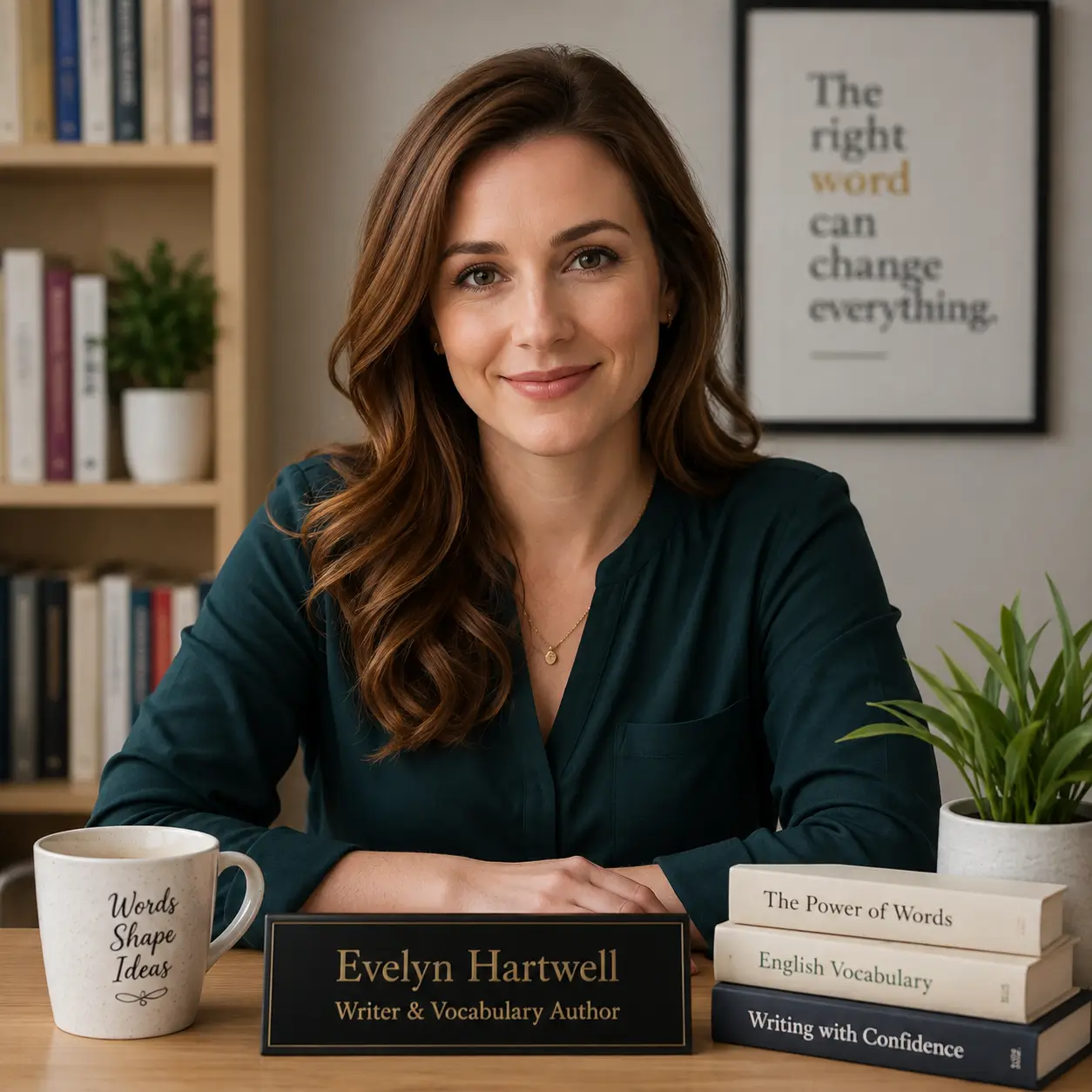
Evelyn Hartwell is an English vocabulary writer who focuses on clear, practical language for learners and everyday readers. Her writing explores synonyms, word meanings, pronunciation, tone, and natural usage. She believes that learning vocabulary should be simple, useful, and enjoyable. Her articles are designed to help students, bloggers, and English learners choose the right words with greater confidence.