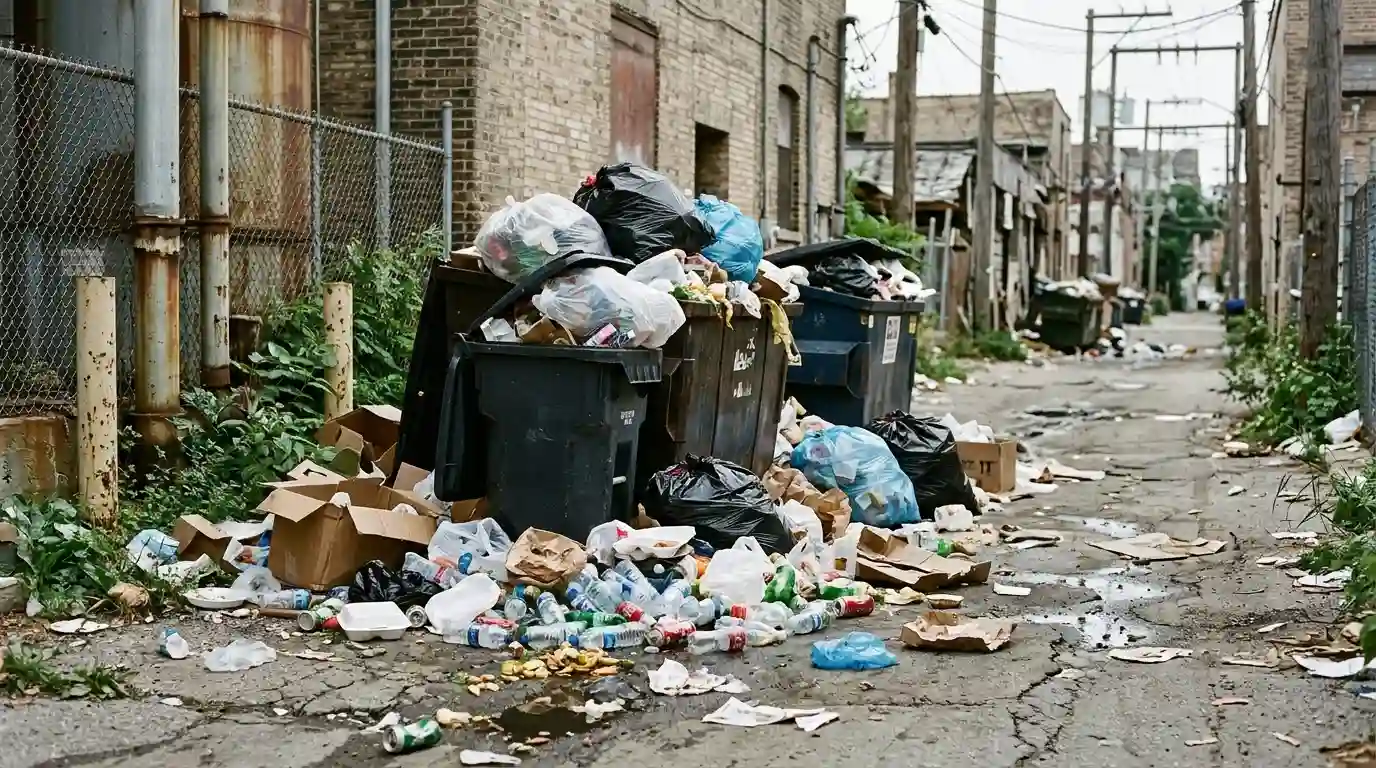
Synonyms for waste help you describe thrown-away trash, lost time, and careless spending without repeating one word. Imagine tossing fresh leftovers into the bin after dinner.
Learning synonyms for waste gives you sharper words for environmental essays, finance articles, and daily chats. Native speakers use this word daily because saving time and resources matters.
Students, bloggers, content writers, and daily English users all benefit from strong synonyms for waste. Exact words sharpen essays, keep blogs engaging, and make your speech clear.
What Does “Waste” Really Mean?
The word waste functions as a verb, a noun, and an adjective. As a verb, it means to use money, time, food, or energy carelessly without getting good value. As a noun, it refers to unwanted trash, scraps, or unused land.
Native speakers hear this word as critical, practical, and urgent. It signals loss, inefficiency, or environmental concern depending on the sentence.
You will hear this word in many everyday situations:
- Throwing away uneaten food after a big meal
- Spending hours scrolling on your phone instead of studying
- Leaving lights and air conditioning running in an empty room
- Recycling plastic bottles and household waste properly
Connotative Meaning
Connotation (the hidden emotional feeling or cultural association a word carries beyond its literal dictionary definition) shifts slightly between everyday habits and environmental topics.
- Positive tone: Rarely positive, though people use it playfully when joking about “wasting” a sunny afternoon relaxing on the beach.
- Negative tone: Strongly disapproving, regretful, or critical when describing squandered money, ruined food, or pollution.
- Neutral tone: Objective and technical in science, engineering, and city planning when discussing solid waste or wastewater.
Etymology and Word History
The word waste comes from the Old North French wast and Latin vastus, meaning “empty, desolate, or uncultivated.” Originally, it described barren land before shifting to careless spending.
- Old English (450–1100): The word did not exist yet; speakers used native terms like westan (to lay desolate) and spillan (to destroy or squander).
- Middle English (1100–1500): After the Norman Conquest, English adopted waste from Anglo-French to describe deserted land and reckless destruction of property.
- Modern English (1500–Present): By the 16th century, waste meant squandering money, time, or food, as well as household rubbish.
Pronunciation and Structure
- US IPA: /weɪst/
- UK IPA: /weɪst/
- Syllables: waste (one single syllable)
Affixation Pattern:
- Root: waste (base verb, noun, and adjective)
- Prefix: None
- Suffix: None (takes standard inflections -ed, -ing, -s, and -ful in derivatives)
46 Common Synonyms for Waste
Each synonym below matches a core meaning of waste whether referring to squandering resources, throwing things away, physical trash, or barren land.
Squander (Verb) — US: /ˈskwɑːn.dɚ/ | UK: /ˈskwɒn.də/
Meaning: Means to spend money, time, or opportunities recklessly and foolishly.
Examples:
- He squandered his entire summer savings on video games and takeout food.
- Don’t squander your talent by refusing to practice before the audition.
Misuse (Verb) — US: /ˌmɪsˈjuːz/ | UK: /ˌmɪsˈjuːz/
Meaning: Refers to using something wrongly, carelessly, or for the wrong purpose.
Examples:
- Misusing company funds will quickly cost an employee their job.
- You can damage the blender motor if you misuse it to crush hard ice.
Frivolous / Frivol Away (Phrasal Verb) — US: /ˈfrɪv.əl əˈweɪ/ | UK: /ˈfrɪv.əl əˈweɪ/
Meaning: Describes wasting time or money bit by bit on silly, unimportant things.
Examples:
- She realized she had frivoled away three hours watching short clips online.
- Small daily impulse buys can frivol away a healthy monthly budget.
Dissipate (Verb) — US: /ˈdɪs.ə.peɪt/ | UK: /ˈdɪs.ɪ.peɪt/
Meaning: Means to scatter or waste energy, money, or attention until nothing remains.
Examples:
- Arguing over tiny details will only dissipate the team’s creative energy.
- He dissipated his inheritance within two years of moving to the city.
Lavish (Verb) — US: /ˈlæv.ɪʃ/ | UK: /ˈlæv.ɪʃ/
Meaning: Means to spend or give money, praise, or attention in excessive, extravagant amounts.
Examples:
- They lavished thousands of dollars on flowers for a single evening party.
- The grandparents lavished gifts on the newborn baby all winter.
Splurge (Verb) — US: /splɝːdʒ/ | UK: /splɜːdʒ/
Meaning: An informal verb meaning to spend a lot of money extravagantly on a treat.
Examples:
- We decided to splurge on front-row concert tickets for our anniversary.
- Sometimes it feels nice to splurge on a fancy pastry after a hard week.
Blow (Verb) — US: /bloʊ/ | UK: /bləʊ/
Meaning: A casual slang verb meaning to waste money or ruin a great chance quickly.
Examples:
- He blew his entire paycheck at the mall in one afternoon.
- We had a clear lead, so let’s not blow our chance to win now.
Burn Through (Phrasal Verb) — US: /bɝːn θruː/ | UK: /bɜːn θruː/
Meaning: Means to use up money, fuel, or supplies at an alarmingly fast rate.
Examples:
- That old pickup truck burns through gasoline on steep mountain roads.
- New startups often burn through cash before they earn steady profits.
Drain (Verb) — US: /dreɪn/ | UK: /dreɪn/
Meaning: Describes gradually emptying or exhausting energy, money, or resources.
Examples:
- Leaving background apps open will drain your phone battery by noon.
- Constant negative news can drain your motivation during the week.
Deplete (Verb) — US: /dɪˈpliːt/ | UK: /dɪˈpliːt/
Meaning: Means to reduce a supply of resources, energy, or money until very little is left.
Examples:
- Overfishing can severely deplete local ocean populations within a few years.
- Long hospital shifts depleted the nurse’s physical energy.
Exhaust (Verb) — US: /ɪɡˈzɔːst/ | UK: /ɪɡˈzɔːst/
Meaning: Refers to using up a supply or strength completely so nothing remains.
Examples:
- Travelers exhausted their bottled water supply halfway across the desert trail.
- We exhausted every possible solution before calling the repair technician.
Consume (Verb) — US: /kənˈsuːm/ | UK: /kənˈsjuːm/
Meaning: Means to use up fuel, time, food, or resources in large quantities.
Examples:
- Older refrigerators consume far more electricity than modern models.
- Answering emails consumed my entire Tuesday morning.
Throw Away (Phrasal Verb) — US: /θroʊ əˈweɪ/ | UK: /θrəʊ əˈweɪ/
Meaning: Means to discard something as useless, or to waste a good opportunity.
Examples:
- Please throw away those empty cardboard boxes after unpacking.
- Don’t throw away your scholarship by skipping morning lectures.
Discard (Verb) — US: /dɪˈskɑːrd/ | UK: /dɪˈskɑːd/
Meaning: Refers to getting rid of something that is no longer useful or needed.
Examples:
- Discard any expired medicine safely instead of leaving it in the cabinet.
- The editor discarded three weak paragraphs to make the article sharper.
Dispose Of (Phrasal Verb) — US: /dɪˈspoʊz əv/ | UK: /dɪˈspəʊz əv/
Meaning: A formal phrase meaning to throw away or get rid of unwanted items properly.
Examples:
- Follow local city guidelines when you dispose of old paint cans.
- Cleaners disposed of the broken glass safely after the event.
Dump (Verb) — US: /dʌmp/ | UK: /dʌmp/
Meaning: Means to drop or get rid of unwanted trash or items carelessly in a heap.
Examples:
- Illegal haulers dumped old tires beside the quiet country road.
- He dumped his wet gym clothes straight into the laundry basket.
Ditch (Verb) — US: /dɪtʃ/ | UK: /dɪtʃ/
Meaning: An informal verb meaning to abandon or get rid of something unwanted.
Examples:
- She ditched her heavy winter coat once the spring sun came out.
- Let’s ditch the complicated chart and use a simple list instead.
Scrap (Verb) — US: /skræp/ | UK: /skræp/
Meaning: Means to cancel a plan or discard an old machine or project that is not working.
Examples:
- The studio scrapped the movie sequel after the script fell apart.
- Mechanics scrapped the rusted car engine for spare metal parts.
Jettison (Verb) — US: /ˈdʒɛt̬.ə.sən/ | UK: /ˈdʒet.ɪ.sən/
Meaning: Describes throwing cargo overboard to lighten a ship, or dropping useless ideas.
Examples:
- The crew jettisoned heavy crates to keep the boat afloat during the storm.
- Good writers jettison extra fluff so their main message shines.
Trash (Noun) — US: /træʃ/ | UK: /træʃ/
Meaning: Refers to everyday household waste, broken items, or worthless material.
Examples:
- Remember to take the kitchen trash out to the curb tonight.
- Most of the mail in my inbox today was pure advertising trash.
Garbage (Noun) — US: /ˈɡɑːr.bɪdʒ/ | UK: /ˈɡɑː.bɪdʒ/
Meaning: Means discarded food scraps, household refuse, or nonsense.
Examples:
- The city garbage truck collects bins every Thursday morning at seven.
- Always tie the garbage bag tightly so nothing spills on the stairs.
Rubbish (Noun) — US: /ˈrʌb.ɪʃ/ | UK: /ˈrʌb.ɪʃ/
Meaning: A common British and international noun for household waste or foolish talk.
Examples:
- Please put your empty coffee cups in the street rubbish bin.
- That rumor about the school closing early is complete rubbish.
Refuse (Noun) — US: /ˈrɛf.juːs/ | UK: /ˈref.juːs/
Meaning: A formal noun referring to solid waste and trash collected from homes or streets.
Examples:
- Municipal workers cleared tons of storm refuse from the city parks.
- Separate garden clippings from household refuse before pickup day.
Litter (Noun) — US: /ˈlɪt̬.ɚ/ | UK: /ˈlɪt.ər/
Meaning: Describes small pieces of trash left carelessly on the ground in public places.
Examples:
- Volunteers spent Saturday morning picking up litter along the beach.
- Please hold onto your candy wrapper until you spot a litter bin.
Debris (Noun) — US: /dəˈbriː/ | UK: /ˈdeb.riː/
Meaning: Refers to scattered broken pieces left behind after destruction, storms, or construction.
Examples:
- Cleanup crews swept fallen branches and storm debris off the highway.
- Hikers stepped carefully around rocky debris on the mountain path.
Junk (Noun) — US: /dʒʌŋk/ | UK: /dʒʌŋk/
Meaning: An informal noun for old, broken, or useless clutter stored in closets or garages.
Examples:
- We rented a small trailer to haul old basement junk to the recycling center.
- Clearing out drawer junk made my desk feel twice as big.
Clutter (Noun) — US: /ˈklʌt̬.ɚ/ | UK: /ˈklʌt.ər/
Meaning: Describes a messy collection of unnecessary items filling up a space.
Examples:
- Removing paper clutter from your desk helps you focus better on work.
- Donate clothes you never wear to reduce bedroom clutter.
Scrap (Noun) — US: /skræp/ | UK: /skræp/
Meaning: Means a small leftover piece of food, paper, fabric, or metal.
Examples:
- She jotted down the phone number on a tiny scrap of paper.
- Vegetable scraps make rich compost for backyard flower beds.
Residue (Noun) — US: /ˈrɛz.ə.duː/ | UK: /ˈrez.ɪ.djuː/
Meaning: Refers to a small amount of substance left behind after a process or use.
Examples:
- Wash dishes with warm water so no soap residue stays on the plates.
- Sticky tape residue can be cleaned off glass with a drop of oil.
Byproduct (Noun) — US: /ˈbaɪˌprɑː.dʌkt/ | UK: /ˈbaɪˌprɒd.ʌkt/
Meaning: Means an extra, often unused substance produced while making something else.
Examples:
- Sawdust is a common byproduct of cutting lumber at a sawmill.
- Happiness is often a natural byproduct of helping other people.
Leftovers (Noun) — US: /ˈlɛftˌoʊ.vɚz/ | UK: /ˈleftˌəʊ.vəz/
Meaning: Describes uneaten food remaining after a meal that can be saved or wasted.
Examples:
- Packing dinner leftovers for lunch saves both money and food waste.
- Put holiday leftovers in glass containers so they stay fresh longer.
Sewage (Noun) — US: /ˈsuː.ɪdʒ/ | UK: /ˈsjuː.ɪdʒ/
Meaning: Refers to liquid waste and used water carried away from homes through pipes.
Examples:
- Modern treatment plants clean city sewage safely before releasing water.
- Heavy flooding can overwhelm older underground sewage systems.
Effluent (Noun) — US: /ˈɛf.lu.ənt/ | UK: /ˈef.lu.ənt/
Meaning: A technical noun for liquid waste or industrial runoff flowing into rivers or seas.
Examples:
- Environmental inspectors test factory effluent regularly to protect local fish.
- Strict laws require plants to filter chemical effluent before discharge.
Pollution (Noun) — US: /pəˈluː.ʃən/ | UK: /pəˈluː.ʃən/
Meaning: Describes harmful waste materials contaminating air, water, or soil.
Examples:
- Planting urban trees helps reduce air pollution along busy roads.
- Plastic pollution poses a serious threat to sea turtles and seabirds.
Spoilage (Noun) — US: /ˈspɔɪ.lɪdʒ/ | UK: /ˈspɔɪ.lɪdʒ/
Meaning: Refers to food or goods ruined and wasted through decay or poor storage.
Examples:
- Keeping your fridge below forty degrees prevents dairy spoilage.
- Grocery stores donate fresh produce early to avoid unnecessary spoilage.
Loss (Noun) — US: /lɔːs/ | UK: /lɒs/
Meaning: Means the wasting or disappearance of money, time, energy, or value.
Examples:
- Poor window insulation causes major heat loss during cold winter nights.
- Missing the connecting flight was a frustrating loss of an entire vacation day.
Extravagance (Noun) — US: /ɪkˈstræv.ə.ɡəns/ | UK: /ɪkˈstræv.ə.ɡəns/
Meaning: Describes wasteful, excessive spending far beyond what is reasonable or needed.
Examples:
- Renting a private limousine just to buy groceries is pure extravagance.
- His simple lifestyle avoids showy extravagance and focuses on travel.
Prodigality (Noun) — US: /ˌprɑː.dɪˈɡæl.ə.t̬i/ | UK: /ˌprɒd.ɪˈɡæl.ə.ti/
Meaning: A formal noun meaning reckless, wasteful spending of money or resources.
Examples:
- Historians noted how royal prodigality emptied the treasury within a decade.
- Careful budgeting replaced years of careless prodigality.
Idle (Verb) — US: /ˈaɪ.dəl/ | UK: /ˈaɪ.dəl/
Meaning: Means to spend time doing nothing useful, or to run an engine without moving.
Examples:
- Turn off your car engine instead of letting it idle in the driveway.
- He idled away the rainy Sunday afternoon reading comic books.
Loiter (Verb) — US: /ˈlɔɪ.t̬ɚ/ | UK: /ˈlɔɪ.tər/
Meaning: Describes standing or waiting around idly without any clear purpose.
Examples:
- Security guards asked the teenagers not to loiter near the store entrance.
- Travelers loitered around the gate waiting for boarding announcements.
Dawdle (Verb) — US: /ˈdɔː.dəl/ | UK: /ˈdɔː.dəl/
Meaning: Means To waste time by moving slowly or taking too long over simple tasks.
Examples:
- Don’t dawdle over breakfast, or you will miss the morning school bus.
- Kids love to dawdle along the sidewalk, looking at bugs and puddles.
Procrastinate (Verb) — US: /proʊˈkræs.tə.neɪt/ | UK: /prəʊˈkræs.tɪ.neɪt/
Meaning: Means To waste time by delaying important work until the last minute.
Examples:
- When students procrastinate on term papers, they end up stressed all night.
- Breaking big chores into tiny steps helps you stop procrastinating.
Wasteland (Noun) — US: /ˈweɪst.lænd/ | UK: /ˈweɪst.lænd/
Meaning: Refers to an empty, barren stretch of land where nothing grows or lives.
Examples:
- Centuries of drought turned the once-green valley into a dry wasteland.
- Community gardeners transformed an abandoned urban wasteland into flower beds.
Desert (Noun) — US: /ˈdɛz.ɚt/ | UK: /ˈdez.ət/
Meaning: Describes an arid, sandy, or barren region with very little water or plant life.
Examples:
- Camels can travel for days across the hot desert without drinking water.
- Night temperatures drop sharply in the open desert once the sun sets.
Barren (Adjective) — US: /ˈbær.ən/ | UK: /ˈbær.ən/
Meaning: Means empty, unproductive, and unable to support crops or useful results.
Examples:
- Heavy salt in the soil left the coastal field completely barren.
- A barren brainstorming session ended without a single usable idea.
Unproductive (Adjective) — US: /ˌʌn.prəˈdʌk.tɪv/ | UK: /ˌʌn.prəˈdʌk.tɪv/
Meaning: Describes time, meetings, or efforts that waste energy without producing results.
Examples:
- Checking your phone constantly makes study sessions feel unproductive.
- We shortened our weekly meeting because hour-long calls were unproductive.
Synonyms for “Waste” by Tone
Choosing the right synonym depends on whether you are talking about trash, lost time, or reckless spending.
- Neutral / Environmental: Refuse, debris, residue, byproduct, sewage, effluent, deplete, consume. Ideal for science, ecology, and objective reporting.
- Negative / Critical: Squander, misuse, dissipate, spoilage, extravagance, prodigality, pollution. These emphasize regret, carelessness, or harm.
- Casual / Everyday: Trash, garbage, rubbish, junk, clutter, leftovers, throw away, blow. Natural choices for household chores and daily conversation.
- Playful / Lighthearted: Splurge, dawdle, idle, procrastinate. Softer terms used when joking about small indulgences or lazy afternoons.
Why tone matters: Saying you splurged on a nice dinner sounds fun and celebratory, while saying you squandered your money sounds regretful and irresponsible.
Mini Comparison: “Waste” vs. Close Alternatives
| Word | Core Meaning | Tone & Nuance | Best Time to Use |
|---|---|---|---|
| Waste | Use resources carelessly, or unwanted trash | Critical, direct, versatile | Everyday talk about food, time, money, or recycling |
| Squander | Spend money, time, or talent foolishly | Strong, disapproving, moral | Discussing reckless spending or missed life opportunities |
| Discard | Get rid of something no longer useful | Neutral, practical, tidy | Cleaning out old files, expired food, or editing drafts |
| Trash / Rubbish | Physical household waste and garbage | Casual, everyday (US vs. UK) | Taking out kitchen bins or describing worthless items |
How “Waste” Changes by Context
- Daily Conversation: Keep things simple and natural. Use trash (US), rubbish (UK), leftovers, throw away, or dawdle when chatting at home.
- Writing or Blogging: Replace generic waste with vivid verbs like squander, drain, clutter, or jettison so your advice feels sharp and memorable.
- Professional or Academic Tone: Avoid slang like blow or junk in reports. Use precise terms such as deplete, dispose of, refuse, effluent, or unproductive.
- Creative or Informal Use: Use atmospheric nouns like wasteland, debris, and scrap, or expressive verbs like frivol away and splurge in stories.
Common Mistakes & Native Usage
Common Mistakes Learners Make
- Confusing “waste” with “waist”: Waste refers to trash or careless use, while waist is the middle part of your body where you wear a belt. Both sound identical (/weɪst/), so watch your spelling.
- Using “wastes” as a plural for trash: In everyday English, waste (meaning garbage) is uncountable (“reduce plastic waste,” never “plastic wastes”). Only use wastes when referring to vast empty deserts (“frozen wastes”).
- Regional mix-ups between US and UK: Americans say trash and garbage daily, while British speakers say rubbish and bin. Both groups understand each other, but matching local words sounds more natural.
Register Notes
- Formal vs. Informal: Squander, prodigality, refuse, and dispose of fit essays and official notices. Junk, blow, ditch, and splurge belong in casual speech.
- Spoken vs. Written English: Native speakers say waste, trash, throw away, and leftovers out loud every day. Words like dissipate, jettison, and spoilage appear mostly in articles and books.
Tip: You can also explore our guide on synonyms for save to learn positive opposite verbs for protecting time, money, and energy.
Real-Life Mini Scenarios
- Workplace: When a team spends two hours debating minor font colors instead of finishing a proposal, a project manager might say, “Let’s not squander any more time on small details.”
- Social Situations: After hosting a big Sunday dinner, a thoughtful host packs boxes for guests and says, “Please take some leftovers home so this good food doesn’t go to waste.”
- Media & Pop Culture: Environmental documentaries often show images of plastic litter and industrial effluent to encourage cleaner city habits.
- Writing & Storytelling: A dystopian novelist describing an abandoned city might write, “Wind swept dry debris across the silent wasteland.”
Wrapping Up Your Vocabulary Journey
Mastering synonyms for waste helps you talk about sustainability, budgeting, and time management with clarity. You no longer have to repeat the same basic word everywhere.
Exact verbs and nouns elevate your blog posts, sharpen academic essays, and make daily conversations natural. Each synonym shows whether a loss is accidental, careless, or physical.
Try using two or three new words from this list in your emails, essays, or daily chats this week. Pick one favorite word today and notice how much stronger your English becomes.
Practice Exercise: Test Your Word Choice
Choose the best synonym for each real-life scenario below.
- A young lottery winner spends millions of dollars carelessly within two years and ends up broke. Which verb fits best?
A) discard
B) squander
C) dawdle
D) loiter - Which formal noun belongs in a city environmental report about solid household garbage collection?
A) junk
B) refuse
C) splurge
D) leftovers - You tell your child to hurry up while tying their shoes so you do not miss the morning train. You say: “Please don’t ______!”
A) dawdle
B) deplete
C) jettison
D) scrap - Leaving your smartphone screen at maximum brightness all day will quickly use up the battery. It will ______ the battery.
A) drain
B) litter
C) loiter
D) splurge - Which casual verb means treating yourself to an expensive dinner after getting a job promotion?
A) procrastinate
B) splurge
C) dispose of
D) pollute - Volunteers walk along the highway with bags picking up empty cans and wrappers thrown on the ground. They are collecting ______.
A) litter
B) sewage
C) prodigality
D) residue - A movie studio cancels an expensive film project before filming even starts. The studio decided to ______ the project.
A) scrap
B) dawdle
C) lavish
D) idle - Which scientific noun describes liquid industrial waste flowing from a factory pipe?
A) clutter
B) effluent
C) leftovers
D) scrap - A dry, empty stretch of land where no trees or crops can grow is called a ______.
A) byproduct
B) wasteland
C) residue
D) spoilage - Putting extra food from dinner into containers for tomorrow’s lunch prevents wasting ______.
A) leftovers
B) debris
C) sewage
D) extravagance
Answer Key
1-B | 2-B | 3-A | 4-A | 5-B | 6-A | 7-A | 8-B | 9-B | 10-A | 11-A | 12-A
Your Turn to Practice: Pick one synonym from this guide such as squander, discard, or clutter and write one short sentence describing a habit you want to improve or an item you organized today.

Clara Lexon is a language specialist and contributing writer at https PrayIstic.com. She focuses on vocabulary growth, synonym clarity, and precise word choice. With a background in English literature, Clara helps students, bloggers, and writers strengthen their communication skills. Her articles simplify complex language concepts and make learning new words practical and engaging.