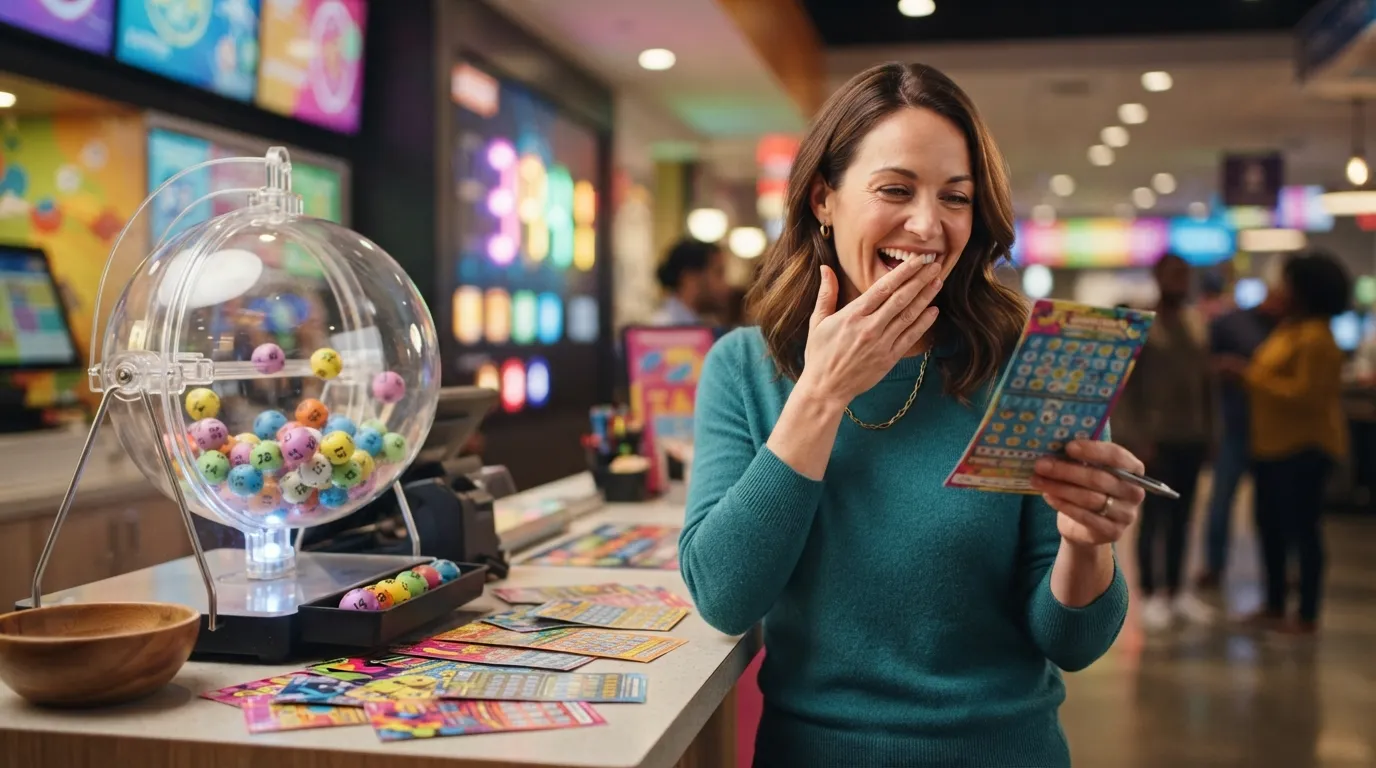
synonyms for lottery can instantly transform your writing when describing games of chance, random selections, or unexpected windfalls. Imagine trying to explain a company raffle or a sudden stroke of luck without repeating the same noun. Relying on one word makes your essay or blog post feel dull and repetitive. Exploring synonyms for lottery helps you express luck and chance with exact linguistic precision.
Understanding synonyms for lottery allows students, content writers, bloggers, and everyday English speakers to build far richer descriptions. Native speakers switch words based on whether they refer to a legal contest, a quick gamble, or a life-changing break. Exploring synonyms for lottery gives you the flexibility to adapt your speech to any formal or casual setting.
Learning these semantic variations expands your vocabulary and sharpens your communication skills across all media. When you select the exact right term, your prose becomes vivid, engaging, and authoritative. Let us break down the meaning, historical origins, and most effective word choices available today.
What Does “Lottery” Really Mean?
“Lottery” is a noun that describes a procedure used to award prizes or make decisions based entirely on chance. It usually involves buying numbered tickets or drawing names randomly out of a container. Native English speakers also use the term metaphorically to describe any situation where success depends on luck rather than skill, such as getting a prime parking spot or landing a competitive job.
Connotative Meaning
(Connotation is the emotional or cultural idea associated with a word beyond its literal dictionary definition.)
- Positive tone: Represents excitement, hope, life-changing financial wealth, and unexpected good fortune.
- Negative tone: Can imply foolish risk, financial loss, dependency on blind luck, or unfair randomness.
- Neutral tone: Simply refers to an official drawing, administrative selection process, or statistical probability.
Etymology
The word comes from the Middle Dutch word loterie, derived from lot, meaning “portion,” “fate,” or “lot.”
- Old English (450–1100): Early ancestors used words like hlot to describe a object used in casting lots to divide property.
- Middle English (1100–1500): The concept evolved through continental trade, blending Dutch and French terms for chance drawings.
- Modern English (1500–Present): The term “lottery” settled into standard English during the 16th century when state-sponsored ticket drawings became popular.
Pronunciation (US & UK – IPA)
- US: /ˈlɑː.t̬ɚ.i/
- UK: /ˈlɒt.ər.i/
Syllables & Affixation Pattern
- Syllables: lot-ter-y (3 syllables)
- Root: lot (portion or fate)
- Prefix: None
- Suffix: -ery (noun-forming suffix indicating a collection or practice)
Synonyms List
Raffle (Noun) — US /ˈræf.əl/ | UK /ˈræf.əl/
Meaning: A contest where people buy numbered tickets for a chance to win a specific item.
Examples:
- Our local school organized a raffle to raise money for new classroom supplies.
- He won a digital camera at the charity raffle last night.
Sweepstakes (Noun) — US /ˈswiːp.steɪks/ | UK /ˈswiːp.steɪks/
Meaning: A gambling or promotional contest where prizes are awarded to randomly drawn participants.
Examples:
- She entered a national sweepstakes hoping to win a brand-new car.
- The company announced the sweepstakes winner on their official social media page.
Draw (Noun) — US /drɑː/ | UK /drɔː/
Meaning: An event where winning names or numbers are picked randomly from a container.
Examples:
- The prize draw will take place right after the main conference speech.
- Make sure you submit your ticket before the draw closes at midnight.
Drawing (Noun) — US /ˈdrɑː.ɪŋ/ | UK /ˈdrɔː.ɪŋ/
Meaning: The act or occasion of choosing winning tickets or entries at random.
Examples:
- The lucky winner will be chosen during a live drawing on television.
- Tickets for the special drawing are available at the front desk.
Tombola (Noun) — US /tɑːmˈboʊ.lə/ | UK /tɒmˈbəʊ.lə/
Meaning: A game where tickets are drawn from a revolving drum to match numbered prizes.
Examples:
- Children loved playing the tombola at the village summer fair.
- I managed to win a giant teddy bear at the church tombola.
Lotto (Noun) — US /ˈlɑː.toʊ/ | UK /ˈlɒt.əʊ/
Meaning: A game of chance similar to a public lottery where players select sets of numbers.
Examples:
- Millions of people buy lotto tickets every weekend in hopes of hitting the jackpot.
- He plays the same numbers in the state lotto every single week.
Gamble (Noun) — US /ˈɡæm.bəl/ | UK /ˈɡæm.bəl/
Meaning: An risky action or enterprise undertaken in the hope of achieving a favorable result.
Examples:
- Investing all your savings into cryptocurrency is a huge gamble.
- Starting a business without market research is always a risky gamble.
Crapshoot (Noun) — US /ˈkræp.ʃuːt/ | UK /ˈkræp.ʃuːt/
Meaning: An uncertain situation or venture where the final outcome is entirely unpredictable.
Examples:
- Finding a great apartment in the city center can be a complete crapshoot.
- The weather in early spring is always a bit of a crapshoot.
Lucky Draw (Noun) — US /ˈlʌk.i drɑː/ | UK /ˈlʌk.i drɔː/
Meaning: A contest where winners are selected purely by chance to receive gifts.
Examples:
- Every customer who fills out a survey gets entered into a lucky draw.
- She picked up her new tablet after winning the store’s lucky draw.
Balloting (Noun) — US /ˈbæl.ət.ɪŋ/ | UK /ˈbæl.ət.ɪŋ/
Meaning: The system or process of selecting people or making decisions by secret lot.
Examples:
- The order of the speakers was determined by random balloting.
- Public balloting decided which community projects received city funding.
Game of Chance (Noun) — US /ɡeɪm əv tʃæns/ | UK /ɡeɪm əv tʃɑːns/
Meaning: An activity whose outcome is strongly influenced by random events rather than skill.
Examples:
- Roulette is a pure game of chance with no skill required.
- The law distinguishes between sports and a simple game of chance.
Risk (Noun) — US /rɪsk/ | UK /rɪsk/
Meaning: A situation involving exposure to danger or the possibility of loss.
Examples:
- He took a big risk by leaving his stable job to travel.
- Playing the stock market involves a certain degree of risk.
Venture (Noun) — US /ˈven.tʃɚ/ | UK /ˈven.tʃər/
Meaning: A risky or daring journey or business undertaking with an uncertain outcome.
Examples:
- Their new online venture proved to be a massive financial success.
- Entering an unknown market is a bold venture for any brand.
Speculation (Noun) — US /ˌspek.jəˈleɪ.ʃən/ | UK /ˌspek.jəˈleɪ.ʃən/
Meaning: The investment in assets in the hope of gain but with the risk of loss.
Examples:
- Real estate speculation drove prices up across the entire region.
- He made his fortune through smart currency speculation.
Sweep (Noun) — US /swiːp/ | UK /swiːp/
Meaning: An informal contest or betting pool where participants predict outcomes.
Examples:
- Our office organized a sweep for the upcoming horse race.
- Everyone put five dollars into the annual football sweep.
Pool (Noun) — US /puːl/ | UK /puːl/
Meaning: A joint fund formed by people betting on the outcome of an event.
Examples:
- She joined the office pool for the national basketball tournament.
- The winner takes the entire pool of collected cash.
Pot (Noun) — US /pɑːt/ | UK /pɒt/
Meaning: The total sum of money played for or staked in a game.
Examples:
- The pot grew larger as more players joined the poker game.
- He swept all the chips from the pot after showing his winning hand.
Jackpot (Noun) — US /ˈdʒæk.pɑːt/ | UK /ˈdʒæk.pɒt/
Meaning: A large top prize accumulating over time in a game or competition.
Examples:
- The progressive jackpot reached over fifty million dollars last night.
- She hit the jackpot on her very first visit to the casino.
Windfall (Noun) — US /ˈwɪnd.fɑːl/ | UK /ˈwɪnd.fɔːl/
Meaning: An unexpected piece of good fortune, especially a large sum of money.
Examples:
- An unexpected inheritance provided a welcome windfall for the family.
- The company used its tax windfall to hire new workers.
Bonanza (Noun) — US /bəˈnæn.zə/ | UK /bəˈnæn.zə/
Meaning: A situation that creates a sudden increase in wealth, good luck, or profits.
Examples:
- The holiday shopping season proved to be a retail bonanza.
- Discovery of oil created an economic bonanza for the town.
Stroke of Luck (Noun) — US /stroʊk əv lʌk/ | UK /strəʊk əv lʌk/
Meaning: An unexpected and highly fortunate event or discovery.
Examples:
- Meeting the director in the elevator was a incredible stroke of luck.
- By a pure stroke of luck, he found his lost wallet on the bus.
Fluke (Noun) — US /fluːk/ | UK /fluːk/
Meaning: An accidental stroke of good luck or unexpected achievement.
Examples:
- Winning the first match was not a fluke; they practiced for months.
- Passing the exam without studying was a complete fluke.
Godsend (Noun) — US /ˈɡɑːd.send/ | UK /ˈɡɒd.send/
Meaning: An unexpected and very welcome event or piece of good fortune.
Examples:
- The rain was a godsend for the farmers after months of drought.
- Finding a cheap apartment near work was an absolute godsend.
Lucky Break (Noun) — US /ˈlʌk.i breɪk/ | UK /ˈlʌk.i breɪk/
Meaning: A sudden opportunity that leads to success or good fortune.
Examples:
- Every young actor is just waiting for that one big lucky break.
- Her lucky break came when a top agent saw her perform live.
Fortune (Noun) — US /ˈfɔːr.tʃən/ | UK /ˈfɔː.tʃən/
Meaning: Chance or luck as an arbitrary force affecting human affairs.
Examples:
- Wheel of fortune can turn in your favor when you least expect it.
- She had the good fortune to work with excellent mentors.
Providence (Noun) — US /ˈprɑː.və.dəns/ | UK /ˈprɒv.ɪ.dəns/
Meaning: Timely preparation or protective care guided by divine luck or nature.
Examples:
- They trusted in providence to guide them through the storm safely.
- It seemed like pure providence that the train arrived on time.
Hazard (Noun) — US /ˈhæz.ɚd/ | UK /ˈhæz.əd/
Meaning: A situation involving chance, risk, or unpredictable danger.
Examples:
- Navigating icy roads poses a serious hazard to motorists.
- Early sailors faced the hazards of unknown seas bravely.
Toss-up (Noun) — US /ˈtɑːs.ʌp/ | UK /ˈtɒs.ʌp/
Meaning: A situation in which two outcomes are equally likely to happen.
Examples:
- The election result is an absolute toss-up between the two candidates.
- Choosing between the two job offers is a total toss-up.
Coin Flip (Noun) — US /ˈkɔɪn ˌflɪp/ | UK /ˈkɔɪn ˌflɪp/
Meaning: A decision or event with two options having an equal chance of occurring.
Examples:
- Deciding who gets the front seat came down to a simple coin flip.
- Predicting tomorrow’s weather feels like a coin flip right now.
Shot in the Dark (Noun) — US /ʃɑːt ɪn ðə dɑːrk/ | UK /ʃɒt ɪn ðə dɑːk/
Meaning: A wild guess or attempt with little hope or knowledge of success.
Examples:
- Her answer on the trivia quiz was just a shot in the dark.
- Applying for the senior role was a shot in the dark, but she got it.
Long Shot (Noun) — US /ˈlɑːŋ.ʃɑːt/ | UK /ˈlɒŋ.ʃɒt/
Meaning: An attempt, contestant, or offer that has a small chance of succeeding.
Examples:
- Winning the championship was a long shot, but the team pulled it off.
- It is a long shot, but you should still submit your application.
Uncertainty (Noun) — US /ənˈsɝː.tən.ti/ | UK /ʌnˈsɜː.tən.ti/
Meaning: A state of doubt or lack of predictability about an outcome.
Examples:
- Economic uncertainty caused many families to delay buying homes.
- The uncertainty of the situation made everyone feel anxious.
Contingency (Noun) — US /kənˈtɪn.dʒən.si/ | UK /kənˈtɪn.dʒən.si/
Meaning: A future event or circumstance that is possible but cannot be predicted.
Examples:
- We must create a plan to cover every financial contingency.
- The contract includes a contingency clause for unexpected delays.
Opportunity (Noun) — US /ˌɑː.pɚˈtuː.nə.ti/ | UK /ˌɒp.əˈtʃuː.nə.ti/
Meaning: A favorable set of circumstances that makes it possible to do something.
Examples:
- Studying abroad gives students an excellent opportunity to learn languages.
- He seized the opportunity to present his ideas to the manager.
Choice by Lot (Noun) — US /tʃɔɪs baɪ lɑːt/ | UK /tʃɔɪs baɪ lɒt/
Meaning: The selection of individuals or items performed strictly at random.
Examples:
- Jury selection relies on a fair choice by lot from official records.
- The winner of the remaining ticket was settled by choice by lot.
Random Selection (Noun) — US /ˈræn.dəm səˈlek.ʃən/ | UK /ˈræn.dəm sɪˈlek.ʃən/
Meaning: A process where every item in a set has an equal chance of choice.
Examples:
- Airport security used random selection for extra bag checks.
- Teachers used random selection to form student project groups.
Destiny (Noun) — US /ˈdes.tə.ni/ | UK /ˈdes.tɪ.ni/
Meaning: The events that will necessarily happen to a person in the future.
Examples:
- He felt it was his destiny to become a world-famous musician.
- She took control of her own destiny by starting her company.
Fate (Noun) — US /feɪt/ | UK /feɪt/
Meaning: The development of events beyond a person’s control, regarded as determined.
Examples:
- They left their fate in the hands of the emergency rescue team.
- Fate brought the two old childhood friends together after twenty years.
Kismet (Noun) — US /ˈkɪz.met/ | UK /ˈkɪz.met/
Meaning: Destiny or fate, especially when bringing people together fortunately.
Examples:
- Meeting her business partner at a coffee shop felt like pure kismet.
- It was kismet that they both picked the same vacation spot.
Serendipity (Noun) — US /ˌser.ənˈdɪp.ə.ti/ | UK /ˌser.ənˈdɪp.ə.ti/
Meaning: The occurrence of finding valuable or pleasant things by chance.
Examples:
- Finding my favorite rare book at a yard sale was pure serendipity.
- Scientific discoveries often rely on a bit of lucky serendipity.
Synonyms for “Lottery” by Tone
Choosing the right term depends on the emotional feeling you want your reader to experience.
Positive Tone
These words highlight good luck, massive rewards, and joyful surprises:
- Jackpot
- Windfall
- Bonanza
- Godsend
- Lucky Break
- Serendipity
Neutral Tone
These options state facts about random draws, games, or organizational contests objectively:
- Raffle
- Sweepstakes
- Draw
- Drawing
- Balloting
- Random Selection
Negative / Critical Tone
These terms focus on unpredictable danger, financial loss, or foolish gambling:
- Gamble
- Crapshoot
- Hazard
- Risk
- Speculation
Playful / Informal Tone
Best suited for casual speech, informal blogging, or light conversation:
- Toss-up
- Coin Flip
- Shot in the Dark
- Long Shot
- Fluke
“Lottery” vs. Close Alternatives
Understanding small differences keeps your writing clear and contextually accurate.
| Word | Core Meaning | Primary Tone | Best Used When… |
| Lottery | A large-scale game based on purchasing numbered tickets | Neutral / Excited | Referring to public cash games or extreme life chances |
| Raffle | A contest where tickets are bought for specific physical prizes | Warm / Community | Describing fundraisers, school events, or local parties |
| Sweepstakes | A promo contest where entries are drawn randomly without fee | Corporate / Formal | Describing marketing giveaways or online brand promos |
- Lottery vs. Raffle: A lottery usually involves picking numbers for huge cash jackpots. A raffle typically awards tangible items like gift baskets or cars at community events.
- Lottery vs. Sweepstakes: Entering a lottery requires buying a ticket. A sweepstakes is legally free to enter and used mostly for marketing.
How “Lottery” Changes by Context
Daily Conversation
In casual chats, native speakers prefer light, simple expressions like lucky draw, coin flip, or long shot.
- Example: “Getting concert tickets was a total long shot, but we got them!”
Writing or Blogging
Bloggers and web writers use engaging terms like windfall, godsend, or serendipity to create vivid emotional imagery.
- Example: “Finding this budget hotel felt like pure serendipity during our trip.”
Professional or Academic Tone
Formal reports and academic papers favor precise terminology like balloting, contingency, or random selection.
- Example: “Participants were assigned to groups using random selection.”
Creative or Informal Use
Storytellers and novelists often rely on dramatic concepts like kismet, fate, or destiny to build plot points.
- Example: “It felt like kismet when the lost letter finally arrived.”
Common Mistakes & Native Usage Notes
Common Mistakes Learners Make
- Using “raffle” for cash jackpots: Raffles award physical goods, whereas lotteries award large financial pots.
- Confusing “sweepstakes” with gambling: Sweepstakes do not require a purchase to play or win.
- Overusing “lottery” for minor luck: Finding a lost penny is a stroke of luck, not winning a lottery.
Register Notes
- Formal Written English: Use random selection, contingency, balloting, and providence.
- Informal Spoken English: Stick to crapshoot, toss-up, coin flip, and long shot.
Real-Life Mini Scenarios
- Workplace: “Assigning night shifts became a random selection process to ensure fairness.”
- Social Situations: “We bought three tickets for the local charity raffle during the festival.”
- Media / Pop Culture: “The game show contestant celebrated after hitting the big jackpot.”
- Writing or Storytelling: “The hero relied on pure serendipity to find the hidden passageway.”
Interactive Practice Exercise
Question 1: Community Fundraiser Usage
The neighborhood center held a _____ to give away a donated mountain bike.
a) hazard
b) raffle
c) gamble
d) speculation
Question 2: Unexpected Wealth
Receiving an unexpected tax refund was a welcome _____ for the struggling family.
a) windfall
b) crapshoot
c) toss-up
d) hazard
Question 3: Academic Research Method
Survey respondents were chosen through _____ to guarantee unbiased study results.
a) a shot in the dark
b) a gamble
c) random selection
d) a fluke
Question 4: Casual Predictability
Deciding which movie to watch tonight is a complete _____ between action and comedy.
a) providence
b) toss-up
c) balloting
d) bonanza
Question 5: High Risk Business
Launching a business without testing the market first is an unnecessary _____.
a) gamble
b) godsend
c) serendipity
d) raffle
Question 6: Major Financial Prize
The casino guest was thrilled when she hit the massive multi-million dollar _____.
a) contingency
b) balloting
c) jackpot
d) hazard
Question 7: Unplanned Good Fortune
Meeting my old childhood mentor at an overseas airport was pure _____.
a) speculation
b) serendipity
c) crapshoot
d) hazard
Question 8: Marketing Promotion
The beverage company ran a national _____ where customers could win a trip to Hawaii.
a) sweepstakes
b) balloting
c) contingency
d) hazard
Question 9: Difficult Odds
Landing a role in a Hollywood movie on your first audition is a true _____.
a) long shot
b) balloting
c) contingency
d) draw
Question 10: Literary Fate
The star-crossed lovers believed their unexpected reunion was arranged by _____.
a) a crapshoot
b) kismet
c) a sweepstakes
d) balloting
Reflection Task
Write one original sentence about an event in your life using any synonym from this guide (e.g., serendipity, windfall, or jackpot).
Answer Key:
- b | 2) a | 3) c | 4) b | 5) a | 6) c | 7) b | 8) a | 9) a | 10) b
Conclusion
Mastering synonyms for lottery helps you describe chance, luck, and unexpected outcomes with vivid precision. Using a wide variety of terms elevates your communication and makes your writing far more engaging.
Practice using these fresh vocabulary words in your next essay, blog post, or daily email to see how much clearer your style becomes. Choosing the right noun ensures your message strikes the exact tone you intend.
Which synonym from this list will you try using today? Share this guide with a friend or classmate, and start incorporating these powerful expressions into your everyday English right now!

Clara Lexon is a language specialist and contributing writer at https PrayIstic.com. She focuses on vocabulary growth, synonym clarity, and precise word choice. With a background in English literature, Clara helps students, bloggers, and writers strengthen their communication skills. Her articles simplify complex language concepts and make learning new words practical and engaging.