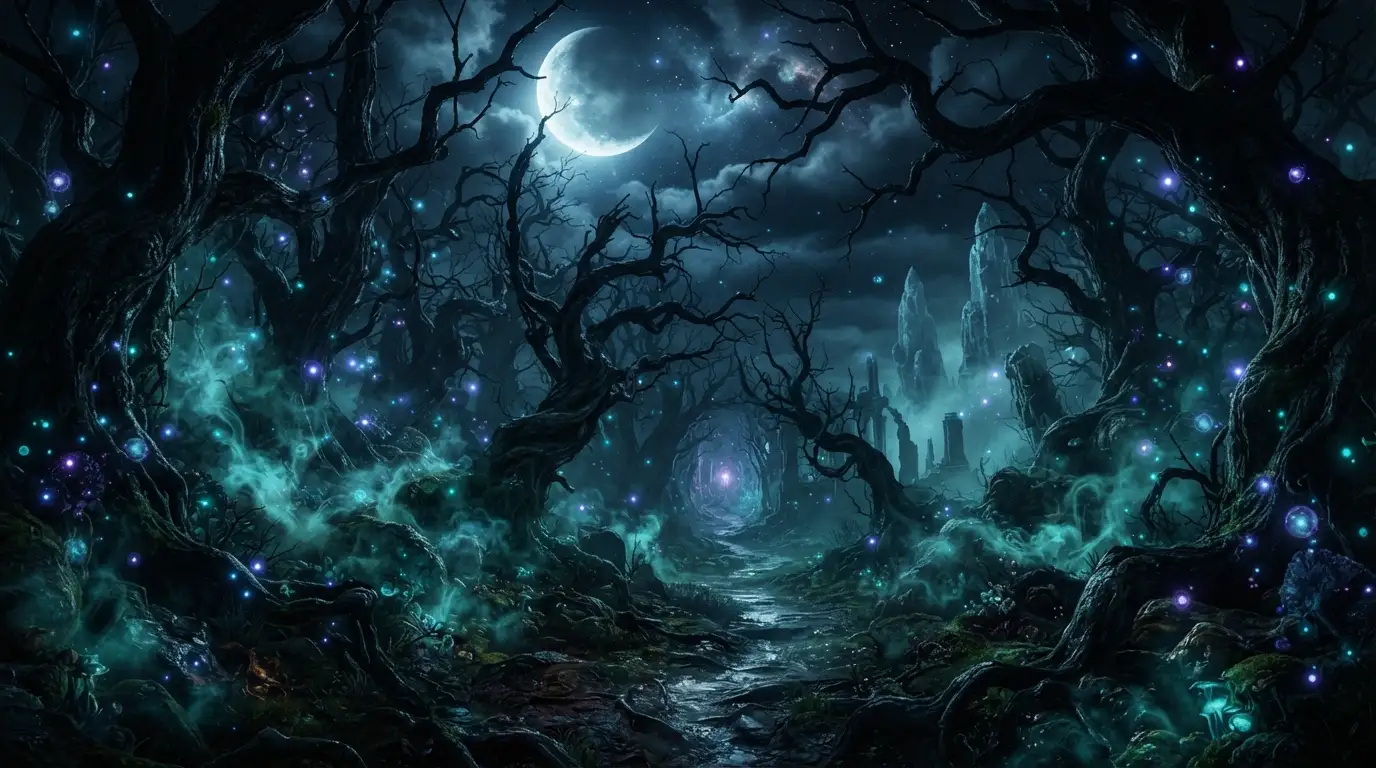
Synonyms for eldritch will transform your descriptive writing and help you create eerie, haunting atmospheres. Imagine reading a thrilling horror novel late at night when a strange noise echoes down the hall. Calling every creepy sound “scary” makes your prose feel flat, repetitive, and dull.
Using varied synonyms for eldritch allows you to capture specific shades of supernatural dread and mystery. A dark forest might feel eerie, while an ancient alien ruin feels truly otherworldly. Choosing the exact word brings your horror and fantasy stories to life.
Mastering synonyms for eldritch is essential for students, bloggers, fiction writers, and language lovers. Content creators can build richer narratives, while ESL learners can master subtle literary nuances. Expanding your vocabulary gives you precise control over tone and emotion.
What Does “Eldritch” Really Mean?
Eldritch describes something strange, unearthly, eerie, or uncanny, often causing a chilling sense of unnatural dread. Native speakers associate the word with alien horrors, bizarre creatures, ancient magic, and dark fantasy fiction.
Part of Speech: Adjective
Definition: Strange or unnatural in an eerie, ghostly, or supernatural way.
Connotative Meaning
(Connotation is the emotional or cultural association that a word carries beyond its literal dictionary definition.)
- Positive tone: Rarely positive, but can convey fascinating, awe-inspiring, or bizarre cosmic wonder.
- Negative tone: Implies disturbing madness, unnatural horror, threatening darkness, or sinister corruption.
- Neutral tone: Describes surreal, unusual, or unearthly aesthetics in fantasy art and literature.
Etymology
The word originates from Middle English elritch, likely linked to Old English æl (foreign/other) and rīce (realm/kingdom).
- Old English (450–1100): Roots existed as æl and rīce, literally suggesting “from another realm.”
- Middle English (1100–1500): Developed into elritch, describing hideous fairyland spirits or ghostly phantoms.
- Modern English (1500–Present): Popularized in modern weird fiction by authors like H.P. Lovecraft to describe cosmic horrors.
Pronunciation (US & UK – IPA)
- US: /ˈel.drɪtʃ/
- UK: /ˈel.drɪtʃ/
Syllables
el-dritch
Affixation Pattern
- Root: eldritch
- Prefix: None
- Suffix: None
Synonyms List
Eerie – [Eerie] (Adjective) — US: /ˈɪr.i/ | UK: /ˈɪə.ri/
Meaning: Strange and frightening in a way that causes a feeling of dread.
Examples:
- An eerie silence settled over the deserted town at dusk.
- She heard an eerie whisper echoing down the hallway.
Uncanny – [Uncanny] (Adjective) — US: /ʌnˈkæn.i/ | UK: /ʌnˈkæn.i/
Meaning: Strange or mysterious in a way that feels unsettlingly unnatural.
Examples:
- The robot had an uncanny resemblance to a real human.
- He possessed an uncanny ability to predict the future.
Unearthly – [Unearthly] (Adjective) — US: /ʌnˈɝːθ.li/ | UK: /ʌnˈɜːθ.li/
Meaning: Suggesting powers or worlds beyond our physical Earth.
Examples:
- An unearthly glow emanated from the dark cave entrance.
- The creature let out an unearthly scream in the night.
Otherworldly – [Otherworldly] (Adjective) — US: /ˌʌð.ɚˈwɝːld.li/ | UK: /ˌʌð.əˈwɜːld.li/
Meaning: Belonging or relating to an imaginary or spiritual world.
Examples:
- The aurora borealis illuminated the snow with otherworldly beauty.
- Her music has an otherworldly quality that mesmerizes listeners.
Supernatural – [Supernatural] (Adjective) — US: /ˌsuː.pɚˈnætʃ.ɚ.əl/ | UK: /ˌsuː.pəˈnætʃ.ər.əl/
Meaning: Manifestations or events attributed to forces beyond scientific understanding.
Examples:
- Investigators searched the old mansion for supernatural activity.
- They believed the ancient ring possessed supernatural powers.
Weird – [Weird] (Adjective) — US: /wɪrd/ | UK: /wɪəd/
Meaning: Strikingly odd, strange, or tied to fate and magic.
Examples:
- We heard weird noises coming from the attic overhead.
- The traveler warned us about the weird customs of the valley.
Creepy – [Creepy] (Adjective) — US: /ˈkriː.pi/ | UK: /ˈkriː.pi/
Meaning: Causing an unpleasant feeling of fear, unease, or skin crawling.
Examples:
- That old abandoned house on the corner looks really creepy.
- He gave me a creepy smile that made me feel nervous.
Spooky – [Spooky] (Adjective) — US: /ˈspuː.ki/ | UK: /ˈspuː.ki/
Meaning: Informally describing something ghostlike, unsettling, or frightening.
Examples:
- The children told spooky stories around the campfire.
- Fog covered the graveyard, creating a spooky atmosphere.
Ghostly – [Ghostly] (Adjective) — US: /ˈɡoʊst.li/ | UK: /ˈɡəʊst.li/
Meaning: Resembling or characteristic of a ghost or phantom.
Examples:
- A ghostly figure appeared at the top of the stairs.
- Pale moonlight cast ghostly shadows across the bedroom floor.
Spectral – [Spectral] (Adjective) — US: /ˈspek.trəl/ | UK: /ˈspek.trəl/
Meaning: Of or like a phantom or phantom-like vision.
Examples:
- Sailors reported seeing a spectral ship gliding through the mist.
- Her spectral appearance startled everyone at the door.
Phantasmal – [Phantasmal] (Adjective) — US: /fænˈtæz.məl/ | UK: /fænˈtæz.məl/
Meaning: Illusory or ghostlike in appearance and sensation.
Examples:
- The lights created phantasmal shapes on the cave walls.
- He chased a phantasmal dream that constantly escaped him.
Bizarre – [Bizarre] (Adjective) — US: /bəˈzɑːr/ | UK: /bɪˈzɑː/
Meaning: Very strange, unusual, or eccentric in design or nature.
Examples:
- The artist painted bizarre creatures with multiple eyes.
- We witnessed a bizarre sequence of events at the festival.
Macabre – [Macabre] (Adjective) — US: /məˈkɑːbrə/ | UK: /məˈkɑː.brə/
Meaning: Disturbing because of involvement with or depiction of death.
Examples:
- The author is famous for writing macabre tales of terror.
- The museum holds a macabre collection of ancient torture devices.
Morbid – [Morbid] (Adjective) — US: /ˈmɔːr.bɪd/ | UK: /ˈmɔː.bɪd/
Meaning: Indicating an unhealthy interest in disturbing, unpleasant, or dark subjects.
Examples:
- She has a morbid fascination with true crime documentaries.
- He avoided discussing morbid topics during dinner.
Sinister – [Sinister] (Adjective) — US: /ˈsɪn.ə.stɚ/ | UK: /ˈsɪn.ɪ.stə/
Meaning: Giving the impression that something evil or harmful will happen.
Examples:
- Dark clouds gathered in a sinister pattern above the city.
- The villain spoke in a quiet, sinister voice.
Ominous – [Ominous] (Adjective) — US: /ˈɑː.mə.nəs/ | UK: /ˈɒm.ɪ.nəs/
Meaning: Giving the worrying impression that something bad is going to happen.
Examples:
- Thunder rolled in the distance with an ominous boom.
- The silence in the room felt ominous and heavy.
Foreboding – [Foreboding] (Adjective) — US: /fɔːrˈboʊ.dɪŋ/ | UK: /fɔːˈbəʊ.dɪŋ/
Meaning: Implying that something misfortune-filled or evil is about to occur.
Examples:
- She stepped into the dark forest with a foreboding sense of danger.
- The foreboding sky warned of an incoming hurricane.
Haunting – [Haunting] (Adjective) — US: /ˈhɑːn.t̬ɪŋ/ | UK: /ˈhɔːn.tɪŋ/
Meaning: Poignant, evocative, and lingering uncomfortably in the mind.
Examples:
- The violin solo had a beautiful yet haunting melody.
- Memories of the accident left a haunting impression on him.
Chilling – [Chilling] (Adjective) — US: /ˈtʃɪl.ɪŋ/ | UK: /ˈtʃɪl.ɪŋ/
Meaning: Causing a sudden feeling of coldness, dread, or paralyzing fear.
Examples:
- The detective uncovered a chilling piece of evidence.
- It was a chilling revelation that shocked the entire community.
Monstrous – [Monstrous] (Adjective) — US: /ˈmɑːn.strəs/ | UK: /ˈmɒn.strəs/
Meaning: Outrageously unnatural, shocking, or huge like a beast.
Examples:
- A monstrous shadow crept along the wall toward them.
- The storm caused monstrous waves along the coast.
Alien – [Alien] (Adjective) — US: /ˈeɪ.li.ən/ | UK: /ˈeɪ.li.ən/
Meaning: Unfamiliar, foreign, and totally contrary to human experience.
Examples:
- The landscape felt alien and completely devoid of plant life.
- Strange symbols were written in an alien alphabet.
Unnatural – [Unnatural] (Adjective) — US: /ʌnˈnætʃ.ɚ.əl/ | UK: /ʌnˈnætʃ.ər.əl/
Meaning: Contrary to the ordinary course of nature, causing unease.
Examples:
- The sky changed to an unnatural shade of bright purple.
- He spoke with an unnatural stiffness that made us suspicious.
Abnormal – [Abnormal] (Adjective) — US: /æbˈnɔːr.məl/ | UK: /æbˈnɔː.məl/
Meaning: Deviating from what is standard, normal, or expected.
Examples:
- Scientists detected abnormal energy readings from the meteorite.
- His sudden change in behavior seemed quite abnormal.
Grotesque – [Grotesque] (Adjective) — US: /ɡroʊˈtesk/ | UK: /ɡrəʊˈtesk/
Meaning: Comically or repulsively ugly, distorted, and unnatural.
Examples:
- The stone gargoyle had a grotesque expression carved on its face.
- The twisted old tree branches formed grotesque shapes in the dark.
Freakish – [Freakish] (Adjective) — US: /ˈfriː.kɪʃ/ | UK: /ˈfriː.kɪʃ/
Meaning: Unusually strange, bizarre, or unexpected in character or look.
Examples:
- A freakish storm blew through the valley in mid-summer.
- The creature possessed freakish strength for its small size.
Outlandish – [Outlandish] (Adjective) — US: /aʊtˈlæn.dɪʃ/ | UK: /aʊtˈlæn.dɪʃ/
Meaning: Looking or sounding bizarre, unfamiliar, and unconventional.
Examples:
- He wore an outlandish costume to the costume party.
- The traveler shared outlandish stories of hidden kingdoms.
Unearthly-sounding – [Unearthly-sounding] (Adjective) — US: /ʌnˈɝːθ.li ˈsaʊn.dɪŋ/ | UK: /ʌnˈɜːθ.li ˈsaʊn.dɪŋ/
Meaning: Producing audio noises that feel detached from normal reality.
Examples:
- An unearthly-sounding whistle echoed through the dark cavern.
- The wind made an unearthly-sounding groan against the window.
Frightful – [Frightful] (Adjective) — US: /ˈfraɪt.fəl/ | UK: /ˈfraɪt.fəl/
Meaning: Very unpleasant, alarming, or inspiring fear.
Examples:
- The beast let out a frightful roar that shook the trees.
- We drove through a frightful blizzard last night.
Ghastly – [Ghastly] (Adjective) — US: /ˈɡæst.li/ | UK: /ˈɡɑːst.li/
Meaning: Causing great horror or fear, or deathly pale in color.
Examples:
- She had a ghastly complexion after seeing the accident.
- The crime scene presented a ghastly sight to officers.
Dreadful – [Dreadful] (Adjective) — US: /ˈdred.fəl/ | UK: /ˈdred.fəl/
Meaning: Causing great dread, terror, or severe discomfort.
Examples:
- A dreadful howl cut through the quiet night air.
- They received dreadful news about the storm damage.
Mysterious – [Mysterious] (Adjective) — US: /mɪˈstɪr.i.əs/ | UK: /mɪˈstɪə.ri.əs/
Meaning: Difficult or impossible to understand, explain, or identify.
Examples:
- A mysterious stranger sat in the corner of the inn.
- Scientists found a mysterious object submerged in the lake.
Arcane – [Arcane] (Adjective) — US: /ɑːrˈkeɪn/ | UK: /ɑːˈkeɪn/
Meaning: Secret, mysterious, and understood by very few people.
Examples:
- The wizard read ancient spells written in arcane symbols.
- He spent years studying arcane mathematical formulas.
Esoteric – [Esoteric] (Adjective) — US: /ˌes.əˈter.ɪk/ | UK: /ˌes.əˈter.ɪk/
Meaning: Intended for or likely to be understood by only a small group.
Examples:
- The professor gave a lecture on esoteric philosophy.
- They discussed esoteric rituals practiced centuries ago.
Occult – [Occult] (Adjective) — US: /əˈkʌlt/ | UK: /əˈkʌlt/
Meaning: Involving supernatural, mystical, or magic powers and secrets.
Examples:
- The scholar researched occult practices from medieval times.
- They found an occult symbol carved into the wooden altar.
Mystical – [Mystical] (Adjective) — US: /ˈmɪs.tɪ.kəl/ | UK: /ˈmɪs.tɪ.kəl/
Meaning: Having a spiritual power or reality that is mysterious and awe-inspiring.
Examples:
- The ancient forest held a mystical power over travelers.
- She claimed to have a mystical vision during her meditation.
Cryptic – [Cryptic] (Adjective) — US: /ˈkrɪp.tɪk/ | UK: /ˈkrɪp.tɪk/
Meaning: Having a meaning that is mysterious, obscure, or hidden.
Examples:
- He left a cryptic note on the table before vanishing.
- The ancient tomb was covered in cryptic inscriptions.
Enigmatic – [Enigmatic] (Adjective) — US: /ˌen.ɪɡˈmæt̬.ɪk/ | UK: /ˌen.ɪɡˈmæt.ɪk/
Meaning: Mysterious, puzzling, and difficult to interpret correctly.
Examples:
- The Mona Lisa is famous for her enigmatic smile.
- He offered an enigmatic response that left us guessing.
Inexplicable – [Inexplicable] (Adjective) — US: /ˌɪn.ɪkˈsplɪk.ə.bəl/ | UK: /ˌɪn.ɪkˈsplɪk.ə.bəl/
Meaning: Unable to be explained or accounted for logically.
Examples:
- The sudden disappearance of the boat remains inexplicable.
- She felt an inexplicable urge to leave the building.
Unfathomable – [Unfathomable] (Adjective) — US: /ʌnˈfæð.əm.ə.bəl/ | UK: /ʌnˈfæð.əm.ə.bəl/
Meaning: Incapable of being fully explored or understood.
Examples:
- The deep ocean trenches hold unfathomable mysteries.
- The creature moved with unfathomable speed and grace.
Cosmically Alien – [Cosmically Alien] (Adjective) — US: /ˈkɑːz.mɪ.kli ˈeɪ.li.ən/ | UK: /ˈkɒz.mɪ.kli ˈeɪ.li.ən/
Meaning: Originating from vast cosmic space beyond human comprehension.
Examples:
- The comet left behind a cosmically alien dust cloud.
- The ruins belonged to a cosmically alien civilization.
Surreal – [Surreal] (Adjective) — US: /səˈriː.əl/ | UK: /səˈrɪəl/
Meaning: Having a strange, dreamlike, or bizarre quality.
Examples:
- Walking through the empty airport felt totally surreal.
- The movie combined bright colors with surreal imagery.
Nightmare-like – [Nightmare-like] (Adjective) — US: /ˈnaɪt.mer.laɪk/ | UK: /ˈnaɪt.meə.laɪk/
Meaning: Resembling a terrifying dream or distressing vision.
Examples:
- A nightmare-like creature emerged from the swamp waters.
- They survived a nightmare-like journey through the storm.
Fiendish – [Fiendish] (Adjective) — US: /ˈfiːn.dɪʃ/ | UK: /ˈfiːn.dɪʃ/
Meaning: Extremely cruel, wicked, or devilishly clever.
Examples:
- The villain devised a fiendish plot to trap the heroes.
- The labyrinth was filled with fiendish traps and dead ends.
Infernal – [Infernal] (Adjective) — US: /ɪnˈfɝː.nəl/ | UK: /ɪnˈfɜː.nəl/
Meaning: Relating to or characteristic of hell or underworld forces.
Examples:
- An infernal heat radiated from the volcano opening.
- The cultists chanted infernal prayers in the dark cavern.
Ungodly – [Ungodly] (Adjective) — US: /ʌnˈɡɑːd.li/ | UK: /ʌnˈɡɒd.li/
Meaning: Outrageously strange, wicked, or occurring at an unreasonable hour.
Examples:
- The phone rang at an ungodly hour of the night.
- An ungodly screech echoed from the abandoned barn.
Synonyms by Tone
Choosing the right word tone shapes how your readers feel when reading your descriptions:
Positive Tone
Words that evoke awe, mystery, or strange artistic magic rather than pure fear:
- Otherworldly
- Mystical
- Surreal
- Enigmatic
- Arcane
Neutral Tone
Objective terms for describing strange, unusual, or unexplainable phenomena clearly:
- Uncanny
- Supernatural
- Abnormal
- Inexplicable
- Mysterious
Negative Tone
Intense, chilling words meant to inspire fear, disgust, dread, and horror:
- Eldritch
- Sinister
- Macabre
- Infernal
- Ghastly
Playful / Informal Tone
Casual terms suited for lighthearted stories, conversational English, or casual blogging:
- Creepy
- Spooky
- Freakish
- Weird
Mini Comparison
Eldritch vs. Eerie vs. Uncanny
| Feature | Eldritch | Eerie | Uncanny |
| Primary Focus | Alien, cosmic, or ancient unnatural horror. | A creepy, quiet feeling that something is wrong. | Something familiar that feels weirdly wrong or fake. |
| Tone | Dark, heavy, supernatural, and strange. | Mysterious, atmospheric, and nervous. | Puzzling, disturbing, and artificial. |
| Best Used When | Describing monster designs or alien magic. | Describing quiet dark woods or empty streets. | Describing realistic humanlike dolls or robots. |
Context-Based Usage
Daily Conversation
In casual talk, native speakers rarely say “eldritch.” Instead, use popular words like creepy, spooky, or weird to describe unsettling places or things.
Writing or Blogging
Bloggers and essay writers use terms like uncanny, surreal, or inexplicable to create vivid images without sounding overly dramatic or theatrical.
Professional or Academic Tone
When writing academic papers or literary analysis, select formal vocabulary like supernatural, abnormal, arcane, or esoteric.
Creative or Fiction Writing
Fiction writers rely on heavy literary words like eldritch, macabre, spectral, and infernal to build terrifying horror environments.
Common Mistakes & Native Usage
Misuse Scenarios
- Using Eldritch for Normal Scares: Calling a jump-scare in a modern action movie “eldritch” is incorrect. Eldritch implies alien, ancient, or cosmic origin.
- Overusing Creepy: Using “creepy” repeatedly makes creative writing sound juvenile. Alternate with “eerie” or “unearthly.”
Register Notes
- Formal vs. Informal: “Eldritch” and “Phantasmal” belong strictly to high literary fantasy and horror fiction. “Spooky” belongs to casual talk.
- Spoken vs. Written: Native speakers seldom speak the word “eldritch” aloud; it appears predominantly in printed books and fantasy games.
For deeper insights on refining your creative writing, explore our expanded vocabulary guides on descriptive terms.
Real-Life Mini Scenarios
- Workplace: An engineer describes an abnormal system reading that cannot be explained by standard equipment testing.
- Social Situations: Friends giggle nervously when walking past a spooky looking old barn during an evening stroll.
- Media / Pop Culture: Video game reviewers celebrate a new dark fantasy game for its eldritch creature designs and cosmic atmosphere.
- Writing or Storytelling: A fantasy author writes about an arcane portal radiating unearthly blue light inside a stone ruin.
Practice Exercises
Multiple-Choice Questions
- Which synonym best describes an ancient, alien monster beyond human understanding?
a) Spooky
b) Eldritch
c) Abnormal
d) Freakish - What is the tone of the word “Mystical”?
a) Deeply negative
b) Playful or casual
c) Positive or awe-inspiring
d) Terrifying - Select the best word for a realistic robot that feels disturbing because it acts almost human:
a) Arcane
b) Uncanny
c) Infernal
d) Outlandish - Which term fits best in casual conversation about a dark basement?
a) Phantasmal
b) Eldritch
c) Creepy
d) Esoteric - The word “Eldritch” historically originates from roots meaning:
a) Deep water
b) Foreign realm
c) Dark night
d) Evil mind - Which synonym specifically implies a connection to death or grave subjects?
a) Macabre
b) Bizarre
c) Outlandish
d) Surreal - What part of speech is “Eldritch”?
a) Noun
b) Adjective
c) Verb
d) Adverb - Which word describes secret knowledge understood by only a select few?
a) Spectral
b) Ghastly
c) Arcane
d) Freakish - Which word is best for a ghostlike, see-through ship on the ocean?
a) Spectral
b) Abnormal
c) Freakish
d) Outlandish - Calling a simple shadow “eldritch” is usually considered an error because eldritch implies:
a) Cheerful magic
b) Ancient, alien, or cosmic horror
c) Bright sunlight
d) Modern technology
Application Task
Write a short 2-sentence paragraph describing a mysterious fantasy location using two synonyms from our list.
Answer Key
1: b | 2: c | 3: b | 4: c | 5: b | 6: a | 7: b | 8: c | 9: a | 10: b
Conclusion
Learning synonyms for eldritch gives you the creative power to build chilling, unforgettable descriptions in your writing. Matching the right word to your scene creates vivid pictures that captivate your audience.
Expanding your atmospheric vocabulary boosts your overall English fluency, creative writing skills, and reading comprehension. You will easily spot these subtle word choices in famous fantasy literature and classic horror.
Try using two or three of these descriptive synonyms in your next creative story, essay, or journal entry. Practice using new vocabulary daily to build confidence and express your ideas with true artistic precision!

Evelyn Hartwell is an English vocabulary writer who focuses on clear, practical language for learners and everyday readers. Her writing explores synonyms, word meanings, pronunciation, tone, and natural usage. She believes that learning vocabulary should be simple, useful, and enjoyable. Her articles are designed to help students, bloggers, and English learners choose the right words with greater confidence.