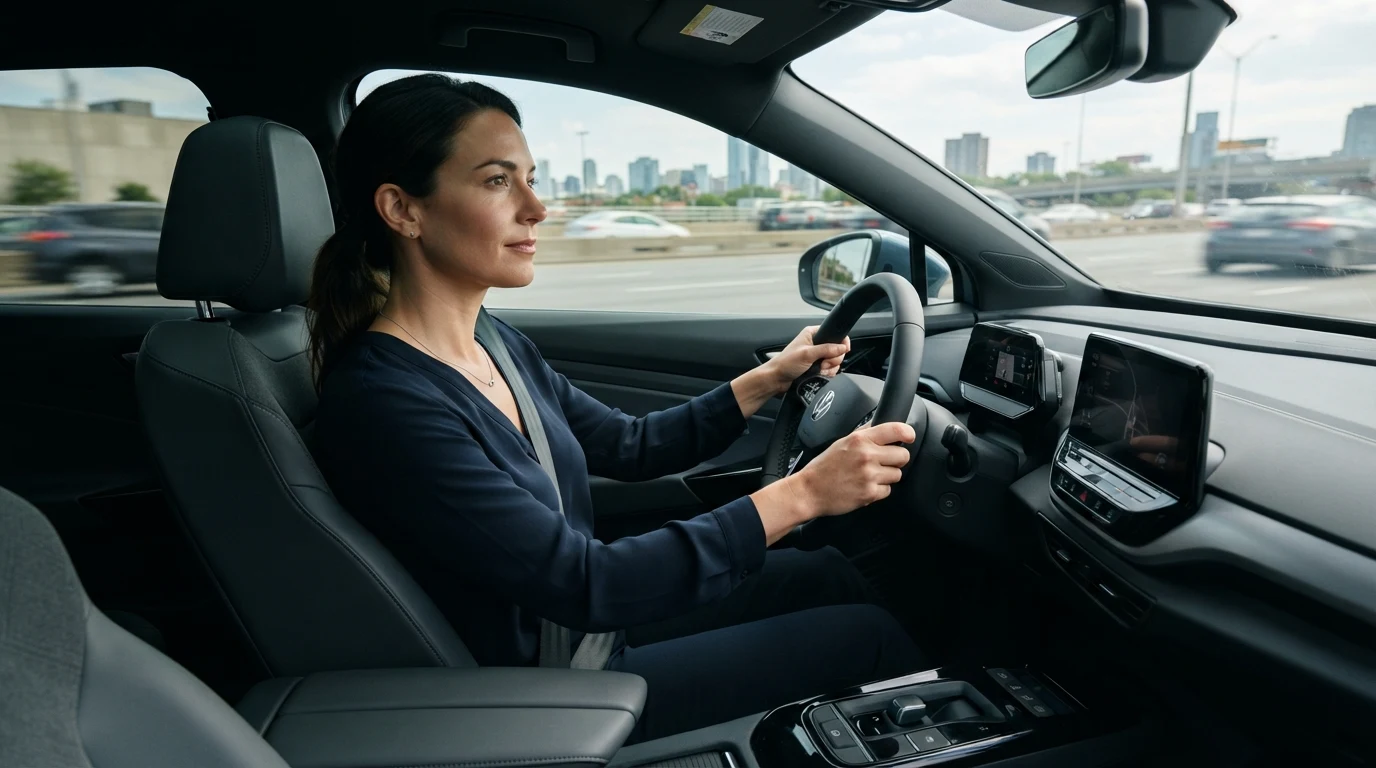
Synonyms for driver help you describe people who operate vehicles, lead key initiatives, or motivate team projects in everyday English.
Imagine describing a road trip or writing a business report about growth factors. Using varied synonyms for driver makes your writing sharp.
When you learn synonyms for driver, your vocabulary expands rapidly. This word appears constantly in transport, business, and tech news.
Students, bloggers, and writers need these alternatives to avoid repetition. Studying synonyms for driver will instantly elevate your communication.
What Does “Driver” Really Mean?
The word “driver” primary refers to a person who operates a motor vehicle, locomotive, or animal-drawn carriage. Native speakers also use it figuratively to describe a primary force, factor, or person that controls, directs, or accelerates growth in a process. As a noun, it simply means an operator, a controller, or a motivating cause.
Connotative Meaning
Words carry subtle emotional weight beyond their simple literal meanings. (Connotation is the cultural or emotional feeling associated with a word in addition to its main dictionary definition.)
- Positive tone: Implies leadership, control, progress, skill, and dynamic initiative.
- Negative tone: Implies aggressive control, physical pushiness, or harsh forcing behaviors.
- Neutral tone: Simply describes a job role, functional transport worker, or logical factor.
Etymology and History
The word comes from the Old English verb drīfan, which meant to urge forward, push, move, or impel.
- Old English (450–1100): Existed as drīfere, describing one who forces or drives animals forward.
- Middle English (1100–1500): Evolved into drivere, referring to livestock herd drivers or cart pushers.
- Modern English (1500–Present): Expanded to carriage operators, motor vehicle drivers, and computer device software drivers.
Pronunciation
- US: /ˈdraɪ.vɚ/
- UK: /ˈdraɪ.vər/
Syllables & Structure
- Syllables: dri-ver
- Root: drive (to operate or impel)
- Prefix: None
- Suffix: -er (forming an agent noun)
The Core List of Synonyms
Chauffeur (Noun) — US: /ʃoʊˈfɝː/ | UK: /ˈʃəʊ.fər/
Meaning: A person employed to drive a private luxury or personal passenger vehicle.
Examples:
- The hotel hired a private chauffeur to collect VIP guests.
- She sat comfortably in the back while her chauffeur drove.
Motorist (Noun) — US: /ˈmoʊ.ṭɚ.ɪst/ | UK: /ˈməʊ.tər.ɪst/
Meaning: Any person who drives or travels in a private motor car.
Examples:
- The news warned every motorist about heavy morning fog.
- Traffic police reminded each motorist to wear a seatbelt.
Operator (Noun) — US: /ˈɑː.pə.reɪ.ṭɚ/ | UK: /ˈɒp.ər.eɪ.tər/
Meaning: A skilled person who controls or manages heavy machinery or transport systems.
Examples:
- The crane operator lifted the heavy steel beam safely.
- Every bus operator must undergo annual safety checks.
Pilot (Noun) — US: /ˈpaɪ.lət/ | UK: /ˈpaɪ.lət/
Meaning: A person who operates an aircraft, ship, or specialized transport vehicle.
Examples:
- The boat pilot guided the large vessel into port.
- She trained hard to become a commercial airplane pilot.
Motorman (Noun) — US: /ˈmoʊ.ṭɚ.mən/ | UK: /ˈməʊ.tə.mən/
Meaning: An operator of an electric streetcar, locomotive, or subway train.
Examples:
- The motorman stopped the subway train smoothly at the platform.
- An experienced motorman operated the historical city tram.
Teamster (Noun) — US: /ˈtiːm.stɚ/ | UK: /ˈtiːm.stər/
Meaning: A person who drives a truck or a team of draft animals for haulage.
Examples:
- The local teamster union organized a safety meeting.
- He worked as a freight teamster for over twenty years.
Cabby (Noun) — US: /ˈkæb.i/ | UK: /ˈkæb.i/
Meaning: An informal term for a person who drives a taxi cab for a living.
Examples:
- The friendly cabby gave us great tourist recommendations.
- I handed the cabby his fare along with a generous tip.
Cabbie (Noun) — US: /ˈkæb.i/ | UK: /ˈkæb.i/
Meaning: A common alternate spelling for a professional taxi driver.
Examples:
- A local cabbie knew every shortcut across the city center.
- She flagged down an oncoming cabbie in the rain.
Taxidriver (Noun) — US: /ˈtæk.siˌdraɪ.vɚ/ | UK: /ˈtæk.siˌdraɪ.vər/
Meaning: A licensed driver who operates a taxi for hire to convey passengers.
Examples:
- The taxidriver checked his GPS map before starting the meter.
- Every municipal taxidriver must hold a valid permit.
Trucker (Noun) — US: /ˈtrʌk.ɚ/ | UK: /ˈtrʌk.ər/
Meaning: A professional driver who operates heavy transport trucks across long distances.
Examples:
- Long-haul trucker drivers stop at highway service stations.
- The trucker delivered the retail cargo on schedule.
Coachman (Noun) — US: /ˈkoʊtʃ.mən/ | UK: /ˈkəʊtʃ.mən/
Meaning: A person who drives a horse-drawn carriage or public coach.
Examples:
- A royal coachman adjusted the horses before the ceremony.
- The historical novel described a lantern held by a coachman.
Team-driver (Noun) — US: /tiːm ˈdraɪ.vɚ/ | UK: tiːm ˈdraɪ.vər/
Meaning: A driver who shifts driving duties with another person on long road transport routes.
Examples:
- Commercial team-driver setups help trucks move across states nonstop.
- The team-driver rested in the sleeper cabin during the night shift.
Wheelman (Noun) — US: /ˈwiːl.mæn/ | UK: /ˈwiːl.mæn/
Meaning: A skilled person who handles the steering wheel of a boat or getaway car.
Examples:
- The ship wheelman kept the vessel on its harbor heading.
- Crime thrillers often feature an expert wheelman leading a escape.
Helmsman (Noun) — US: /ˈhelmz.mən/ | UK: /ˈhelmz.mən/
Meaning: A person who steers a ship, boat, or maritime vessel.
Examples:
- The helmsman adjusted direction to avoid rough coastal waters.
- An experienced helmsman stayed focused throughout the ocean storm.
Steersman (Noun) — US: /ˈstɪrz.mən/ | UK: /ˈstɪəz.mən/
Meaning: A person who controls the steering mechanism of a boat or barge.
Examples:
- The river steersman guided the heavy cargo barge along the canal.
- A skilled steersman navigated the vessel around shallow rocks.
Automobilist (Noun) — US: /ˌɑː.ṭə.moʊˈbiː.lɪst/ | UK: /ˌɔː.tə.məʊˈbiː.lɪst/
Meaning: A formal term for a person who owns or drives an automobile.
Examples:
- Early magazines provided practical advice for every adventurous automobilist.
- The club welcomed every classic automobilist to the car show.
Transport-worker (Noun) — US: /ˈtræn.spɔːrt ˌwɝː.kɚ/ | UK: /ˈtræn.spɔːt ˌwɜː.kər/
Meaning: An individual employed in operating or managing commercial transport vehicles.
Examples:
- Every transport-worker received specialized safety training last month.
- The city recognized each public transport-worker for dedicated service.
Hauler (Noun) — US: /ˈhɑː.lɚ/ | UK: /ˈhɔː.lər/
Meaning: A person or heavy vehicle operator engaged in transporting goods or materials.
Examples:
- The gravel hauler drove his heavy tipper truck into the quarry.
- Construction companies rely on an independent freight hauler.
Courier (Noun) — US: /ˈkʊr.i.ɚ/ | UK: /ˈkʊr.i.ər/
Meaning: A driver or messenger employed to deliver urgent packages and documents.
Examples:
- The motorcycle courier delivered the legal documents within an hour.
- A local delivery courier arrived with our lunch order.
Delivery-driver (Noun) — US: dɪˈlɪv.ɚ.i ˈdraɪ.vɚ/ | UK: dɪˈlɪv.ər.i ˈdraɪ.vər/
Meaning: A person who drives a light vehicle to distribute merchandise directly to clients.
Examples:
- The parcel delivery-driver dropped the box at our front door.
- Our supermarket app assigns a delivery-driver to your order.
Transporter (Noun) — US: trænˈspɔːr.ṭɚ/ | UK: trænˈspɔː.tər/
Meaning: An operator or vehicle dedicated to transferring items or passengers safely.
Examples:
- The car transporter drove five new sedans to the local dealership.
- An authorized luggage transporter collected the tourists’ bags.
Van-driver (Noun) — US: /væn ˈdraɪ.vɚ/ | UK: /væn ˈdraɪ.vər/
Meaning: A person who operates a commercial utility van for freight or passengers.
Examples:
- A van-driver loaded the bakery boxes early in the morning.
- The utility van-driver parked near the loading dock bay.
Bus-driver (Noun) — US: /bʌs ˈdraɪ.vɚ/ | UK: /bʌs ˈdraɪ.vər/
Meaning: A person who drives a bus along public transit or private charter routes.
Examples:
- Our morning bus-driver greeted every passenger with a warm smile.
- The school bus-driver waited patiently at the crosswalk.
Tram-driver (Noun) — US: /træm ˈdraɪ.vɚ/ | UK: /træm ˈdraɪ.vər/
Meaning: An operator who drives electric trams along fixed urban track routes.
Examples:
- The tram-driver sounded the horn as pedestrian crowds crossed streets.
- A vintage tram-driver managed the historic seaside route.
Train-driver (Noun) — US: /treɪn ˈdraɪ.vɚ/ | UK: /treɪn ˈdraɪ.vər/
Meaning: A railway professional who controls the engine and speed of a train.
Examples:
- The express train-driver slowed down when approaching the sharp curve.
- An experienced train-driver completed the long night journey.
Locomotive-driver (Noun) — US: /ˌloʊ.kəˈmoʊ.t̬ɪv ˈdraɪ.vɚ/ | UK: /ˌləʊ.kəˈməʊ.tɪv ˈdraɪ.vər/
Meaning: A formal term for an operator of a heavy railway locomotive engine.
Examples:
- A certified locomotive-driver verified all instrument dials before departure.
- The freight company promoted him to chief locomotive-driver.
Dispatcher (Noun) — US: /dɪˈspætʃ.ɚ/ | UK: /dɪˈspætʃ.ər/
Meaning: A person who directs transport movements and coordinates vehicle routes.
Examples:
- The taxi dispatcher sent a car to our precise street address.
- An emergency services dispatcher managed route instructions efficiently.
Charioteer (Noun) — US: /ˌtʃær.i.əˈtɪr/ | UK: /ˌtʃær.i.əˈtɪər/
Meaning: A historical driver who operated a two-wheeled horse-drawn chariot.
Examples:
- The Roman charioteer raced around the crowded arena track.
- An ancient bronze statue depicted a famous Greek charioteer.
Drover (Noun) — US: /ˈdroʊ.vɚ/ | UK: /ˈdrəʊ.vər/
Meaning: A person who drives cattle or sheep herds across long overland distances.
Examples:
- The Outback drover guided cattle herds toward water stations.
- Historical drover routes stretched across rural countryside paths.
Carter (Noun) — US: /ˈkɑːr.ṭɚ/ | UK: /ˈkɑː.tər/
Meaning: A person who drives a horse-drawn cart to convey heavy trade goods.
Examples:
- The village carter hauled sacks of grain to the local mill.
- An old wooden wagon was maintained by a local carter.
Drayman (Noun) — US: /ˈdreɪ.mən/ | UK: /ˈdreɪ.mən/
Meaning: A driver who operates a heavy flat cart for delivering beer barrels or freight.
Examples:
- The brewery drayman unloaded wooden cider barrels outside the pub.
- A traditional drayman managed draft horses along cobbled streets.
Wagoner (Noun) — US: /ˈwæɡ.ən.ɚ/ | UK: /ˈwæɡ.ən.ər/
Meaning: A person who drives a heavy freight wagon drawn by animals.
Examples:
- The wagoner brought essential supplies to remote mountain outposts.
- An experienced wagoner led the trade caravan safely.
Conductor (Noun) — US: /kənˈdʌk.tɚ/ | UK: /kənˈdʌk.tər/
Meaning: A person who directs transport operations, passenger fares, or movement.
Examples:
- The bus conductor punched ticket stubs for every line passenger.
- A friendly conductor signaled the driver to clear the station.
Leader (Noun) — US: /ˈliː.dɚ/ | UK: /ˈliː.dər/
Meaning: A person who drives or directs a team, project, or organizational movement.
Examples:
- Our project leader guided the division to meeting all target deadlines.
- She proved to be a compassionate business leader during tough market transitions.
Catalyst (Noun) — US: /ˈkæt̬.əl.ɪst/ | UK: /ˈkæt.əl.ɪst/
Meaning: A key factor or person that causes or accelerates significant change.
Examples:
- Innovation acts as a primary catalyst for long-term economic growth.
- New leadership proved to be the catalyst behind our team’s success.
Force (Noun) — US: /fɔːrs/ | UK: /fɔːs/
Meaning: A driving influence, power, or momentum that creates action or change.
Examples:
- Market demand remains a driving force behind product development.
- Environmental groups became a powerful force for regional reform.
Agent (Noun) — US: /ˈeɪ.dʒənt/ | UK: /ˈeɪ.dʒənt/
Meaning: An active cause, factor, or person that produces a specific effect or result.
Examples:
- Digital tools act as an agent of modernization across schools.
- She served as an effective agent of policy change in the council.
Engine (Noun) — US: /ˈen.dʒɪn/ | UK: /ˈen.dʒɪn/
Meaning: The primary underlying force or mechanism that powers growth or progress.
Examples:
- Small businesses form the economic engine of our local economy.
- Research forms the core engine driving medical breakthroughs.
Motivator (Noun) — US: /ˈmoʊ.ṭə.veɪ.ṭɚ/ | UK: /ˈməʊ.tɪ.veɪ.tər/
Meaning: A factor or person that inspires others to act, work, or achieve goals.
Examples:
- Recognition serves as a strong motivator for employee performance.
- Our athletic coach was an exceptional motivator before big games.
Instigator (Noun) — US: /ˈɪn.stə.ɡeɪ.ṭɚ/ | UK: /ˈɪn.stɪ.ɡeɪ.tər/
Meaning: A person or event that initiates, prompts, or brings about an action.
Examples:
- The new policy was the main instigator of positive workflow changes.
- She was the instigator behind organizing our community clean-up drive.
Director (Noun) — US: /dəˈrek.tɚ/ | UK: /daɪˈrek.tər/
Meaning: A person who controls, guides, or manages the operational direction of a team.
Examples:
- The movie director guided actors through every intense scene.
- Our department director approved the updated annual budget.
Guide (Noun) — US: /ɡaɪd/ | UK: /ɡaɪd/
Meaning: A person or influence that leads or directs others along a course.
Examples:
- Our mountain guide led the group safely along rocky trails.
- Ethical values serve as a moral guide in tough business choices.
Pioneer (Noun) — US: /ˌpaɪ.əˈnɪr/ | UK: /ˌpaɪ.əˈnɪər/
Meaning: An innovative person who leads the development of new ideas or paths.
Examples:
- She was a medical pioneer who developed life-saving surgery tools.
- Early computer science pioneers shaped our modern tech landscape.
Spearhead (Noun) — US: /ˈspɪr.hed/ | UK: /ˈspɪə.hed/
Meaning: An individual or force that leads a major campaign, attack, or project.
Examples:
- He served as the main spearhead for our brand marketing overhaul.
- Environmental activists formed the spearhead of the conservation effort.
Controller (Noun) — US: /kənˈtroʊ.lɚ/ | UK: /kənˈtrəʊ.lər/
Meaning: A person or device that directs, regulates, or governs operations.
Examples:
- Air traffic controller staff directed incoming flights down safely.
- The system controller adjusted water flow across urban pipelines.
Synonyms by Tone
Choosing the appropriate word depends heavily on your context, domain, and emotional tone.
Tone Categories
- Positive: Pioneer, Leader, Catalyst, Motivator, Guide, Spearhead. These words highlight leadership, positive momentum, vision, and inspiration.
- Neutral: Motorist, Operator, Chauffeur, Trucker, Bus-driver, Courier, Transporter. These terms describe everyday transport roles without emotional bias.
- Negative / Informal: Cabby, Wheelman, Instigator. These can carry casual slang weight, criminal associations, or imply trouble.
Tone matters immensely because describing an executive as a “catalyst” praises innovation, whereas calling them an “instigator” might imply conflict.
Mini Comparison
Driver vs. Chauffeur vs. Motorist
| Feature | Driver | Chauffeur | Motorist |
|---|---|---|---|
| Primary Focus | General vehicle operator or cause | Professional private vehicle driver | Any private car driver on roads |
| Best Context | Daily talk, business growth, transport | Luxury transport, VIP services, hospitality | Highway news, safety reports, road laws |
| Tone | Neutral / Universal | Formal / Luxurious | Informational / Official |
- Use driver when referring generally to vehicle control or business growth factors.
- Use chauffeur when emphasizing hired luxury, elegance, or private driver services.
- Use motorist when discussing public road usage, highway safety laws, or driver statistics.
Context-Based Usage
Daily Conversation
In casual talk, everyday words like “driver,” “cabbie,” or “trucker” fit naturally. You might say, “Our driver arrived early,” rather than using formal vocabulary.
Writing and Blogging
Bloggers frequently alternate between “driver,” “motorist,” and “courier” to avoid repetitive language. Switching synonyms keeps travel or logistics posts engaging for readers.
Professional and Academic Tone
In business reports, figurative terms like “catalyst,” “engine,” “agent,” or “primary factor” work best. They clearly explain abstract growth mechanisms and strategic forces.
Creative Writing
Fiction authors utilize colorful historical terms like “wheelman,” “coachman,” “helmsman,” or “drayman” to build atmospheric story settings and rich characters.
Common Mistakes & Native Usage
Common Mistakes
- Overusing “chauffeur”: Calling a regular bus driver a “chauffeur” sounds unnatural because chauffeurs specifically operate private luxury vehicles.
- Confusing “pilot” and “driver”: While both steer vehicles, “pilot” applies to aircraft, ships, or specialized vessels not standard road cars.
- Misusing figurative terms: Using “catalyst” to describe a physical truck operator creates confusion in technical writing.
Register Notes
- Formal: Chauffeur, motorist, locomotive-driver, catalyst, agent. Ideal for legal documents, news, and business proposals.
- Informal: Cabby, cabbie, wheelman. Best suited for fiction dialogues, casual social chats, and light travel blogs.
Tip: To strengthen your overall writing flow, review our general vocabulary guide on active verbs and agent nouns.
Real-Life Mini Scenarios
Workplace
Your company launches a software update. Management identifies team training as the primary catalyst for boosting employee productivity.
Social Situations
You hire a private vehicle service for a wedding event. A professional chauffeur opens the passenger door for guests.
Media & Pop Culture
News reports cover holiday traffic jams, advising every motorist to check weather apps before driving long distances.
Storytelling
A sea adventure novel describes how a brave helmsman steers the ship safely through dark ocean waves.
Interactive Practice Exercise
Test your understanding of these terms with these practice questions.
- Which word best fits: “A private __________ drove the executives to the gala.”
- A) instigator
- B) chauffeur
- C) drover
- D) carter
- “Strong customer demand remains the main __________ behind corporate growth.”
- A) cabby
- B) drayman
- C) catalyst
- D) wheelman
- What is the tone of the word “pioneer”?
- A) Negative
- B) Neutral
- C) Positive
- D) Informal
- Choose the best term for a person steering a ship:
- A) teamster
- B) helmsman
- C) trucker
- D) motorist
- Which word refers informally to a taxi driver?
- A) Cabbie
- B) Conductor
- C) Automobilist
- D) Agent
- “Highway safety warnings advise every __________ to stay alert.”
- A) drover
- B) motorist
- C) charioteer
- D) instigator
- Which synonym carries a historical connotation?
- A) Courier
- B) Coachman
- C) Operator
- D) Dispatcher
- Select the best term for a long-distance cargo truck operator:
- A) Trucker
- B) Helmsman
- C) Pilot
- D) Guide
- “She was the main __________ behind the company’s rebranding project.”
- A) drayman
- B) spearhead
- C) motorman
- D) wagoner
- What part of speech is “driver”?
- A) Adjective
- B) Verb
- C) Noun
- D) Adverb
Reflection Task
Write one original sentence about your daily routine or workplace using one of the new synonyms you learned today.
Answer Key
1: B | 2: C | 3: C | 4: B | 5: A | 6: B | 7: B | 8: A | 9: B | 10: C
Conclusion
Learning synonyms for driver gives you the clarity to express ideas with precision.
When you practice synonyms for driver, your overall writing and speaking skills advance naturally.
Try incorporating these synonyms for driver into your upcoming emails, reports, or articles today.
Mastering English vocabulary becomes simple when you practice new words in real-life contexts regularly.

Clara Lexon is a language specialist and contributing writer at https PrayIstic.com. She focuses on vocabulary growth, synonym clarity, and precise word choice. With a background in English literature, Clara helps students, bloggers, and writers strengthen their communication skills. Her articles simplify complex language concepts and make learning new words practical and engaging.