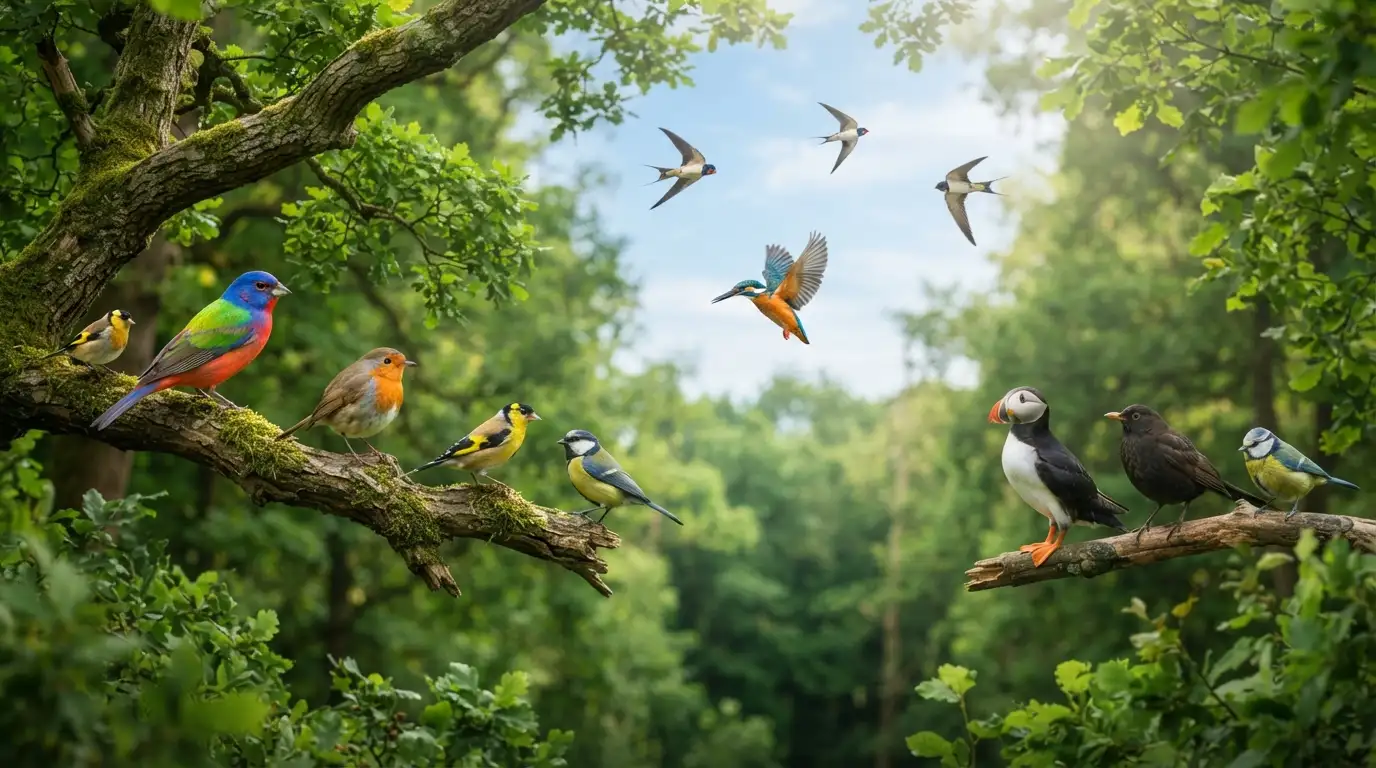
Synonyms for birds help you describe feathered creatures, wildlife, and natural themes without repeating the same word in your daily writing.
Imagine writing a park description and repeating the word “bird” six times. Your text quickly feels dry, repetitive, and uninspiring.
Learning synonyms for birds transforms plain sentences into expressive prose. It adds color to your essays, blog posts, and daily talks.
Mastering synonyms for birds empowers students, bloggers, content writers, and English learners to speak with precision and creative style.
What Does “Birds” Really Mean?
The word “birds” refers to warm-blooded, egg-laying vertebrate animals characterized by feathers, wings, toothless beaked jaws, and high metabolic rates.
In everyday English, native speakers use the term to talk about nature, wildlife, pets, or freedom, while informal British slang uses it to mean young women.
Grammatically, “birds” acts as a plural countable noun. In simple English, it means winged animals that usually fly and lay eggs.
Connotative Meaning
Connotation means the emotional association or cultural feeling attached to a specific word beyond its strict dictionary definition.
- Positive tone: Symbolizes freedom, grace, joy, peace, intelligence, and soaring beauty.
- Negative tone: Associated with pests, noise, scavenging behavior, or looming danger in horror contexts.
- Neutral tone: Denotes biological classification, nature observation, or everyday animals without emotional bias.
Etymology and History
The word comes from the Old English bridd, which originally meant a young bird or nestling rather than all winged creatures.
- Old English (450–1100): Bridd referred specifically to chicks or young nestlings, while fugel was used for adult birds.
- Middle English (1100–1500): Brid or byrd shifted to mean any bird, gradually replacing fowel as the primary general term.
- Modern English (1500–Present): “Bird” became the universal word, while “fowl” shifted toward farm poultry and game.
Pronunciation
- US: /bɜrdz/
- UK: /bɜːdz/
Syllables and Affixation Pattern
- Syllables: birds (1 syllable)
- Root: Bird
- Prefix: None
- Suffix: -s (plural suffix)
45 Essential Synonyms for Birds
Fowl (Noun) — US: /faʊl/ | UK: /faʊl/
Meaning: Domesticated or wild birds kept for eggs, meat, or hunting, like chickens and ducks.
Examples:
- The farmer feeds his fowl every morning at sunrise.
- Wild fowl gather near the lake during autumn.
Avian (Adjective / Noun) — US: /ˈeɪviən/ | UK: /ˈeɪvɪən/
Meaning: Relating to birds or a bird species in scientific and formal contexts.
Examples:
- The sanctuary protects several rare avian species.
- Researchers study avian migration patterns across continents.
Feathered friends (Noun Phrase) — US: /ˈfɛðərd frɛndz/ | UK: /ˈfɛðəd frɛndz/
Meaning: A warm, informal phrase used to describe wild or pet birds affectionately.
Examples:
- We built a small wooden house for our feathered friends.
- Winter is tough for our feathered friends in the backyard.
Fledglings (Noun) — US: /ˈflɛdʒlɪŋz/ | UK: /ˈflɛdʒlɪŋz/
Meaning: Young birds that have just grown their feathers and are learning to fly.
Examples:
- The mother robin feeds her hungry fledglings in the nest.
- Two fledglings tried their first flight off the porch rail.
Nestlings (Noun) — US: /ˈnɛstlɪŋz/ | UK: /ˈnɛstlɪŋz/
Meaning: Very young birds that are too young to leave their nest.
Examples:
- You can hear the tiny nestlings chirping for food.
- The storm blew the nestlings down from the oak branch.
Songbirds (Noun) — US: /ˈsɔŋˌbɜrdz/ | UK: /ˈsɒŋˌbɜːdz/
Meaning: Birds that produce musical calls or melodic sounds.
Examples:
- Morning walks are peaceful with songbirds singing above.
- Her garden attracts colorful songbirds all summer long.
Warblers (Noun) — US: /ˈwɔrblərz/ | UK: /ˈwɔːbləz/
Meaning: Small songbirds known for singing intricate and lively melodies.
Examples:
- Yellow warblers fluttered through the blooming apple trees.
- The woods echoed with the sweet calls of warblers.
Waterfowl (Noun) — US: /ˈwɔtərˌfaʊl/ | UK: /ˈwɔːtəfaʊl/
Meaning: Birds that swim and live near lakes, rivers, or ponds, such as ducks and geese.
Examples:
- Ducks and swans are common waterfowl seen at the city park.
- The protected wetlands provide a sanctuary for migratory waterfowl.
Game birds (Noun Phrase) — US: /geɪm bɜrdz/ | UK: /geɪm bɜːdz/
Meaning: Wild birds hunted for sport or food, such as pheasants and quail.
Examples:
- Hunters search the thick brush for game birds in autumn.
- The restaurant menu featured roasted game birds with herbs.
Poultry (Noun) — US: /ˈpoʊltri/ | UK: /ˈpəʊltri/
Meaning: Farmed birds raised for their meat or eggs, including chickens, turkeys, and ducks.
Examples:
- Fresh eggs come from poultry raised on organic farms.
- The farmer moved his poultry into the barn before dark.
Raptors (Noun) — US: /ˈræptərz/ | UK: /ˈræptəz/
Meaning: Birds of prey that hunt and eat other animals using strong claws and sharp beaks.
Examples:
- Eagles and falcons are powerful raptors with sharp eyesight.
- We watched raptors soaring high above the rocky cliffs.
Birds of prey (Noun Phrase) — US: /bɜrdz ʌv preɪ/ | UK: /bɜːdz ɒv preɪ/
Meaning: Predatory birds that catch live animals for food.
Examples:
- Owls are nocturnal birds of prey that hunt small rodents.
- Red-tailed hawks are common birds of prey in countryside fields.
Wildfowl (Noun) — US: /ˈwaɪldˌfaʊl/ | UK: /ˈwaɪldfaʊl/
Meaning: Wild game birds or waterfowl living free in nature.
Examples:
- The lake area is preserved to protect native wildfowl.
- Large flocks of wildfowl land on the marsh every evening.
Sea birds (Noun Phrase) — US: /si bɜrdz/ | UK: /siː bɜːdz/
Meaning: Birds that live near the ocean and spend long periods over sea water.
Examples:
- Seagulls and albatrosses are typical sea birds found along coastlines.
- Sea birds nested along the steep ocean cliffs.
Shorebirds (Noun) — US: /ˈʃɔrˌbɜrdz/ | UK: /ˈʃɔːbɜːdz/
Meaning: Birds that frequent beaches, mudflats, and coastline shorelines.
Examples:
- Sandpipers run along the wet sand searching for shorebirds’ food.
- Volunteers count shorebirds along the coast every spring.
Waders (Noun) — US: /ˈweɪdərz/ | UK: /ˈweɪdəz/
Meaning: Long-legged birds that walk through shallow water to catch food.
Examples:
- Herons and egrets are striking waders seen in coastal marshes.
- The camera caught several waders standing motionless in the stream.
Wading birds (Noun Phrase) — US: /ˈweɪdɪŋ bɜrdz/ | UK: /ˈweɪdɪŋ bɜːdz/
Meaning: Birds equipped with long legs adapted for wading in water margins.
Examples:
- Flamingos are famous wading birds known for bright pink feathers.
- Tall wading birds hunted minnows along the reed beds.
Avians (Noun) — US: /ˈeɪviənz/ | UK: /ˈeɪvɪənz/
Meaning: A formal or scientific plural noun referring to members of the bird class.
Examples:
- Vets specialized in treating unfamiliar avians in city clinics.
- Ancient avians shared traits with small prehistoric reptiles.
Feathered creatures (Noun Phrase) — US: /ˈfɛðərd ˈkriːtʃərz/ | UK: /ˈfɛðəd ˈkriːtʃəz/
Meaning: A descriptive phrase used to refer to birds in creative writing.
Examples:
- Mysterious feathered creatures settled high in the canopy.
- The sanctuary shelters injured feathered creatures until they heal.
Flying creatures (Noun Phrase) — US: /ˈflaɪɪŋ ˈkriːtʃərz/ | UK: /ˈflaɪɪŋ ˈkriːtʃəz/
Meaning: Any living animals that possess wings and fly through the air.
Examples:
- Twilight brought hundreds of small flying creatures across the lake.
- Children marveled at the flying creatures inside the large aviary.
Aves (Noun) — US: /ˈeɪviːz/ | UK: /ˈeɪviːz/
Meaning: The formal biological class name that encompasses all bird species.
Examples:
- All living birds belong to the biological class Aves.
- Biology textbooks classify penguins within Aves despite their inability to fly.
Winged creatures (Noun Phrase) — US: /wɪŋd ˈkriːtʃərz/ | UK: /wɪŋd ˈkriːtʃəz/
Meaning: Animals with wings, commonly used as a poetic alternative for birds.
Examples:
- Majestic winged creatures glided effortlessly across the canyon sky.
- The forest was filled with colorful winged creatures every dawn.
Winged animals (Noun Phrase) — US: /wɪŋd ˈænəməlz/ | UK: /wɪŋd ˈænɪməlz/
Meaning: Animals that have wings, including birds and bats.
Examples:
- Feathers distinguish birds from all other winged animals on Earth.
- Cave systems shelter various winged animals away from daylight.
Flock (Noun) — US: /flɑːk/ | UK: /flɒk/
Meaning: A group of birds gathering, feeding, or flying together.
Examples:
- A flock of geese flew south across the clear sky.
- The farmer scattered seeds to feed the noisy flock.
Nesting birds (Noun Phrase) — US: /ˈnɛstɪŋ bɜrdz/ | UK: /ˈnɛstɪŋ bɜːdz/
Meaning: Birds actively building nests, laying eggs, or raising young.
Examples:
- Keep your dogs on leashes to avoid disturbing nesting birds.
- Quiet signs protected the dunes where nesting birds lay eggs.
Migratory birds (Noun Phrase) — US: /ˈmaɪɡrətɔːri bɜrdz/ | UK: /maɪˈɡreɪtəri bɜːdz/
Meaning: Birds that travel long distances seasonally between breeding and wintering grounds.
Examples:
- The lake sanctuary supports millions of migratory birds each autumn.
- Scientists track migratory birds using lightweight GPS tags.
Passage birds (Noun Phrase) — US: /ˈpæsɪdʒ bɜrdz/ | UK: /ˈpæsɪdʒ bɜːdz/
Meaning: Birds passing through a region temporarily during seasonal migration.
Examples:
- Spring brings colorful passage birds to coastal bushes for brief rests.
- Birdwatchers set up cameras early to catch passing passage birds.
Native birds (Noun Phrase) — US: /ˈneɪtɪv bɜrdz/ | UK: /ˈneɪtɪv bɜːdz/
Meaning: Bird species naturally occurring in a specific region or ecosystem.
Examples:
- Planting local trees provides ideal shelter for native birds.
- Park rangers work to protect native birds from invasive species.
bizarre birds (Noun Phrase) — US: /ɪɡˈzɑːtɪk bɜrdz/ | UK: /ɪɡˈzɒtɪk bɜːdz/
Meaning: Brightly colored or unusual non-native bird species, often from tropical regions.
Examples:
- The botanical conservatory houses rare, alluring birds from South America.
- Parrots and toucans are classic fascinating birds with vibrant feathers.
Tropical birds (Noun Phrase) — US: /ˈtrɑːpɪkl bɜrdz/ | UK: /ˈtrɒpɪkl bɜːdz/
Meaning: Bird species residing naturally in warm, humid tropical rainforests.
Examples:
- Bright macaws are famous tropical birds living in lush jungle canopies.
- Tour guides showed visitors colorful tropical birds along the riverbank.
Cage birds (Noun Phrase) — US: /keɪdʒ bɜrdz/ | UK: /keɪdʒ bɜːdz/
Meaning: Birds kept indoors in cages as pets, such as canary birds or parakeets.
Examples:
- Canaries and finches have a long history as popular cage birds.
- Specialty stores sell custom toys designed specifically for cage birds.
Aviary birds (Noun Phrase) — US: /ˈeɪviɛri bɜrdz/ | UK: /ˈeɪvɪəri bɜːdz/
Meaning: Birds housed in large flight enclosures rather than small cages.
Examples:
- Zoo visitors can walk right among friendly aviary birds.
- The sanctuary raised funds to build a spacious shelter for rescued aviary birds.
Tree-dwellers (Noun) — US: /triː ˈdwɛlərz/ | UK: /triː ˈdwɛləz/
Meaning: Birds or animals that spend most of their life living up in trees.
Examples:
- Woodpeckers and nuthatches are skilled tree-dwellers that hunt insects in bark.
- Dense forest floors offer safety to small tree-dwellers nesting overhead.
Perching birds (Noun Phrase) — US: /ˈpɜːrtʃɪŋ bɜrdz/ | UK: /ˈpɜːtʃɪŋ bɜːdz/
Meaning: Passerine birds with feet adapted for gripping branches securely.
Examples:
- Sparrows and finches are common perching birds seen in garden bushes.
- Long toes allow perching birds to sleep on thin branches safely.
Passerines (Noun) — US: /ˈpæsəraɪnz/ | UK: /ˈpæsəraɪnz/
Meaning: Members of the largest bird order, characterized by perching feet and singing ability.
Examples:
- Over half of all living bird species belong to passerines.
- Passerines fill woodland gardens with early morning chorus sounds.
Seabirds (Noun) — US: /ˈsiːbɜrdz/ | UK: /ˈsiːbɜːdz/
Meaning: Birds adapted primarily to life in open ocean environments.
Examples:
- Oceanic research ships often follow flocks of diving seabirds.
- Pollution poses severe threats to breeding colonies of coastal seabirds.
Coastal birds (Noun Phrase) — US: /ˈkoʊstl bɜrdz/ | UK: /ˈkəʊstl bɜːdz/
Meaning: Birds living near sea coasts, bays, and ocean shores.
Examples:
- Pelicans and gulls are familiar coastal birds along sandy beaches.
- Strong coastal winds carried groups of coastal birds toward harbor rocks.
Marsh birds (Noun Phrase) — US: /mɑːrʃ bɜrdz/ | UK: /mɑːʃ bɜːdz/
Meaning: Birds residing in grassy wetlands, swamps, and muddy marshes.
Examples:
- Bitterns are elusive marsh birds that blend seamlessly into tall reeds.
- Environmental conservation helps preserve habitats for threatened marsh birds.
Forest birds (Noun Phrase) — US: /ˈfɔːrɪst bɜrdz/ | UK: /ˈfɒrɪst bɜːdz/
Meaning: Bird species adapted specifically to deep woodland and jungle habitats.
Examples:
- Owls and wood pigeons are typical forest birds seen in oak woods.
- Logging operations destroy critical nesting trees used by forest birds.
Backyard birds (Noun Phrase) — US: /ˌbækˈjɑːrd bɜrdz/ | UK: /ˌbækˈjɑːd bɜːdz/
Meaning: Common, friendly birds visiting residential gardens and bird feeders.
Examples:
- Blue jays and cardinals are beloved backyard birds across North America.
- Setting up fresh water invites colorful backyard birds into your garden.
Pipits (Noun) — US: /ˈpɪpɪts/ | UK: /ˈpɪpɪts/
Meaning: Small, slender, ground-dwelling songbirds with dull brown plumage.
Examples:
- Meadow pipits sang while flying high over grassy hillsides.
- We spotted pipits hunting insects along open field paths.
Finches (Noun) — US: /ˈfɪntʃɪz/ | UK: /ˈfɪntʃɪz/
Meaning: Small passerine birds with short, stubby beaks built for cracking seeds.
Examples:
- Bright red house finches visited our balcony seed feeder daily.
- Darwin studied finches in the Galapagos Islands to explain evolution.
Fowls (Noun) — US: /faʊlz/ | UK: /faʊlz/
Meaning: An alternative plural form referring to birds, especially domesticated poultry or game.
Examples:
- The barnyard was filled with the loud noises of various fowls.
- Farmers carefully protect their fowls from nighttime predators.
Birds of a feather (Noun Phrase) — US: /bɜrdz ʌv ə ˈfɛðər/ | UK: /bɜːdz ɒv ə ˈfɛðə/
Meaning: Idiomatic expression meaning people with similar character, interests, or backgrounds.
Examples:
- Those two engineers are birds of a feather; they discuss tech all day.
- As birds of a feather, the painters opened an art studio together.
Nesting pair (Noun Phrase) — US: /ˈnɛstɪŋ pɛr/ | UK: /ˈnɛstɪŋ peə/
Meaning: Two mated birds working together to build a nest and raise offspring.
Examples:
- A nesting pair of bald eagles built a large nest atop the pine tree.
- Biologists monitored the nesting pair until their chicks hatched.
Synonyms Tone
Choosing the right synonym depends on matching the word’s tone to your writing context:
- Positive / Affectionate Tone: Feathered friends, Songbirds, Warblers, Backyard birds, Fledglings.
- Neutral / Descriptive Tone: Fowl, Waterfowl, Shorebirds, Waders, Flock, Migratory birds, Passerines.
- Formal / Academic Tone: Avian, Avians, Aves, Birds of prey, Raptors.
- Creative / Poetic / Informal Tone: Winged creatures, Feathered creatures, Flying creatures, Birds of a feather.
Tone matters because using scientific terms like “Aves” in a personal blog post sounds rigid, while calling wild hawks “feathered friends” in a research paper sounds overly informal.
Mini Comparison: “Birds” vs. Close Alternatives
| Feature | Birds | Fowl | Avian |
| Primary Context | General, everyday, all winged species | Farm poultry, game birds, waterfowl | Scientific, medical, formal writing |
| Tone | Neutral, versatile, universal | Practical, agricultural, traditional | Technical, academic, formal |
| Best Used When… | Describing any bird in common speech. | Discussing poultry, hunting, or farming. | Writing research papers or medical reports. |
Context-Based Usage
Daily Conversation
In casual speech, use simple terms like “birds,” “songbirds,” or “backyard birds.” For example: “I love listening to backyard birds while drinking morning coffee.”
Writing or Blogging
Bloggers should vary terms using descriptive phrases like “feathered creatures,” “flocks,” or “nesting birds.” Using synonyms for birds prevents repetitive sentence structures.
Professional or Academic Tone
In scientific writing, prefer precise terms such as “avians,” “Aves,” or “raptors.” For example: “The sanctuary monitors health risks in local avian populations.”
Creative Writing
Poets and storytellers benefit from evocative phrasing like “winged creatures” or “feathered friends” to build rich visual imagery in their stories.
Common Mistakes & Native Usage
Misuse Scenarios
- Confusing “Fowl” with “Foul”: “Fowl” refers to birds like chickens, while “foul” means dirty, offensive, or bad.
- Using “Poultry” for Wild Raptors: “Poultry” applies strictly to farmed birds raised for meat or eggs, not wild eagles or hawks.
- Overusing “Aves” in Casual Settings: Using formal taxonomy in everyday speech sounds robotic and unnatural.
Register Notes
- Formal Written English: Avian, Aves, Raptors, Passerines.
- Informal Spoken English: Feathered friends, Backyard birds, Birds of a feather.
For more insights on building precise vocabulary across different registers, exploring formal vocabulary choices can help sharpen your professional communication skills.
Real-Life Mini Scenarios
- Workplace: “Our veterinary clinic specializes in treating peculiar avians and domestic birds.”
- Social Situations: “We set up seed feeders to welcome local feathered friends to our new backyard.”
- Media & Publishing: “Documentary crews tracked rare migratory birds across North American wetlands.”
- Storytelling: “At dusk, hundreds of winged creatures flew silently across the darkening horizon.”
Interactive Practice Exercise
Test your understanding of these terms with the following questions.
Questions
- Which term is best suited for an academic research paper on bird health?
- A) Feathered friends
- B) Avian
- C) Backyard birds
- D) Flying creatures
- What does the word “poultry” specifically refer to?
- A) Wild eagles and falcons
- B) Farmed birds raised for eggs or meat
- C) Migratory ocean birds
- D) Small singing garden birds
- Select the phrase that carries an affectionate, informal tone.
- A) Aves
- B) Raptors
- C) Feathered friends
- D) Passerines
- Which term describes young birds that have just grown flight feathers?
- A) Nestlings
- B) Fledglings
- C) Poultry
- D) Waders
- Complete the sentence: “The lake provides a safe habitat for migratory __________ every autumn.”
- A) waterfowl
- B) poultry
- C) cage birds
- D) aviary birds
- What type of birds are hawks, eagles, and owls classified as?
- A) Songbirds
- B) Birds of prey
- C) Waterfowl
- D) Cage birds
- Which homophone refers to something dirty or offensive rather than a bird?
- A) Fowl
- B) Foul
- C) Avian
- D) Flock
- Which term is a poetic alternative for birds in storytelling?
- A) Poultry
- B) Winged creatures
- C) Fowls
- D) Game birds
- What is the formal biological class name for all birds?
- A) Raptors
- B) Passerines
- C) Aves
- D) Waders
- What mistake occurs when calling wild eagles “poultry”?
- A) Misspelling the noun
- B) Confusing farmed food birds with wild predatory birds
- C) Using a term that is too formal
- D) Changing the part of speech
Application Task
Write one original sentence about a visit to a park or nature reserve using the synonym songbirds.
Answer Key:
1: B | 2: B | 3: C | 4: B | 5: A | 6: B | 7: B | 8: B | 9: C | 10: B
Conclusion
Learning varied synonyms for birds boosts your vocabulary and gives you the tools needed to write clear, vivid, and engaging content.
Using varied words prevents awkward repetition and lets you match your tone precisely to your audience, whether casual or academic.
Incorporating terms like “feathered friends,” “avians,” and “songbirds” into your writing naturally improves your communication and creative expression.
Start using synonyms for birds today in your daily conversations, emails, and writing assignments to make your English sound natural and polished.

Evelyn Hartwell is an English vocabulary writer who focuses on clear, practical language for learners and everyday readers. Her writing explores synonyms, word meanings, pronunciation, tone, and natural usage. She believes that learning vocabulary should be simple, useful, and enjoyable. Her articles are designed to help students, bloggers, and English learners choose the right words with greater confidence.