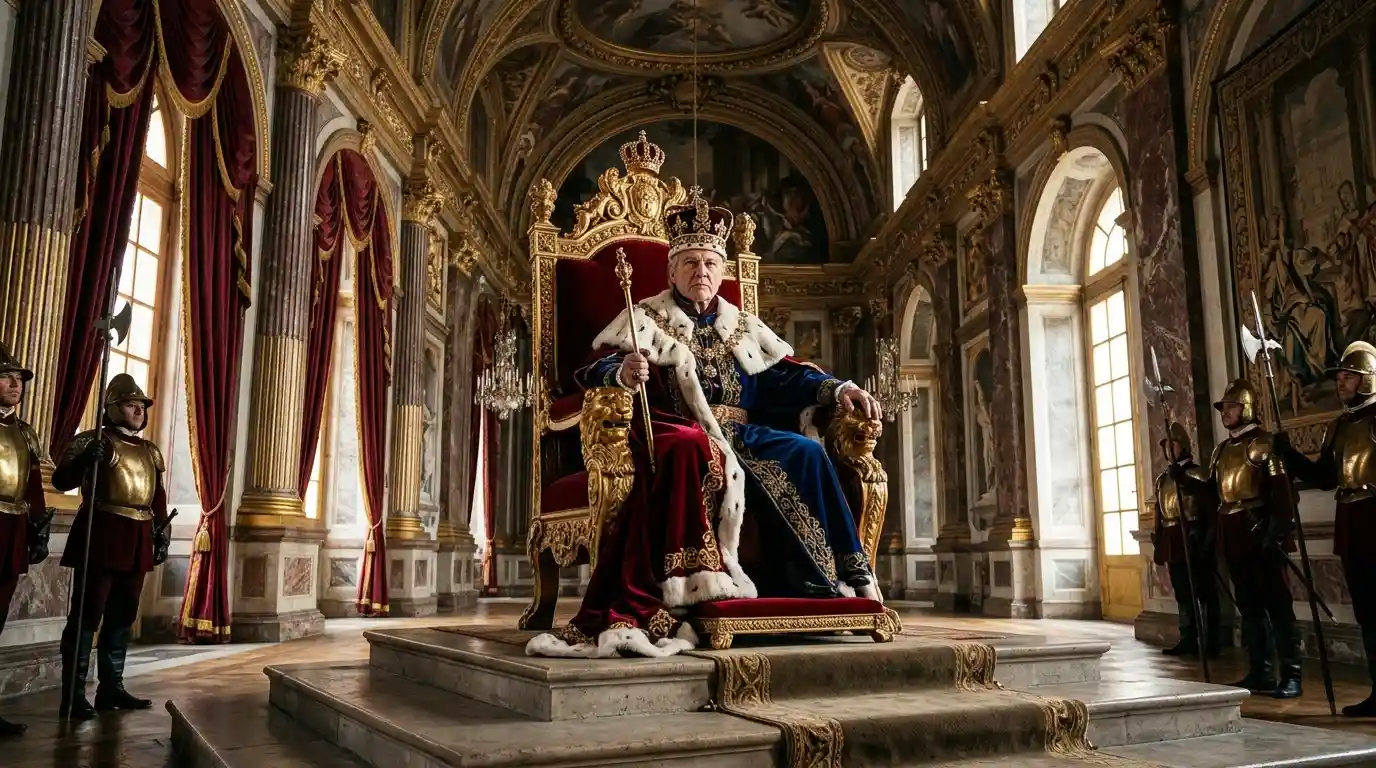
Absolute monarchy synonyms can help you write better history essays, political reports, creative novels, and daily educational discussions.
Imagine studying King Louis XIV of France in history class and needing fresh terms to describe his total rule over state affairs. Exploring absolute monarchy synonyms allows you to express different shades of unchecked power accurately.
Understanding these absolute monarchy synonyms expands your vocabulary and builds political literacy. Mastering absolute monarchy synonyms is ideal for students, bloggers, content writers, and history enthusiasts wanting clear communication.
What Does “Absolute Monarchy” Really Mean?
The phrase “absolute monarchy” describes a form of government where a single hereditary ruler holds supreme authority unrestricted by written laws or constitutions. In simple terms, it means a king or queen possesses total power over a nation.
Native speakers view “absolute monarchy” as a precise political science term. It appears in history textbooks, legal analysis, global news commentary, and political science lectures.
- Part of Speech: Noun phrase
- Definition: A government system where a hereditary sovereign holds supreme, unrestricted authority without constitutional limits.
Connotative Meaning
Words carry distinct emotional tones depending on context and speaker intent.
(Connotation refers to the secondary or emotional meaning associated with a word beyond its strict literal definition.)
- Positive tone: Can imply stability, decisive leadership, royal majesty, and unified national direction.
- Negative tone: Suggests tyranny, oppressive rule, total control, suppression of freedom, and lack of democracy.
- Neutral tone: Denotes a historical government model, political structure, or constitutional classification.
Etymology
The phrase joins two Latin roots. “Absolute” stems from Latin absolutus (meaning “unbound” or “free from limit”). “Monarchy” comes from Greek monarkhia (from monos, meaning “single,” and arkhein, meaning “to rule”).
Historical Evolution:
- Old English (450–1100): English used native Germanic terms like ānwealda (single ruler) before Anglo-Norman influences.
- Middle English (1100–1500): Words like monarchie entered English via Old French to describe royal kingdoms.
- Modern English (1500–Present): During the 1600s, political theorists combined these terms to contrast unrestricted kings with constitutional parliaments.
Pronunciation (US & UK – IPA)
- US: /ˈæb.sə.luːt ˈmɑː.nɚ.ki/
- UK: /ˈæb.sə.luːt ˈmɒn.ə.ki/
Syllables & Structure
- Syllable Breakdown: ab-so-lute mon-ar-chy (5 syllables)
- Root: Absolutus (unbound) + Monarkhia (single rule)
- Prefix: Ab- (from/away)
- Suffix: -y (noun suffix)
Synonyms List (Core Section)
Absolutism (Noun) — US: /ˈæb.sə.luː.tɪ.zəm/ | UK: /ˈæb.sə.luː.tɪ.zəm/
Meaning: A political system where a ruler holds complete unrestricted power.
Examples:
- European history during the seventeenth century was defined by royal absolutism.
- The professor gave a long lecture on seventeenth-century European absolutism.
Autocracy (Noun) — US: /ɑːˈtɑː.krə.si/ | UK: /ɔːˈtɒk.rə.si/
Meaning: A system of government by one person with absolute supreme power.
Examples:
- The country transitioned from royal autocracy toward parliamentary democracy slowly.
- Citizens protested against the strict rules enforced by the autocracy.
Despotism (Noun) — US: /ˈdes.pə.tɪ.zəm/ | UK: /ˈdes.pə.tɪ.zəm/
Meaning: The exercise of absolute power in a cruel or oppressive way.
Examples:
- Local communities suffered under centuries of harsh royal despotism.
- Writers condemned the government for slipping into cruel despotism.
Totalitarianism (Noun) — US: /toʊˌtæl.əˈter.i.ə.nɪ.zəm/ | UK: /təʊˌtæl.ɪˈteə.ri.ə.nɪ.zəm/
Meaning: A central political system that requires complete subservience to state authority.
Examples:
- Modern scholars compare ancient absolute rule to twentieth-century totalitarianism.
- The novel depicts a scary future governed by total totalitarianism.
Dictatorship (Noun) — US: /dɪkˈteɪ.t̬ɚ.ʃɪp/ | UK: /dɪkˈteɪ.tə.ʃɪp/
Meaning: Government by a ruler who has total power over a country.
Examples:
- The military staged a coup and established a strict dictatorship.
- Life under a military dictatorship brought severe limits on speech.
Monocracy (Noun) — US: /məˈnɑː.krə.si/ | UK: /mɒˈnɒk.rə.si/
Meaning: Government by a single person holding total political control.
Examples:
- The ancient kingdom operated as a strict monocracy for centuries.
- Historians identified key features of traditional monocracy in the records.
Tyranny (Noun) — US: /ˈtɪr.ə.ni/ | UK: /ˈtɪr.ə.ni/
Meaning: Cruel and oppressive government rule exercised by an absolute power.
Examples:
- Patriots fought brave battles to free their homeland from tyranny.
- The new constitution was designed to prevent political tyranny.
Unchecked monarchy (Noun) — US: /ʌnˈtʃekt ˈmɑː.nɚ.ki/ | UK: /ʌnˈtʃekt ˈmɒn.ə.ki/
Meaning: A royal kingdom operating without legislative or legal limits on the throne.
Examples:
- An unchecked monarchy leaves citizens without legal protections against royal decrees.
- Parliaments were created to limit the danger of an unchecked monarchy.
Unlimited monarchy (Noun) — US: /ʌnˈlɪm.ɪ.t̬ɪd ˈmɑː.nɚ.ki/ | UK: /ʌnˈlɪm.ɪ.tɪd ˈmɒn.ə.ki/
Meaning: A kingdom ruled by a monarch whose royal authority has no boundaries.
Examples:
- King Louis XIV ruled France under a famous unlimited monarchy model.
- The reform movement sought to convert the unlimited monarchy into a republic.
Pure monarchy (Noun) — US: /pjʊr ˈmɑː.nɚ.ki/ | UK: /pjʊər ˈmɒn.ə.ki/
Meaning: A government where the monarch executes all executive and judicial powers alone.
Examples:
- In a pure monarchy, the sovereign acts as lawmaker and judge.
- Scholars debate whether any pure monarchy exists in the modern world.
Absolute rule (Noun) — US: /ˈæb.sə.luːt ruːl/ | UK: /ˈæb.sə.luːt ruːl/
Meaning: Total administrative and political control maintained by a single ruler.
Examples:
- The emperor maintained absolute rule across all conquered territories for decades.
- Rebellions broke out against the monarch’s strict absolute rule.
Totalitarian monarchy (Noun) — US: /toʊˌtæl.əˈter.i.ən ˈmɑː.nɚ.ki/ | UK: /təʊˌtæl.ɪˈteə.ri.ən ˈmɒn.ə.ki/
Meaning: A royal government that asserts complete state control over public life.
Examples:
- The fictional kingdom was written as a dark totalitarian monarchy.
- Secret police protected the interests of the totalitarian monarchy.
Autocratic regime (Noun) — US: /ˌɑː.t̬əˈkræt̬.ɪk reɪˈʒiːm/ | UK: /ˌɔː.təˈkræt.ɪk reɪˈʒiːm/
Meaning: An authoritarian government system centered around one supreme ruler.
Examples:
- International sanctions were imposed on the aggressive autocratic regime.
- The autocratic regime collapsed following widespread public protests.
Authoritarian rule (Noun) — US: /əˌθɔːr.əˈter.i.ən ruːl/ | UK: /ɔːˌθɒr.ɪˈteə.ri.ən ruːl/
Meaning: Strict governance that demands obedience to central state authority over personal freedom.
Examples:
- Citizens lived quietly under decades of firm authoritarian rule.
- Newspaper editors faced censorship under strict authoritarian rule.
Unlimited rule (Noun) — US: /ʌnˈlɪm.ɪ.t̬ɪd ruːl/ | UK: /ʌnˈlɪm.ɪ.tɪd ruːl/
Meaning: Governance that operates without constitutional, legislative, or judicial oversight.
Examples:
- Legal scholars warned against allowing any leader to gain unlimited rule.
- The noble barons rebelled to end the emperor’s unlimited rule.
Unrestricted rule (Noun) — US: /ˌʌn.rɪˈstrɪk.tɪd ruːl/ | UK: /ˌʌn.rɪˈstrɪk.tɪd ruːl/
Meaning: Total control exercised free from legal restrictions or public elections.
Examples:
- Unrestricted rule often leads to rapid systemic corruption in government.
- The charter established clear limits to end unrestricted rule.
One-man rule (Noun) — US: /wʌn mæn ruːl/ | UK: /wʌn mæn ruːl/
Meaning: An informal description of government controlled entirely by a single individual.
Examples:
- Voters rejected the proposal to prevent a return to one-man rule.
- Decades of one-man rule left national state institutions weak.
Monocratic government (Noun) — US: /ˌmɑː.nəˈkræt̬.ɪk ˈɡʌv.ɚn.mənt/ | UK: /ˌmɒn.əˈkræt.ɪk ˈɡʌv.ən.mənt/
Meaning: A formal political structure organized under the singular command of one leader.
Examples:
- The paper analyzed the administrative efficiency of monocratic government structures.
- Monocratic government systems struggle with long-term leadership transitions.
Imperial absolutism (Noun) — US: /ɪmˈpɪr.i.əl ˈæb.sə.luː.tɪ.zəm/ | UK: /ɪmˈpɪə.ri.əl ˈæb.sə.luː.tɪ.zəm/
Meaning: Supreme unrestricted political authority exercised across an entire empire.
Examples:
- Imperial absolutism unified distant provinces under a single imperial crown.
- The czar exercised imperial absolutism across vast Eurasian territories.
Royal absolutism (Noun) — US: /ˈrɔɪ.əl ˈæb.sə.luː.tɪ.zəm/ | UK: /ˈrɔɪ.əl ˈæb.sə.luː.tɪ.zəm/
Meaning: The principle of complete, unchecked political power held by a monarch.
Examples:
- French history features famous examples of seventeenth-century royal absolutism.
- Writers debated whether divine right justified royal absolutism.
Absolute sovereignty (Noun) — US: /ˈæb.sə.luːt ˈsɑːv.rən.ti/ | UK: /ˈæb.sə.luːt ˈsɒv.rɪn.ti/
Meaning: Supreme, independent power and authority held by a single governing entity.
Examples:
- The king claimed absolute sovereignty over all land within national borders.
- Modern constitutions divide authority to avoid concentrated absolute sovereignty.
Sovereign dictatorship (Noun) — US: /ˈsɑːv.rən dɪkˈteɪ.t̬ɚ.ʃɪp/ | UK: /ˈsɒv.rɪn dɪkˈteɪ.tə.ʃɪp/
Meaning: Total authority claimed by a supreme leader without legal constitutional boundaries.
Examples:
- The kingdom functioned as a sovereign dictatorship during wartime crisis periods.
- Historians described the reign as a supreme sovereign dictatorship.
Unchecked autocracy (Noun) — US: /ʌnˈtʃekt ɑːˈtɑː.krə.si/ | UK: /ʌnˈtʃekt ɔːˈtɒk.rə.si/
Meaning: An autocracy that faces no internal or external legal limits on power.
Examples:
- An unchecked autocracy rarely tolerates public criticism or free reporting.
- The charter was drafted to guard against an unchecked autocracy.
Unrestrained monarchy (Noun) — US: /ˌʌn.rɪˈstreɪnd ˈmɑː.nɚ.ki/ | UK: /ˌʌn.rɪˈstreɪnd ˈmɒn.ə.ki/
Meaning: A royal regime operating without constitutional balance or parliamentary control.
Examples:
- The revolution aimed to overthrow the unrestrained monarchy completely.
- Taxes were increased rapidly under the unrestrained monarchy.
Totalitarian regime (Noun) — US: /toʊˌtæl.əˈter.i.ən reɪˈʒiːm/ | UK: /təʊˌtæl.ɪˈteə.ri.ən reɪˈʒiːm/
Meaning: An oppressive government network that controls all private and public life.
Examples:
- Human rights organizations documented abuses by the totalitarian regime.
- Refugees fled across borders to escape the totalitarian regime.
Arbitrary rule (Noun) — US: /ˈɑːr.bə.trer.i ruːl/ | UK: /ˈɑː.bɪ.trər.i ruːl/
Meaning: Government based on individual whims rather than established legal laws.
Examples:
- Business owners suffered under years of unpredictable, arbitrary rule.
- The bill of rights protected citizens against arbitrary rule.
Despotic regime (Noun) — US: /dɪˈspɑː.t̬ɪk reɪˈʒiːm/ | UK: /dɪˈspɒt.ɪk reɪˈʒiːm/
Meaning: A government entity operating through harsh, cruel, and total authority.
Examples:
- Nearby nations united to oppose the aggressive despotic regime.
- Freedom of speech was abolished by the despotic regime.
Single-ruler system (Noun) — US: /ˈsɪŋ.ɡəl ˈruː.lɚ ˈsɪs.təm/ | UK: /ˈsɪŋ.ɡəl ˈruː.lə ˈsɪs.təm/
Meaning: A government structure centered around one individual decision-maker.
Examples:
- Political analysts compared the traditional empire to a single-ruler system.
- Transitioning from a single-ruler system requires building independent courts.
Dictatorial monarchy (Noun) — US: /ˌdɪk.təˈtɔːr.i.əl ˈmɑː.nɚ.ki/ | UK: /ˌdɪk.təˈtɔː.ri.əl ˈmɒn.ə.ki/
Meaning: A royal state where the monarch rules with harsh dictatorial authority.
Examples:
- The country experienced decades of oppression under a dictatorial monarchy.
- Protesters gathered in capital streets demanding an end to the dictatorial monarchy.
Hereditary dictatorship (Noun) — US: hɪˈred.ə.ter.i dɪkˈteɪ.t̬ɚ.ʃɪp/ | UK: hɪˈred.ɪ.tər.i dɪkˈteɪ.tə.ʃɪp/
Meaning: Total political control passed down through royal family bloodlines.
Examples:
- The nation was trapped in a hereditary dictatorship for three generations.
- Analysts labeled the isolated kingdom a hereditary dictatorship.
Sovereign absolutism (Noun) — US: /ˈsɑːv.rən ˈæb.sə.luː.tɪ.zəm/ | UK: /ˈsɒv.rɪn ˈæb.sə.luː.tɪ.zəm/
Meaning: Complete political authority vested entirely in a sovereign ruler’s person.
Examples:
- The textbook explains how sovereign absolutism shaped early modern Europe.
- Royal courts promoted the idea of sovereign absolutism.
Uncontrolled rule (Noun) — US: /ˌʌn.kənˈtroʊld ruːl/ | UK: /ˌʌn.kənˈtrəʊld ruːl/
Meaning: Governance operating without external regulation, voting, or legal oversight.
Examples:
- Uncontrolled rule led to heavy state spending on royal palaces.
- The reforms ended centuries of uncontrolled rule in the realm.
Strict autocracy (Noun) — US: /strɪkt ɑːˈtɑː.krə.si/ | UK: /strɪkt ɔːˈtɒk.rə.si/
Meaning: A rigid system of single-person governance with harsh enforcement.
Examples:
- Life in the isolated province was governed by strict autocracy.
- The military enforced strict autocracy throughout the kingdom.
Absolute kingship (Noun) — US: /ˈæb.sə.luːt ˈkɪŋ.ʃɪp/ | UK: /ˈæb.sə.luːt ˈkɪŋ.ʃɪp/
Meaning: The office or condition of a king possessing total political authority.
Examples:
- The era of absolute kingship created powerful centralized state governments.
- King Louis XIV was the ultimate symbol of European absolute kingship.
Unbound monarchy (Noun) — US: /ʌnˈbaʊnd ˈmɑː.nɚ.ki/ | UK: /ʌnˈbaʊnd ˈmɒn.ə.ki/
Meaning: A monarchy free from constitutional limits, treaties, or legal checks.
Examples:
- An unbound monarchy can change national laws overnight without votes.
- The new treaty limited the reach of the unbound monarchy.
Centralized autocracy (Noun) — US: /ˈsen.trə.laɪzd ɑːˈtɑː.krə.si/ | UK: /ˈsen.trə.laɪzd ɔːˈtɒk.rə.si/
Meaning: An autocratic system where all administrative decisions flow from one office.
Examples:
- The empire built a centralized autocracy to manage distant tax collection.
- Local governors lost independent power under the centralized autocracy.
Total monarchy (Noun) — US: /ˈtoʊ.t̬əl ˈmɑː.nɚ.ki/ | UK: /ˈtəʊ.təl ˈmɒn.ə.ki/
Meaning: A royal system asserting complete authority over all state functions.
Examples:
- Political theorists used total monarchy to describe total state control.
- The royal family established a total monarchy across the nation.
Sovereign autocracy (Noun) — US: /ˈsɑːv.rən ɑːˈtɑː.krə.si/ | UK: /ˈsɒv.rɪn ɔːˈtɒk.rə.si/
Meaning: Independent single-person rule that recognizes no higher governing authority.
Examples:
- The isolated kingdom operated as a sovereign autocracy for centuries.
- Neighboring states established trade treaties with the sovereign autocracy.
Absolute reign (Noun) — US: /ˈæb.sə.luːt reɪn/ | UK: /ˈæb.sə.luːt reɪn/
Meaning: The historical period during which a monarch exercises unrestricted power.
Examples:
- The country experienced economic growth during his absolute reign.
- Art and architecture flourished throughout her long absolute reign.
Supreme rule (Noun) — US: suːˈpriːm ruːl/ | UK: suːˈpriːm ruːl/
Meaning: Highest, ultimate political authority exercised over a state or empire.
Examples:
- The conqueror established supreme rule over the newly acquired territory.
- Citizens pledged allegiance to the emperor’s supreme rule.
Monocratic regime (Noun) — US: /ˌmɑː.nəˈkræt̬.ɪk reɪˈʒiːm/ | UK: /ˌmɒn.əˈkræt.ɪk reɪˈʒiːm/
Meaning: A formal political regime organized under a single-person supreme authority.
Examples:
- Scholars published research detailing the fall of the monocratic regime.
- Economic isolation harmed the long-term stability of the monocratic regime.
Absolute monarchy system (Noun) — US: /ˈæb.sə.luːt ˈmɑː.nɚ.ki ˈsɪs.təm/ | UK: /ˈæb.sə.luːt ˈmɒn.ə.ki ˈsɪs.təm/
Meaning: The complete institutional framework supporting unchecked royal governance.
Examples:
- The absolute monarchy system concentrated wealth within the royal court.
- Revolutions across Europe dismantled the traditional absolute monarchy system.
Direct royal rule (Noun) — US: dəˈrekt ˈrɔɪ.əl ruːl/ | UK: daɪˈrekt ˈrɔɪ.əl ruːl/
Meaning: Governance executed personally by a monarch without parliamentary advisers.
Examples:
- The king abolished parliament and established direct royal rule.
- Local officials received orders straight from direct royal rule.
Unchecked dictatorship (Noun) — US: /ʌnˈtʃekt dɪkˈteɪ.t̬ɚ.ʃɪp/ | UK: /ʌnˈtʃekt dɪkˈteɪ.tə.ʃɪp/
Meaning: A dictatorial government operating free from any constitutional checks.
Examples:
- Human rights suffered terribly under the unchecked dictatorship.
- Protesters demanded free national elections to end the unchecked dictatorship.
Sovereign monocracy (Noun) — US: /ˈsɑːv.rən məˈnɑː.krə.si/ | UK: /ˈsɒv.rɪn mɒˈnɒk.rə.si/
Meaning: An independent system of single-person political governance.
Examples:
- Historical documents described the island nation as a sovereign monocracy.
- The sovereign monocracy maintained neutral foreign policies for decades.
Synonyms for “Absolute Monarchy” by Tone
Grouping synonyms by tone helps you match your political vocabulary to your message:
- Positive / Neutral Tone: Pure monarchy, Royal absolutism, Imperial absolutism, Absolute reign, Sovereign autocracy.
- Neutral Academic Tone: Absolutism, Monocracy, Autocracy, Monocratic government, Single-ruler system.
- Negative / Critical Tone: Despotism, Tyranny, Totalitarianism, Dictatorship, Despotic regime, Arbitrary rule.
- Playful / Informal: One-man rule, Unchecked rule.
Tone matters because using a critical word like “tyranny” in an academic paper introduces bias, while using “monocracy” in a passionate speech might sound overly dry.
Mini Comparison
“Absolute Monarchy” vs. “Autocracy” vs. “Despotism”
- Absolute Monarchy: Refers specifically to a hereditary royal system where a king or queen holds total, unchecked political power (e.g., France under King Louis XIV).
- Autocracy: A broader, neutral term for any government system where one person holds supreme power, whether royal or non-royal (e.g., a military leader running a state).
- Despotism: A critical, negative term for absolute rule exercised in a cruel, oppressive, or tyrannical manner (e.g., a harsh ruler oppressing citizens).
When to use which: Use absolute monarchy when discussing royal history and traditional kingdoms. Use autocracy for neutral political science analysis of single-person rule. Use despotism when highlighting cruelty and severe oppression.
Context-Based Usage
Daily Conversation
In casual talk, people use simpler phrases like “one-man rule,” “dictatorship,” or “total control.” For example: “The old kingdom operated under strict one-man rule.”
Writing & Blogging
History bloggers and content creators use terms like “absolutism,” “royal rule,” or “arbitrary rule” to keep articles lively and informative.
Professional & Academic Tone
Scholars and historians use precise terms like “monocracy,” “sovereign autocracy,” “autocratic regime,” or “monocratic government.”
Creative & Informal Use
Novelists use dramatic terms like “tyranny,” “despotic regime,” or “unbound monarchy” to build tense political fantasy worlds.
Common Mistakes & Native Usage
Misuse Scenarios
- Confusing “absolute monarchy” with “constitutional monarchy”: A constitutional monarchy limits the king’s power through laws and parliaments (e.g., the modern UK). An absolute monarchy gives the king complete, unchecked power.
- Confusing tone: Calling a neutral historical royal government “a brutal dictatorship” without context introduces emotional bias into academic writing.
- Overusing “absolute monarchy”: Repeating “absolute monarchy” continuously in history essays creates repetitive prose. Rotate with “absolutism,” “autocracy,” or “unlimited rule.”
Register Notes
- Formal vs. Informal: “Monocracy” and “imperial absolutism” belong in academic papers. “One-man rule” fits casual conversations or news opinion pieces.
- Spoken vs. Written: Speakers say “dictatorship” or “total control,” while history writers choose “absolutism” or “absolute monarchy.”
(Looking to expand your political history vocabulary further? Read our detailed guides on constitutional terms and political systems.)
Real-Life Mini Scenarios
- Workplace: A political science researcher writes an essay comparing absolutism in seventeenth-century Europe to modern governance models.
- Social Situations: Students in a history study group discuss how despotism sparked major revolutions across European nations.
- Media / Pop Culture: News commentators analyze how an autocratic regime handles international trade negotiations.
- Writing or Storytelling: A fantasy author creates an empire governed by an unbound monarchy where royal decrees become instant law.
Practice Exercise
Test your knowledge of absolute monarchy synonyms with these 10 practical questions:
- Which term specifically describes a government system where a single king holds complete, unrestricted power?
a) Democracy
b) Absolute monarchy
c) Republic
d) Anarchy - What is the neutral political science term for any system governed by one person?
a) Autocracy
b) Parliament
c) Federation
d) Coalition - Which word implies cruel, oppressive, and tyrannical rule by an absolute leader?
a) Monarchy
b) Despotism
c) Diplomacy
d) Suffrage - In a constitutional monarchy, the monarch’s power is limited by laws. In an absolute monarchy, the power is:
a) Shared with voters
b) Unrestricted
c) Temporary
d) Abolished - Which phrase fits best in a casual news article describing concentrated political power?
a) One-man rule
b) Propaedeutic state
c) Monocratic matrix
d) Subcellular rule - What academic term describes the seventeenth-century European political system of royal power?
a) Absolutism
b) Anarchism
c) Socialism
d) Federalism - Which synonym carries a strong negative emotional tone?
a) Monocracy
b) Tyranny
c) Royal rule
d) Sovereign state - King Louis XIV of France is famously associated with which form of rule?
a) Parliamentary democracy
b) Royal absolutism
c) Direct republic
d) Constitutional state - What term describes government rule based on personal whims rather than established written laws?
a) Arbitrary rule
b) Constitutional law
c) Judicial review
d) Democratic vote - Which political structure passes total power down through royal family bloodlines?
a) Hereditary dictatorship
b) Open democracy
c) Elected council
d) Public assembly
Application Task
Write one short sentence describing a historical kingdom or story setting using at least one synonym from this guide (e.g., absolutism, autocracy, despotism).
Answer Key:
1: b | 2: a | 3: b | 4: b | 5: a | 6: a | 7: b | 8: b | 9: a | 10: a
Conclusion
Expanding your vocabulary with absolute monarchy synonyms helps you describe historical regimes, political systems, and power structures with exact precision. Selecting the right word elevates your writing across history essays, political reports, and daily discussions.
Understanding subtle tone differences ensures you select words that match your context. Balancing neutral terms like “absolutism” with critical terms like “despotism” sharpens your writing style.
Start practicing these political vocabulary words today in your study notes and writing projects. Challenge yourself to use three new synonyms from this guide in your next history essay or article!

Clara Lexon is a language specialist and contributing writer at https PrayIstic.com. She focuses on vocabulary growth, synonym clarity, and precise word choice. With a background in English literature, Clara helps students, bloggers, and writers strengthen their communication skills. Her articles simplify complex language concepts and make learning new words practical and engaging.